
Magnetic Sensor Development Tools
Engineers working with position sensing, rotational feedback, current measurement, or contactless detection often need a faster way to validate sensor behavior before moving into a full product design. Magnetic Sensor Development Tools help shorten that path by providing evaluation boards, development kits, and practical test platforms for checking signal response, integration options, and system-level feasibility.
In this category, you can explore development hardware used to assess magnetic sensing performance in real applications such as motion control, industrial automation, embedded systems, and smart electronic devices. These tools are especially useful during prototyping, proof-of-concept work, and early-stage design verification, where quick access to sensor data and interface behavior can save significant engineering time.
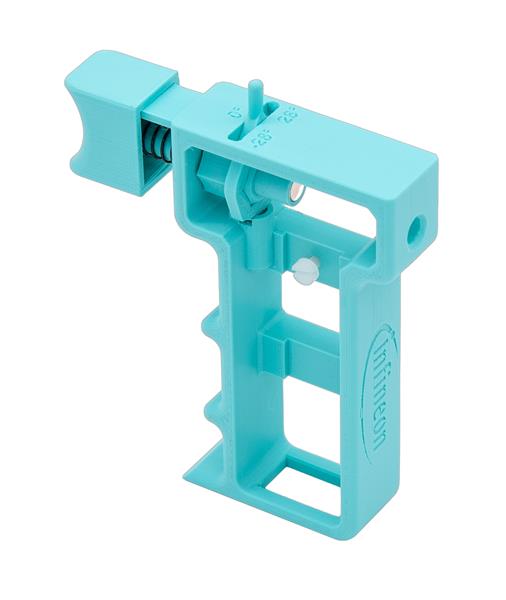
Where magnetic sensor development tools fit in the design process
Magnetic sensing is commonly used when a design requires contactless measurement, reliable switching, or position detection in environments where wear, dust, vibration, or mechanical complexity make conventional approaches less practical. Development tools in this area allow engineers to evaluate how a sensor responds to magnets, movement, alignment changes, and nearby system conditions before committing to PCB layout or firmware architecture.
Compared with designing around a bare sensor immediately, an evaluation board can simplify setup and reduce uncertainty. It gives teams a more direct way to check output behavior, interface compatibility, and sensitivity under realistic test conditions, which is particularly valuable for embedded development, lab validation, and rapid iteration.
Typical applications and engineering use cases
Magnetic sensor platforms are relevant across a wide range of B2B and industrial design tasks. Common examples include angular or linear position sensing, lid or door state detection, shaft monitoring, proximity detection, and other motion-related functions that rely on magnetic fields rather than physical contact. In many cases, they are selected because they support compact mechanical designs and can operate with less wear than contact-based alternatives.
These tools are also useful in multidisciplinary projects where magnetic sensing interacts with broader embedded functions. For example, some teams may compare them with distance sensor development tools when evaluating non-contact detection strategies, while others may review multiple function sensor development tools for systems that combine environmental and motion-related inputs on the same platform.
Representative development kits in this category
Several products in this category illustrate the range of available evaluation approaches. The ams OSRAM AS5013DB and TCS3472EVM show how development hardware can support quick testing of sensor behavior and interface handling in a lab or prototype setup. For engineers building around compact embedded platforms, the NANEYEC RASPBERRY MONO EVK provides another example of a sensor-focused evaluation environment suited to early experimentation.
Another relevant option is the Allegro MicroSystems ASEK724LLC-20AB-T, which demonstrates how a sensor evaluation development board can help teams study response characteristics, electrical integration, and practical test workflows before a custom hardware revision is released. While each kit serves its own device family and design objective, the broader advantage is the same: faster validation with less setup overhead than starting from scratch.
What to consider when choosing a magnetic sensor evaluation board
The right tool depends less on marketing labels and more on the stage of your design. Engineers typically begin by checking the intended sensing function: is the project focused on position, proximity, rotational movement, switching, or another magnetic measurement task? From there, it helps to review how the board fits into the test environment, including available interfaces, development workflow, software support, and whether the board is intended for bench evaluation or embedded prototyping.
You should also consider how closely the kit matches the final application. Some teams need a compact board for quick signal observation, while others need a more complete platform that supports iterative firmware work and system integration. If the design overlaps with motion analysis, it may also be useful to compare nearby categories such as acceleration sensor development tools to build a broader sensing architecture around the target application.
How leading manufacturers support evaluation and prototyping
This category includes development options from recognized suppliers active in sensing and embedded electronics. Analog Devices appears with several evaluation boards in the wider sensor development ecosystem, including examples such as EVAL-ADBMS2960-BASIC, EVAL-ADBMS2950-BASIC, and EVAL-ADXL001-250Z. These products show the practical value of vendor-backed development hardware for validation, measurement, and interface testing during early engineering work.
Other notable names in the broader sensor tool landscape include Adafruit, Allegro MicroSystems, and ams OSRAM. Their development boards can be helpful for teams that need accessible prototyping hardware, application-specific evaluation, or a more streamlined route to proof-of-concept testing. Choosing among manufacturers is often less about brand preference alone and more about documentation quality, ecosystem fit, and how efficiently the kit supports the required experiment or validation task.
Magnetic sensing in a broader sensor development workflow
Magnetic evaluation tools are rarely used in isolation on complex projects. In industrial electronics, robotics, smart devices, and custom embedded control systems, they often sit alongside temperature, motion, current, and other sensing technologies. That is why category-level evaluation matters: it helps engineering teams compare approaches, identify integration trade-offs, and select the right development hardware for each subsystem.
For example, applications involving electromagnetic behavior or load monitoring may benefit from reviewing current sensor development tools alongside magnetic sensor options. Looking across related categories can make it easier to align sensor selection with firmware, mechanics, power design, and the final operating environment.
Why these tools matter for faster validation
Development boards and evaluation kits reduce friction during the most uncertain part of product development: proving that a sensing concept works well enough to justify deeper integration. Instead of building a custom test fixture around an unknown device, engineering teams can begin with a supported hardware platform and concentrate on data capture, response analysis, and application logic.
For buyers, design engineers, and technical teams sourcing components for prototyping or pilot builds, this category provides a practical starting point for evaluating magnetic sensing technologies. By comparing available kits, manufacturer ecosystems, and related sensor development paths, it becomes easier to choose a tool that supports both immediate testing and a smoother transition into real-world product design.
Get exclusive volume discounts, bulk pricing updates, and new product alerts delivered directly to your inbox.
By subscribing, you agree to our Terms of Service and Privacy Policy.
Direct access to our certified experts


