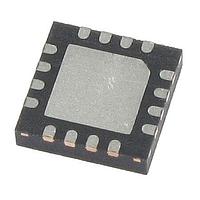
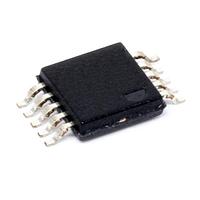
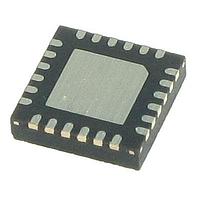
Lasers
Precision light sources are used across sensing, alignment, imaging, data transmission, and industrial design, which is why selecting the right laser component often starts with understanding the application rather than simply comparing part numbers. In this category, Lasers covers a range of optoelectronic devices used where focused optical output, wavelength control, beam characteristics, and integration format all matter.
For engineers, buyers, and design teams, the practical questions are usually straightforward: Is the device intended for distance measurement, optical communication, illumination, or a tightly defined sensing task? Does the project need a compact surface-mount emitter, a through-hole package, a VCSEL, or a telecom-oriented transmitter? A well-structured laser category helps narrow those decisions with less guesswork and better technical fit.
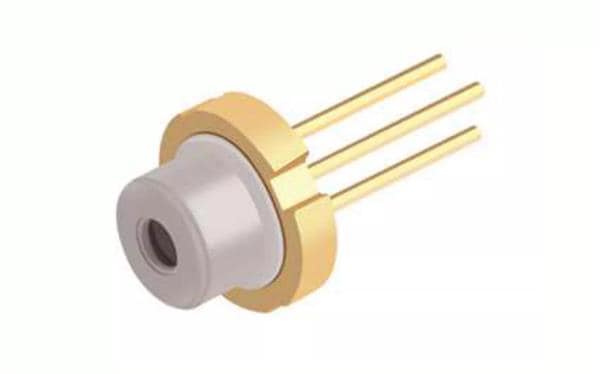
Where laser components are commonly used
Laser devices in the optoelectronics space are selected for their ability to deliver concentrated optical energy with controlled wavelength and emission behavior. That makes them relevant in applications such as optical sensing, measurement systems, positioning, scanning, machine vision support, and high-speed communication hardware.
Some parts in this category are closely aligned with short-range or infrared-based sensing, while others are better suited to optical transmission architectures. If your design is more communication-focused, it may also be useful to review related fiber optic components for broader system context, especially when transmitters, receivers, and interconnect elements need to work together.
Different laser formats serve different design goals
Not all laser products are interchangeable. In practice, engineers often choose between conventional laser diodes, infrared emitters, and VCSEL devices based on beam profile, output power, package style, thermal behavior, and integration requirements. A compact emitter for embedded sensing can have very different priorities from a telecom transmitter designed for long-distance optical links.
For example, the ams OSRAM SPLTL90AT08 120W Infrared Laser Diode (905nm) reflects the kind of component often considered for infrared optical systems, while the Broadcom AFCD-V64XT VCSEL 4x25G represents a different class of device aimed at high-speed optical transmission use cases. This distinction matters because wavelength, modulation behavior, and packaging can directly affect both performance and downstream electronics design.
Representative products in this category
The range of available parts shows how broad the category can be. ams OSRAM appears prominently with devices such as the PLT5 450B Laser Diodes, SPL PL90_3 Laser Diodes, PLT3520D Laser Diodes, and PLT5520EB_Q Laser Diodes. These examples illustrate how laser diode selection often spans visible and infrared design needs, as well as different package and application requirements.
For visible-wavelength projects, products such as the ams OSRAM PLT5488 Laser Diode 488nm 60mW 3-Pin TO-56 and PLT5488-C1C6 Laser Diodes show the relevance of package style, mounting method, and output characteristics in practical integration. Meanwhile, the ams OSRAM EGA2000-850-W VCSEL device highlights another path for designs that depend on high optical output in compact SMD form factors.
On the communications side, Finisar Corporation DM80-01-3-9190-3-LC and DM80-01-3-9180-3-LC transmitter models indicate how this category also connects to telecom and high-speed optical infrastructure. These are not generic emitters; they support more specialized optical transmission environments where link budget, interface format, and network architecture become part of the selection process.
How to choose the right laser for an application
A useful starting point is the intended function of the optical source. If the laser will be used for sensing or ranging, wavelength, pulse capability, optical power, and environmental operating conditions are often central. If it will be integrated into a communications design, the key factors shift toward transmission format, compatibility with the optical path, and overall system signaling requirements.
The next layer of evaluation typically includes package type, mounting method, thermal constraints, and drive conditions. Through-hole packages such as TO-56 may fit laboratory instruments, legacy mechanical layouts, or precision modules, while SMD formats can be better suited to compact embedded assemblies. Engineers should also check whether the project needs a bare emitter, a more application-specific transmitter, or a source that pairs naturally with surrounding optical hardware.
Where the laser is part of a broader imaging or detection setup, adjacent categories may help complete the design picture. For example, projects involving optical capture or machine vision may also benefit from browsing cameras and accessories to better align the light source with the sensing side of the system.
Manufacturer landscape and sourcing considerations
This category includes products from established optoelectronics and semiconductor suppliers, with strong representation from ams OSRAM, Broadcom, and Finisar Corporation in the highlighted products. Each manufacturer tends to be associated with different parts of the optical ecosystem, so supplier choice is often influenced by application maturity, preferred package families, and the availability of complementary components.
In some projects, sourcing decisions are shaped not only by the laser itself but also by the surrounding electronics for control, power, and signal processing. That broader ecosystem is relevant when evaluating solutions from vendors such as Broadcom or other semiconductor manufacturers listed in the category context. Even so, the best fit usually comes from matching the laser’s role in the system to the design constraints, not from choosing by brand alone.
Integration within a broader optoelectronic system
Laser components rarely operate in isolation. They are typically part of a larger chain that may include drivers, optics, sensors, communication modules, heat management, and control electronics. This is especially true in embedded systems, industrial instruments, and communication assemblies where optical performance depends on the interaction between multiple subsystems.
That is why category-level evaluation can be valuable before drilling down to individual SKUs. A buyer comparing laser diodes, VCSELs, and transmitter modules may be working toward very different end products, from compact sensing nodes to optical links. In some cases, adjacent optoelectronic product groups such as displays or other visual interface elements may also be part of the same equipment architecture, even if they serve a different function.
What buyers and engineers should compare before ordering
Before shortlisting parts, it helps to compare the fundamentals: wavelength, output class, device type, package, mounting style, and operating environment. These parameters influence optical alignment, safety considerations, PCB layout, thermal design, and the practicality of integrating the component into existing hardware.
It is also worth checking whether the product is a standalone laser diode, a VCSEL-based source, or a more specialized optical transmitter. That distinction can prevent mismatches early in the sourcing process. For procurement teams, clear categorization also makes it easier to separate prototype candidates from production-oriented parts and to coordinate with engineering on acceptable substitutes or second-source strategies when needed.
Finding the right fit in the Lasers category
The value of this category lies in bringing together laser-related components that support very different technical goals, from visible and infrared emission to structured optical transmission. By comparing device type, wavelength, form factor, and application intent, engineers can move more efficiently from broad search to workable shortlist.
If you are evaluating parts for sensing, communications, or embedded optoelectronic design, this Lasers category provides a practical starting point for narrowing options and identifying components that fit the electrical, mechanical, and optical needs of the project.
Get exclusive volume discounts, bulk pricing updates, and new product alerts delivered directly to your inbox.
By subscribing, you agree to our Terms of Service and Privacy Policy.
Direct access to our certified experts