
LED Lighting Fixture Accessories
Reliable fixture performance depends on more than the light source itself. In many LED projects, the parts around the luminaire—connection hardware, control interfaces, mounting elements, and supporting electrical components—play a major role in installation quality, service life, and long-term maintainability. That is why LED Lighting Fixture Accessories are an important part of any professional lighting system.
This category brings together supporting components used to complete, adapt, or enhance LED fixture assemblies in commercial, industrial, and infrastructure applications. Whether the priority is easier wiring, better compatibility with control systems, or more practical field installation, choosing the right accessory helps reduce integration issues and supports consistent lighting performance.
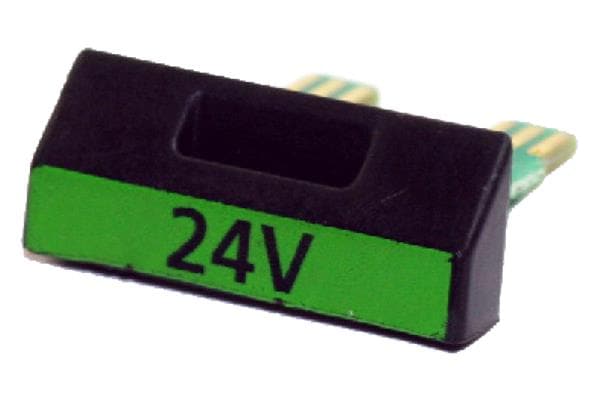
Where fixture accessories fit in an LED lighting system
In a complete lighting setup, accessories serve as the link between the fixture and the wider electrical or control environment. Depending on the application, this may include interface modules, wiring-related parts, replacement electrical elements, or items that help a fixture work correctly within a larger installation.
For buyers, specifiers, and maintenance teams, this category is especially useful when the main fixture is already defined but the supporting hardware still needs to be matched. In practice, accessory selection often affects installation efficiency, service access, and compatibility with dimming or building control requirements just as much as the luminaire itself.
Common use cases in commercial and industrial projects
LED fixture accessories are frequently specified in office lighting, retail spaces, warehouses, machine areas, utility rooms, and facility retrofits. In these environments, installers may need components that support driver integration, structured wiring, fixture adaptation, or interface with lighting control protocols.
For example, projects using tunable or digitally controlled lighting may require dedicated support parts to connect fixtures into a broader control architecture. In maintenance scenarios, accessory replacement can also be a practical alternative to replacing the entire luminaire, especially when the installed system remains mechanically sound.
Representative products in this category
Several listed items help illustrate the range of accessory-related solutions available. The ams OSRAM portfolio includes products such as the ams OSRAM DALI-MCU-TW-G2, which points to applications involving digital lighting control and tunable white setups. This kind of component is relevant where fixtures need to interact with smart lighting management rather than operate as simple standalone lights.
Other examples, such as the ams OSRAM QT-ECO-1X18-21/220-240-S and references like ams OSRAM 5626, 6429, and 6423, show that accessory needs may extend to electrical support elements used around fixture operation or retrofit work. The category also includes examples from Molex and LEVITON, highlighting the importance of interconnection and installation hardware in lighting assemblies.
Products such as Molex 1301120263, Molex 45EBR, and Molex 68801-2112 suggest the supporting role of connector-oriented or installation-related components in professional lighting systems. Likewise, LEVITON 26719-200 and PANASONIC references including XLX800KENCLE2, XLX800DENCLE2, and XLX800AENCLE2 help show how fixture ecosystems often involve multiple supporting parts beyond the visible light unit.
How to choose the right accessory
Selection should begin with the actual fixture environment rather than the accessory alone. Buyers typically review the fixture type, electrical interface, control method, mounting constraints, and service conditions before narrowing options. This is especially important when accessories are intended for retrofit or replacement, where compatibility with an existing installation matters more than generic similarity.
It is also useful to confirm whether the project involves straightforward power distribution or a more advanced lighting control architecture such as dimming, tunable white, or networked building systems. In those cases, control-related accessories should be matched carefully to the intended protocol and fixture behavior. For broader system planning, it can also help to compare related product groups such as LED light bars and light strips when the application may not require a full conventional fixture setup.
Why accessory quality matters in B2B procurement
In industrial and commercial purchasing, accessories are rarely just minor add-ons. They can influence assembly time, reduce field modifications, support safer connections, and simplify future maintenance. A well-matched accessory can also help preserve the intended electrical and mechanical behavior of the fixture over its working life.
From a procurement perspective, standardizing accessory choices across projects may improve spare-parts management and make servicing more predictable. This is particularly relevant for large facilities, OEM builds, and multi-site operations where consistency in supporting components helps reduce downtime and avoid unnecessary variation.
Related categories worth reviewing
Some projects require a combination of fixture accessories and other LED support products. If the goal is to complete an installation package, reviewing LED lighting kits may be useful for integrated solutions, while projects focused on signals or machine status visibility may align better with LED indication products.
Looking at adjacent categories can help distinguish whether the requirement is a fixture accessory, a complete lighting assembly, or an indicator-based device. That clarity is valuable when sourcing for panel builders, facilities teams, machine designers, or maintenance departments working under tight technical and project constraints.
Practical sourcing considerations
When evaluating options in this category, it is worth considering how the accessory will be installed, serviced, and documented in the field. Part identification, replacement planning, and alignment with existing fixture platforms can all affect the total cost of ownership more than the initial component price alone.
For engineering and purchasing teams, the best results usually come from selecting accessories that support system compatibility, practical installation, and reliable lifecycle support. That approach helps ensure the finished lighting system is easier to deploy, easier to maintain, and better aligned with the needs of the application.
Choosing the right LED lighting fixture accessory is ultimately about making the whole lighting system work more smoothly. By focusing on compatibility, installation needs, and the role each component plays within the fixture ecosystem, buyers can make more informed sourcing decisions for both new projects and ongoing maintenance.
Get exclusive volume discounts, bulk pricing updates, and new product alerts delivered directly to your inbox.
By subscribing, you agree to our Terms of Service and Privacy Policy.
Direct access to our certified experts
