UV LEDs
When a design requires controlled ultraviolet output in a compact semiconductor package, choosing the right LED is less about general illumination and more about wavelength, package style, and operating conditions. UV LEDs are widely used in equipment where spectral performance matters, from sensing and fluorescence-based detection to curing, inspection, and specialized industrial assemblies.
This category brings together UV-emitting LED options for engineers, buyers, and technical teams comparing devices for board-level integration or product development. The range includes parts suited to different UV bands, optical patterns, and package formats, helping users narrow down components based on application intent rather than browsing only by part number.
Understanding UV LED selection
Unlike visible-light devices, ultraviolet emitters are typically selected around a target wavelength window and the effect required at the application level. In practice, that often means comparing UVA, UVB, or UV-C output, then matching the device to optical geometry, PCB constraints, thermal conditions, and drive requirements.
Many projects also need to balance compact size with usable radiant output. Surface-mount packages are common across this category, making UV LEDs suitable for embedded electronics, handheld instruments, compact fixtures, and OEM assemblies where space and assembly compatibility are important.
Common UV ranges and where they fit
Within this selection, several devices operate in the UVA range, including examples around 325 nm, 340 nm, 380 nm, 400 nm, and 405 nm. These wavelengths are often considered for applications such as fluorescence excitation, marking or inspection support, and other systems where near-UV energy is preferred over visible output. Parts such as the Marktech Optoelectronics MTE325F11-UV, MTE340F11-UV, and MT5375-UV-HP illustrate how wavelength choice can vary significantly even within the same general UV family.
There are also UVB options, such as the Marktech Optoelectronics MTE310H21-UV and MTE310H32-UV, which may be relevant where shorter-wavelength output is required. For applications moving further into germicidal or specialized compact UV sources, the ams OSRAM SU CULBN2.VC-AGAM-67-4F4G shows the presence of UV-C technology in a small-form LED package. If your project calls for visible or non-UV emitters in the same design family, it can also help to compare with single-color LEDs or IR LED options depending on the sensing method.
Package styles, optics, and integration factors
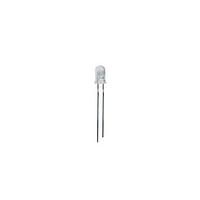
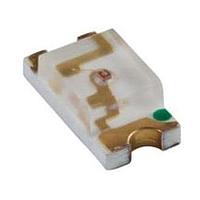
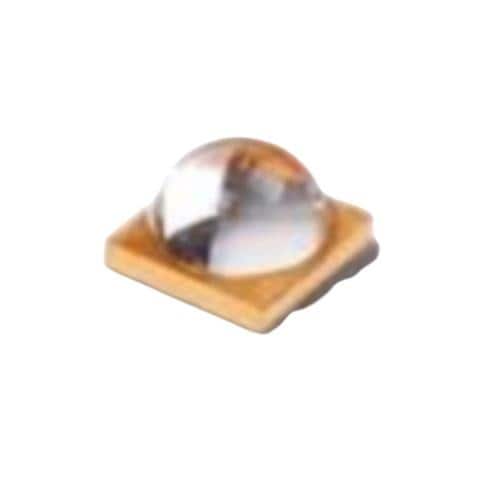
UV LED performance in a real product is influenced not only by wavelength but also by viewing angle, lens form, and mounting method. The listed devices include dome and flat-lens constructions, metal can styles, and SMT packages such as 3535 or 4545 footprints. These differences matter when engineers are trying to control beam spread, increase coupling into a target area, or fit the emitter into a constrained optical path.
For example, narrow viewing angles can be useful when the design needs more concentrated energy on a small inspection zone, while wider angles may better support broader surface coverage. The Inolux IN-C45PPATNU1 high-power top-mount device and the ams OSRAM OSLON UV part represent more compact board-mount approaches for designs where package density and assembly processes are important. Moisture sensitivity and forward voltage should also be reviewed early, especially for reflow planning and driver compatibility.
Representative manufacturers in this category
This category includes products from established optoelectronic suppliers with different strengths across wavelength bands and package formats. Marktech Optoelectronics appears prominently in the range with multiple UVA and UVB emitters, making it relevant for teams that need more targeted wavelength choices. ams OSRAM adds compact UV technology for demanding electronic designs, while BIVAR and Inolux provide additional options for near-UV and high-power board-level integration.
Examples such as BIVAR UV3TZ-400-15 and UV5TZ-405-15 may be useful when comparing near-UV output around 400 to 405 nm, while Inolux IN-C45PPATNU1 gives buyers another reference point in a high-power top-mount style. Using a mix of manufacturers can be practical during design exploration, but final selection usually depends on wavelength target, thermal behavior, assembly method, and long-term sourcing needs.
How to choose the right UV LED for your application
A practical selection process usually starts with the optical objective. If the system needs excitation in a specific spectral region, wavelength should be the first filter. After that, narrow the shortlist using package size, beam angle, forward voltage, and current requirements. In most engineering workflows, these factors are more useful than choosing only by brand or by whether a device is labeled as low power or high power.
It is also important to consider the full system environment. UV emitters may be installed in enclosed assemblies, portable instruments, or continuous-duty equipment, so thermal limits and PCB design become part of the component decision. Where the project includes multiple optical channels, teams sometimes review adjacent technologies such as white LEDs or multicolor LEDs for status indication, alignment, or supplementary visible output.
Typical use cases in industrial and electronic design
Ultraviolet emitters are commonly considered in systems where the emitted spectrum contributes directly to a process or measurement task. That can include fluorescence-based detection, optical inspection, curing-related concepts, analytical instrumentation, and compact embedded devices that need a UV source without the size or complexity of traditional lamps.
Near-UV parts around 400 to 405 nm are often evaluated differently from shorter-wavelength devices around 325 to 340 nm or below, because system response, material interaction, and sensing behavior can change substantially with wavelength. This is why application engineers typically validate not just brightness but also the spectral fit, optical path efficiency, and expected lifetime under real operating conditions.
Finding a suitable part in this category
For procurement teams, a good shortlist often includes a mix of wavelength candidates and package styles rather than a single direct match. A project may begin with devices such as Marktech Optoelectronics MT5400-UV for a higher-output UV emitter comparison, then move toward compact solutions like MTE340H33-UV or MTE325F13-UV when optical and electrical constraints become clearer. In other cases, a near-UV BIVAR part or an Inolux top-mount LED may fit better with the mechanical design.
Reviewing UV LEDs this way helps reduce redesign risk later in the process. Instead of focusing only on one parameter, buyers and engineers can compare spectral range, lens style, mounting approach, and operating window together to identify parts that are more likely to perform well in the finished assembly.
Conclusion
This UV LED category is designed for users who need more than a generic LED search result. With options spanning different UV bands, package formats, and manufacturer lines, it supports a more informed component selection process for industrial electronics, OEM equipment, and specialized optical designs. If your application depends on wavelength accuracy, board-level compatibility, and stable integration, reviewing the available UV LED options in context is the best starting point for a reliable shortlist.
Get exclusive volume discounts, bulk pricing updates, and new product alerts delivered directly to your inbox.
By subscribing, you agree to our Terms of Service and Privacy Policy.
Direct access to our certified experts