
LED Display Drivers
Clear, stable visual output depends on more than the LED itself. In control panels, instrumentation, consumer interfaces, and embedded systems, the driver stage determines how efficiently each segment, digit, or matrix is powered, addressed, and dimmed. LED Display Drivers are used to simplify that task, helping designers manage current, brightness, multiplexing, and communication with the host controller in a more reliable way.
This category is relevant for designs ranging from basic numeric readouts to more complex segmented and matrix displays. Whether the priority is low-voltage operation, serial interfacing, compact board layout, or controlled brightness, selecting the right driver IC can reduce component count and improve overall display behavior.
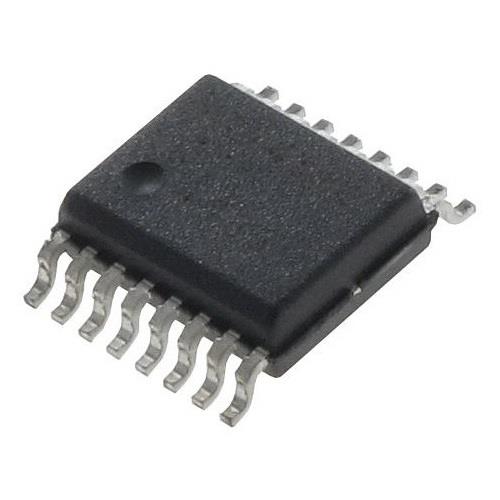
Where LED display drivers fit in a design
An LED display driver sits between the control logic and the display element, managing the electrical behavior needed to illuminate digits, segments, or matrices correctly. Instead of driving each LED directly from a microcontroller, designers use dedicated ICs to handle constant-current control, scan timing, and brightness adjustment more efficiently.
This becomes especially important when the display has multiple digits or many segments. In these cases, the driver helps maintain more consistent brightness, reduces processor overhead, and can improve repeatability across operating conditions. For broader display interface options, related solutions can also be explored in display controllers and drivers.
Common display formats supported by this category
LED display driver ICs are used in several display architectures, including 7-segment numeric modules, multi-digit alphanumeric displays, and LED matrix arrangements. The right device depends on how many outputs are required, whether the display is static or multiplexed, and what communication method the host system uses.
Within the products shown in this category, there are examples for compact segment driving, multi-digit display control, and matrix-style implementations. Devices such as the Analog Devices MAX7221EWG+T are suited to serially interfaced multi-digit applications, while the Analog Devices MAX6960AMH+D addresses 8 x 8 matrix-style control. For projects using liquid crystal interfaces instead of LEDs, LCD drivers may be a more appropriate path.
Key selection factors for LED display drivers
One of the first selection points is output architecture. Some devices are optimized for a defined number of digits or segments, while others provide more flexible port-based output control. Products in this category include examples such as the MAX6967AEE+ with 10 constant-current ports, the STP16CPC26XTR with 16-bit sink-driver functionality, and the MAX6956AAX/V+ with a 20-port configuration.
Voltage range is another practical consideration. Designs powered from low-voltage logic rails may require parts that operate around 2.5 V to 5.5 V, while other applications need wider input capability or support for higher-brightness implementations. Brightness control and dimming are also important when the display must remain visible across changing ambient light conditions or when power consumption must be managed carefully.
Interface method matters as well. Serial and 2-wire or 4-wire interfacing can simplify routing and reduce the number of controller pins required. In compact embedded systems, this often helps with PCB layout, scalability, and firmware integration.
Examples from leading manufacturers
This category includes devices associated with established semiconductor suppliers, with Analog Devices and STMicroelectronics represented in the featured products. These devices cover a useful range of use cases, from compact display interfaces to higher-segment-count and automotive-oriented implementations.
For example, the MAX6958AAEE+ supports a 4-digit arrangement with 2-wire interfacing, making it relevant where simple host communication is preferred. The MAX6954AAX+ extends this idea toward larger display configurations with 4-wire interfacing and a broader segment capacity. In a different direction, the MAX20090AUPB/V+ is positioned for automotive high-voltage, high-brightness use, while the STP16CPC26XTR from STMicroelectronics is a low-voltage 16-bit LED sink driver suited to segment or channel control tasks.
Application areas and design priorities
LED display drivers appear in a wide range of equipment: industrial control panels, test instruments, counters, timing modules, embedded HMIs, and status displays in commercial electronics. In these environments, designers often need predictable current handling, readable output, and a practical interface to the main processor.
Some products in this category also point to more specialized uses. The ICL7137CPL+ combines display-driving relevance with low-power 3 1/2 digit A/D converter functionality, while the ICM7217AIPI+ is aimed at presettable up/down counting applications. These examples show that the category is not limited to simple display buffering; it also includes devices that support broader display-oriented system functions.
Where the main design goal is illumination rather than segmented display control, it may be more useful to review LED lighting driver ICs, which are intended for different electrical and optical priorities.
Practical considerations for integration
Package style and mounting method affect assembly strategy and board density. Many featured parts are available in SMD/SMT formats for modern compact designs, while a few through-hole options remain relevant for legacy systems, prototyping, or specialized board requirements.
Operating temperature range is another important consideration, especially in industrial and automotive environments. Several products shown here support extended temperature operation, which can matter when the display is exposed to enclosed equipment heat, outdoor conditions, or long service cycles. Designers should also check current capability, power dissipation, and whether the device uses sink outputs, source outputs, or constant-current channels, since these directly influence display compatibility and thermal performance.
How to narrow down the right part
A good starting point is to define the display type first: digit-based, segmented, or matrix. From there, compare the required number of outputs, the system supply range, the desired control interface, and whether dimming or brightness adjustment is needed. If the display must serve an automotive or harsher embedded environment, temperature capability and any application-specific qualification data should also be reviewed.
It is also helpful to think in terms of system architecture rather than just part count. A device with integrated serial control or built-in current regulation may reduce external components and firmware complexity, even if the display itself is relatively simple. Conversely, a more specialized driver may be the better choice when the display function is tightly tied to counting, measurement, or matrix addressing.
Choosing within this category
This range of LED display drivers supports designs that need anything from basic segment control to higher-density, interface-friendly display management. Featured parts such as the MAX7221EWG+T, MAX6967AEE+, MAX6954AAX+, ISL97671AIRZ-TK, and STP16CPC26XTR illustrate the breadth of options available for brightness control, multi-digit display handling, and serial communication.
When comparing products, focus on the actual display topology, electrical requirements, and interface constraints of the end application. That approach usually leads to a better fit than selecting only by package or brand, and it helps ensure the display subsystem remains stable, readable, and easier to integrate into the complete design.
Get exclusive volume discounts, bulk pricing updates, and new product alerts delivered directly to your inbox.
By subscribing, you agree to our Terms of Service and Privacy Policy.
Direct access to our certified experts
