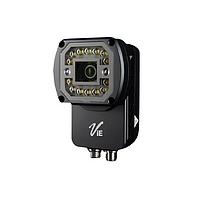
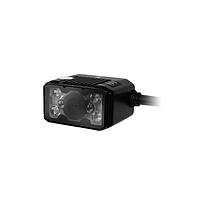
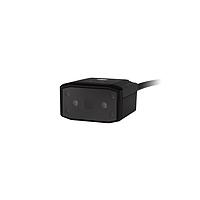
Industrial barcode reader
In automated production, packaging, and traceability workflows, reliable code reading is often the difference between smooth data capture and repeated manual intervention. When labels are damaged, surfaces are reflective, or cycle times are tight, a standard scanner may not be enough. That is where industrial barcode readers are typically used: fixed-position devices designed for stable integration into machines, conveyor systems, and industrial stations.
On this page, you can explore readers suited to 1D and 2D barcode identification, OCR-related tasks on selected models, and continuous operation in demanding environments. The category is relevant for manufacturers, system integrators, warehouse automation teams, and OEMs looking for dependable code reading performance with industrial connectivity and mounting flexibility.
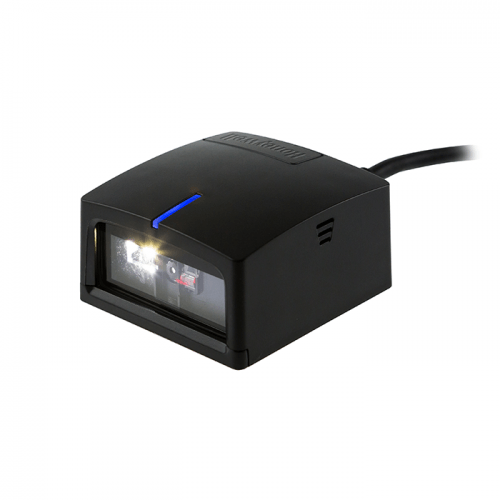
Where industrial barcode readers are used
Unlike general-purpose scanners, industrial models are built to stay mounted in place and read codes as products move through a process. Typical use cases include conveyor-based identification, packaging line verification, work-in-process tracking, pallet or carton routing, and code capture at assembly or inspection stations.
These systems are especially useful when the reading point must be repeatable and connected directly to control equipment. In many installations, the reader becomes part of a broader automation architecture that includes PLCs, sensors, lighting, rejection mechanisms, and factory networks. If your application is less fixed and more operator-driven, a handheld barcode reader may be more appropriate for flexible scanning tasks.
What to look for in an industrial reading system
The right choice usually depends on more than decoding capability alone. In industrial settings, buyers often evaluate sensor resolution, illumination method, communication interface, housing protection, and how the reader will be mounted relative to the code. For direct part marks, small 2D codes, or difficult surfaces, optics and image processing can matter just as much as raw megapixel count.
Environmental resistance is another important factor. Many fixed readers in this category are designed for dust, vibration, and washdown-adjacent conditions, with models offering protection ratings such as IP54, IP65, or IP67 depending on the design. If the device must communicate with line control systems, Ethernet-based industrial protocols or serial options can also become a key selection point.
Common product types within this category
Industrial barcode readers are not all built for the same installation style. Compact fixed-mount units are often used where space is limited and the reading distance is controlled. Larger industrial scanners may support broader integration features, higher performance imaging, more configurable I/O, or industrial network protocols for production environments.
For example, the Cognex DataMan 80 family, including models such as DMR-80X-112E, DMR-80X-112U, and DMR-80X-154U-P, is suited to fixed-mount code reading where compact installation and modern decoding algorithms are important. In the Zebra range, FS10, FS20, FS40, and FS70 represent a broader spectrum of fixed industrial scanners, from compact readers up to more integration-oriented devices for demanding line applications.
Examples from leading manufacturers
This category includes solutions from established suppliers such as Honeywell, Zebra, and Cognex, each relevant to different operational needs. Some applications prioritize compact footprint and straightforward installation, while others require deeper industrial networking, OCR capability, or higher image performance for fast-moving lines.
For instance, the Zebra FS20 Fixed Barcode Reader supports 1D, 2D, and OCR-oriented workflows, while the Zebra FS70 Fixed Industrial Scanner is positioned for more advanced fixed scanning tasks with broader connectivity options. Honeywell also offers fixed industrial choices such as the HF800 for mounted 2D reading, alongside other form factors on its Honeywell brand page. These examples help illustrate how industrial readers can range from compact embedded stations to more fully integrated machine-vision-adjacent devices.
How fixed readers differ from desktop and mobile scanners
A fixed industrial reader is typically selected when the scan point is part of a machine process rather than a manual action. The device remains mounted, aligned, and powered continuously, which helps maintain consistent read performance and supports repeatable throughput. This is particularly useful in traceability systems where each product must be identified automatically without relying on operator handling.
That differs from a desktop barcode reader, which is more commonly used at counters, benches, or laboratory check-in points, and from mobile devices intended for roaming workflows. If your process involves automated line control, synchronized triggers, and equipment-level integration, an industrial fixed reader is usually the more suitable format.
Selection criteria for B2B buyers and integrators
When specifying a reader for an industrial project, it is useful to start with the code itself: barcode type, size, print quality, surface condition, and expected read distance. From there, review mechanical constraints such as available mounting space, cable routing, ambient temperature, and whether the installation needs USB, RS-232, Ethernet, or industrial protocol support.
You should also consider maintenance and scalability. A reader used in a single workstation may have very different requirements from one deployed across multiple conveyor zones. In larger systems, features such as configurable I/O, PoE options on selected models, software-based management, and easier replacement of illumination or optics can simplify commissioning and long-term operation.
Application examples across production and logistics
In manufacturing, industrial barcode readers are often used to verify labels before packaging, identify trays or carriers on conveyors, read 2D codes on components, or support serialization and batch tracking. In logistics and intralogistics, they can help automate sortation, station routing, and confirmation of carton movement through fixed checkpoints.
Some organizations also combine multiple scanner formats in the same workflow. A fixed reader may handle primary line identification, while operators use a mobile barcode reader for exception handling, inventory validation, or field tasks away from the line. This combination is common where automation handles the bulk of throughput but manual recovery is still necessary.
Choosing the right industrial barcode reader for your process
The most suitable solution depends on how and where the code is presented, what level of integration is required, and how demanding the operating environment will be. Compact fixed readers can work well for controlled stations, while more advanced industrial scanners are better suited to complex automation, multiple interfaces, and higher inspection demands.
By comparing code type support, installation constraints, environmental durability, and communication needs, buyers can narrow the selection to devices that fit real production conditions. This category brings together practical options for fixed-mount scanning, whether the goal is basic traceability, higher-speed automation, or a more robust industrial code reading setup within a larger factory system.
Get exclusive volume discounts, bulk pricing updates, and new product alerts delivered directly to your inbox.
By subscribing, you agree to our Terms of Service and Privacy Policy.
Direct access to our certified experts