
Wireless Charging Coils
Designing a reliable wireless power system starts with the right magnetic interface. In many compact electronics, the coil is the core element that enables efficient energy transfer between transmitter and receiver, affecting alignment tolerance, thermal behavior, power handling, and overall charging stability. This makes Wireless Charging Coils an important category for engineers working on consumer devices, industrial handhelds, embedded products, and custom charging platforms.
On this page, you can explore coil options used in wireless power transfer designs, including receiver and charging coil formats from established component manufacturers. The selection is relevant for developers comparing electrical characteristics, mechanical dimensions, mounting style, and integration needs within a broader ecosystem of inductive components and passive circuitry.
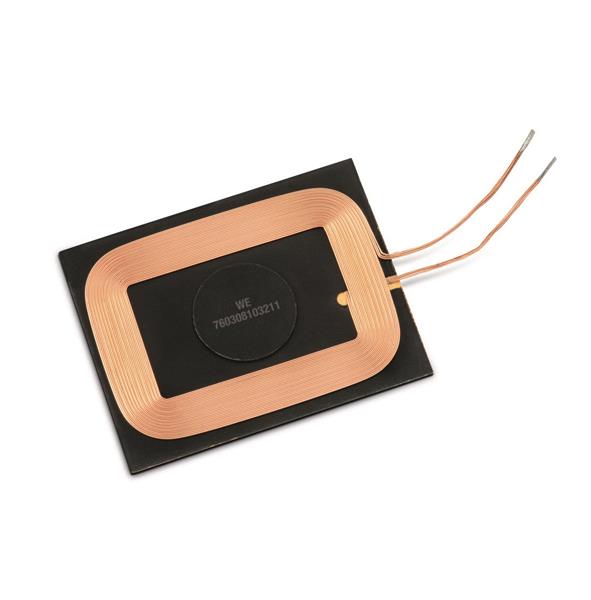
How wireless charging coils fit into electronic designs
A wireless charging system transfers energy through magnetic coupling rather than direct electrical contact. The coil geometry, inductance, resistance, and current capability all influence how effectively power can be transferred from the transmitter side to the receiving side. In practical design work, these parameters matter not only for charging speed but also for mechanical packaging and thermal performance.
Compared with more general-purpose capacitor and passive support networks around a charging circuit, the coil is the part most directly tied to coupling efficiency and physical placement. This is why engineers often evaluate coil shape, thickness, and target operating conditions early in the product development cycle.
What to look for when selecting a wireless charging coil
The first step is matching the coil to the intended role in the system. Some parts are designed for transmitting energy, while others are built as receiving coils for end devices. Electrical values such as inductance and current rating help determine whether the part is suitable for low-power embedded charging, compact mobile devices, or designs that require higher transfer capability.
Mechanical dimensions are equally important. Thin, flat coils are often chosen for space-constrained products, while larger formats may support different placement or coupling targets. Engineers should also review factors such as DC resistance, tolerance, and mounting style, especially when balancing efficiency, heating, and assembly constraints.
Environmental range can also influence part choice. For products used in industrial or portable environments, operating temperature limits may be relevant alongside board layout, enclosure spacing, shielding, and nearby components such as filters that help manage electromagnetic behavior in the wider design.
Representative products in this category
This category includes examples from well-known manufacturers such as TDK, Wurth Elektronik, Vishay, and Molex. For instance, the TDK WR383245-17F5-G wireless charging coil offers a defined compact size and 17.5 uH inductance, making it relevant when physical footprint and target inductance need to be considered together. The TDK WR-483250-15M2-G receiving coil is another useful reference point for receiver-side designs where current rating, inductance, and package profile all matter.
From Wurth Elektronik, parts such as the 760308101312 and 760308101410 wireless charging coils illustrate how current capability and tolerance can vary across options in the same application space. Vishay also appears in the category with IWTX series parts such as the IWTX55R0DZEB8R9KF1, while Molex provides options like the 1461790001 wireless charging coil for engineers comparing low-profile board-mount solutions.
Common application scenarios
Wireless charging coils are used wherever sealed, contactless, or convenience-focused power transfer is desirable. Typical use cases include handheld electronics, charging cradles, embedded control devices, portable accessories, and products where connector wear, moisture exposure, or industrial handling make direct-contact charging less attractive.
They can also be relevant in custom docks and space-limited devices where cable access is inconvenient. In these projects, designers often assess not only the coil itself but also nearby passive elements, shielding, and RF-related components. Depending on the architecture, adjacent categories such as antenna components may also become part of the broader integration discussion, especially in compact wireless products combining charging and communication functions.
Comparing manufacturers and product families
Different manufacturers approach wireless charging coil design with different mechanical formats, electrical targets, and integration priorities. TDK appears prominently in this category with multiple coil options, including receiver and charging variants suited to different package sizes and operating needs. Wurth Elektronik provides several coil choices that are useful when current handling and practical integration are key decision points.
Vishay and Molex broaden the available range with additional form factors and inductance options. Rather than selecting by brand alone, it is usually better to compare the intended coil role, available space, expected coupling conditions, and the performance requirements of the full charging subsystem.
Integration considerations for engineers and buyers
For engineering teams, coil selection should be tied to the full wireless power architecture, including controller compatibility, enclosure materials, alignment strategy, and thermal limits. A coil that looks suitable on paper may behave differently once ferrite materials, spacing, and mechanical tolerances are introduced into the final assembly. Prototype validation is therefore an important part of the selection process.
For procurement teams, consistency of specifications, manufacturer preference, and lifecycle planning can be just as important as nominal electrical values. Reviewing available alternatives within the same category can help when qualifying second-source options or standardizing parts across multiple device programs.
Choosing the right option for your project
The most effective way to narrow this category is to start with application role and mechanical constraints, then move to inductance, current capability, and temperature range. From there, comparing representative parts such as TDK receiver coils, Wurth Elektronik charging coils, Vishay IWTX series options, or Molex board-mount designs can help identify a practical shortlist.
Whether you are building a compact receiver, evaluating a transmitter-side layout, or sourcing parts for a custom charging platform, this category provides a focused starting point for wireless power transfer design. A well-matched coil supports better efficiency, smoother system integration, and a more dependable end product.
Get exclusive volume discounts, bulk pricing updates, and new product alerts delivered directly to your inbox.
By subscribing, you agree to our Terms of Service and Privacy Policy.
Direct access to our certified experts
