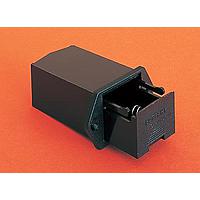
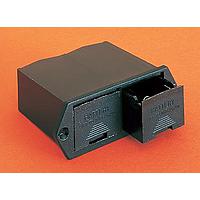
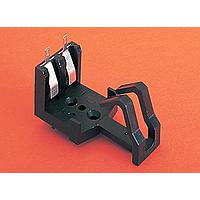
9V Battery Snaps & Contacts
Reliable battery connections matter just as much as the battery itself, especially in compact electronics, prototypes, handheld devices, and service assemblies built around standard 9V cells. This category brings together 9V Battery Snaps & Contacts designed to create a practical electrical interface between a 9V battery and the rest of the circuit, whether you need a simple snap connector, wire leads for quick integration, or a holder format for more stable mounting.
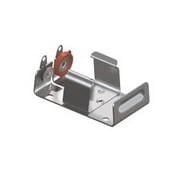
Where these connectors fit in an electronic assembly
9V battery snaps and contacts are commonly used when a design needs a fast, serviceable way to connect a single 9V battery without adding unnecessary complexity. In many low-power circuits, test fixtures, educational projects, alarm modules, and portable control units, the battery interface needs to be secure enough for operation while still allowing easy replacement during maintenance.
Compared with more rigid battery mounting methods, snap-style connectors offer flexibility in wiring and enclosure layout. Depending on the design, you may choose a free-hanging leaded snap, a flat holder, or a snap-in holder that keeps the battery connection organized inside the product.
Common product styles in this category
This range typically includes several connector formats because not every 9V-powered device is assembled in the same way. Some parts are intended as direct battery snaps with wire leads, while others function more like holders or straps that improve retention and simplify installation.
For example, the Keystone Electronics 203-P is a snap-in 9V holder suited to applications where mounting stability is important. For simpler cable-based connections, products such as the Eagle Plastic Devices 121-0622/I-GR and 121-1822/I-GR provide leaded 9V snap options in different wire lengths, which can be useful when routing must match the layout of the enclosure or PCB assembly.
There are also compact connector options such as the Adam Tech BS-1-1, as well as strap and clip styles like the Keystone Electronics 81-4 or Eagle Plastic Devices 12BH610-GR. These parts play different roles within the same power ecosystem, from basic battery connection to light mechanical support and easier battery replacement.
How to choose the right 9V snap or contact
The best selection usually depends on mounting style, termination method, and how often the battery will be replaced. A free-hanging connector with wire leads may be enough for a simple portable assembly, while a snap-in or flat holder can make more sense when the battery needs more controlled positioning inside the device.
It is also worth checking the contact material and plating, especially if the equipment will be handled often or exposed to vibration during use. Brass or steel contact constructions with tin or nickel-plated surfaces are common in this category because they support dependable conductivity and reasonable durability in routine electronic applications.
Lead length is another practical factor. Shorter leads can help reduce clutter in compact products, while longer leads provide more freedom during panel or enclosure integration. If your design needs a broader range of battery interface components beyond this category, you may also want to review related battery contacts for alternative connection approaches.
Examples of parts for different build requirements
For projects that prioritize a stable installed position, the Keystone Electronics 79 flat 9V holder is a useful example of a holder-style approach. It is better suited to assemblies where the battery should remain seated in a defined location rather than simply hanging on leads.
When the goal is straightforward connection to a battery terminal, products such as Keystone Electronics 273 and Eagle Plastic Devices 121-0526/T-GR represent a more direct snap-and-contact format. These are often chosen for service-friendly builds, compact harnesses, or low-complexity power input sections.
For wire-terminated designs, options like Eagle Plastic Devices 121-0626/I-GR, 121-0626/IM-GR, and Keystone Electronics 235-M illustrate how this category supports different cable and connector preferences. The result is a flexible set of components for OEM assembly, repair work, and prototyping where a standard 9V source remains a practical power option.
Integration considerations for enclosures and wiring
Battery connection hardware should be selected with the final mechanical design in mind, not just the electrical requirement. In a tightly packaged product, the orientation of the battery, available service space, and the routing of lead wires can all affect which snap or holder style is most appropriate.
If the battery is installed inside a case, the surrounding hardware may matter as much as the connector itself. In these situations, related products such as battery enclosures can help create a more complete and protected battery solution. This is especially useful for portable devices or assemblies that need cleaner cable management and better physical protection.
Engineers and buyers also often evaluate replacement convenience. If end users or service technicians need frequent battery access, a connector that balances retention with easy removal can reduce wear on the assembly over time.
Manufacturers commonly used for 9V battery connection components
This category includes recognized component brands used across prototyping, light industrial electronics, maintenance builds, and general electronic production. Keystone Electronics and Eagle Plastic Devices appear frequently in 9V connection hardware because they cover multiple formats, including holders, snaps, clips, and leaded options.
Adam Tech is also relevant where a compact battery connector is needed for straightforward integration. More broadly, buyers sourcing battery accessories may also compare adjacent product ecosystems from suppliers active in electronic hardware and power-related accessories, depending on enclosure design, assembly method, and stock preference.
When this category is the right starting point
If your application specifically uses a single 9V battery and requires a physical connection component rather than the battery itself, this category is the right place to begin. It is most relevant when you need a 9V battery interface for new product builds, replacement parts, field repair, lab fixtures, or custom cable assemblies.
For projects using other battery formats or more specialized accessory types, a broader review of other battery accessories may help identify complementary parts. That can be useful when the power section includes additional mounting, protection, or accessory hardware beyond the 9V snap connection itself.
Choosing the right 9V snap or contact comes down to fit, wiring method, and service needs. With options ranging from simple leaded snaps to holder-style parts, this category supports practical battery integration for a wide variety of electronic assemblies without overcomplicating the design.
Get exclusive volume discounts, bulk pricing updates, and new product alerts delivered directly to your inbox.
By subscribing, you agree to our Terms of Service and Privacy Policy.
Direct access to our certified experts