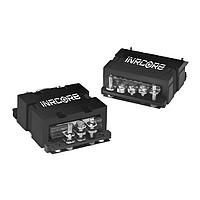
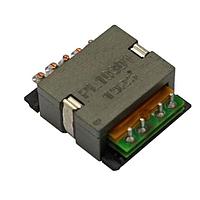
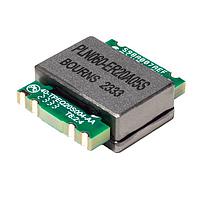
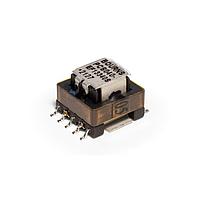
Transformers
Reliable power conversion starts with choosing the right magnetic components for the job. In design, maintenance, and industrial procurement, transformers are not a single-device category but a broad group of components used to step voltage up or down, provide isolation, support switching topologies, and transfer signals safely between circuits.
Transformers remain essential across power electronics, embedded systems, telecom interfaces, backup infrastructure, and many OEM assemblies. Whether the requirement is mains conversion, PCB-level isolation, or integration into a larger power architecture, selecting the right type depends on electrical function, mounting style, insulation needs, and the operating environment.
Where transformers fit in modern power systems
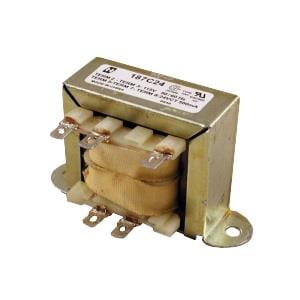
In practical applications, transformers support much more than basic voltage conversion. They are used to isolate sensitive electronics, match impedances, couple communication lines, and enable efficient energy transfer in linear and switched-mode designs. This makes the category relevant to engineers working on control systems, industrial electronics, communication hardware, and board-level power stages.
They are also closely tied to the wider power ecosystem. For example, transformer selection often goes hand in hand with decisions around power supplies, especially when designers need to balance efficiency, safety isolation, size constraints, and input/output requirements.
Understanding the main transformer types in this category
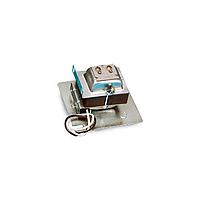
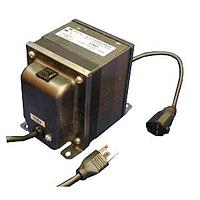
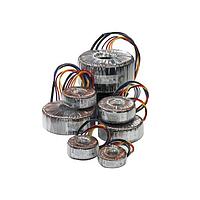
This category covers several functional groups, each serving a distinct purpose. Power transformers are typically used for transferring electrical energy between circuits at the required voltage and current levels. They are common in adapters, embedded power modules, and equipment that needs stable AC conversion or isolated DC power stages.
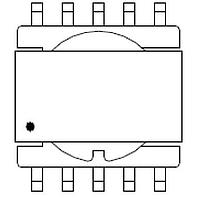
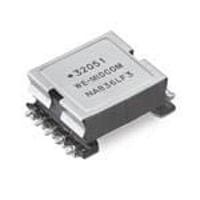
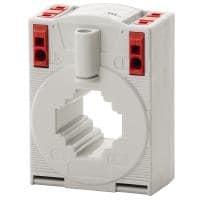
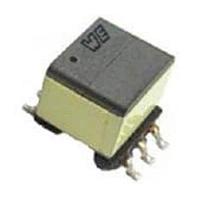
Switching transformers are designed for high-frequency operation in switch-mode power systems, where compact size and efficiency are important. Other transformer families in the broader category include audio and signal transformers for coupling and impedance matching, current transformers for measurement and monitoring, pulse transformers for fast signal transfer, and autotransformers where isolation is not the primary requirement.
Representative products and manufacturers
The available range includes parts from established suppliers such as Bourns, BAUMER, and American Power Conversion. These brands appear across different transformer use cases, from PCB-mounted parts for compact electronics to products intended for broader power applications and support equipment.
Examples in this category include the Bourns TX12-12V Power Transformers, Bourns PCS040-EF1303KS Switching Transformers, and the Bourns PT61018EL telecom transformer for signal-oriented applications. Other listed products such as the BAUMER 2202-0001.C Switching Transformers and American Power Conversion AP9626 Power Transformers illustrate how the category spans both high-frequency conversion and more general power roles.
Several Bourns models also show the variety of form factors and circuit functions available, including the SM51590PEL, PT61017XEL, PFBR45-ST13150S, and HCTSM80101AAL-E1. Rather than choosing by brand alone, buyers typically compare transformer type, intended topology, package style, and how the part fits into the complete system design.
Key factors when selecting a transformer
The first selection step is to define the electrical role of the component. Is the transformer needed for voltage conversion, galvanic isolation, signal coupling, current sensing, or operation in a switching converter? This decision immediately narrows the category and helps avoid comparing parts that serve very different functions.
Next, consider installation and design constraints. PCB space, mounting method, thermal conditions, and frequency of operation all influence suitability. Surface-mount parts may fit compact electronics, while larger assemblies may prioritize insulation spacing, mechanical robustness, or integration into a cabinet-level power path.
For procurement teams, it is also useful to review whether the transformer is part of a wider subsystem. In projects involving backup power, charging stages, or energy storage, related product groups such as battery charger solutions or supercapacitors may affect how the transformer is specified within the overall architecture.
Typical applications across industries
Transformers are found in a wide range of B2B and industrial applications. In control panels and automation hardware, they help isolate low-voltage electronics from higher-power sections. In communication equipment, telecom and signal transformers support line coupling and signal integrity. In embedded systems, switching transformers are central to compact, efficient DC-DC and AC-DC conversion stages.
They also appear in service tools, support hardware, and specialized equipment where power conditioning or interface isolation is required. The variety seen in products from Bourns, BAUMER, Dremel, and American Power Conversion reflects how transformer demand extends from board-level electronics to broader infrastructure and support assemblies.
How to compare options without overcomplicating the shortlist
A practical shortlist usually starts with application fit rather than part number volume. Separate parts intended for signal transfer from those built for power conversion, then compare package style, intended operating mode, and circuit integration. This approach is often more effective than scanning a large list of model names without a functional filter.
It can also help to align transformer selection with adjacent system components early in the process. For projects involving portable, mobile, or transport-related power design, browsing related areas such as eMobility power components may provide better context for electrical architecture, packaging, and system constraints.
Choosing the right category path for sourcing
Because this is a broad technical category, buyers often benefit from starting with the intended transformer function and then narrowing toward the relevant subcategory. That is especially useful when the requirement could fall between power, pulse, current, or signal-oriented designs. A focused search path usually reduces qualification time and leads to more meaningful comparisons.
If you are evaluating manufacturers, it may also be useful to review supplier-specific ranges such as American Power Conversion for relevant power hardware context, while comparing that offering with transformer-focused parts from other listed brands. This is particularly helpful when sourcing for existing approved vendor lists or mixed-brand assemblies.
Final considerations
A well-matched transformer improves safety, compatibility, and long-term system performance. The right choice depends less on broad category labels and more on the actual electrical task, integration method, and surrounding power design. By narrowing the requirement around function first, buyers and engineers can review the available transformer range more efficiently and identify parts that fit the real application rather than the generic name alone.
For teams sourcing components for industrial electronics, OEM production, or maintenance stock, this category provides a useful starting point for comparing transformer types, supported applications, and manufacturer options within a wider power system strategy.
Get exclusive volume discounts, bulk pricing updates, and new product alerts delivered directly to your inbox.
By subscribing, you agree to our Terms of Service and Privacy Policy.
Direct access to our certified experts