Pulse Transformers
Reliable signal transmission in isolated circuits often depends on the right magnetic component. In high-speed communication interfaces, gate drive stages, and switching designs, pulse transformers help transfer pulse-shaped electrical signals while maintaining galvanic isolation, reducing noise coupling, and supporting stable system behavior.
This category is intended for engineers, buyers, and maintenance teams looking for transformer components used in power electronics, interface isolation, and signal coupling applications. Whether you are selecting parts for new designs or sourcing replacements for industrial electronics, understanding how pulse transformers differ from other transformer types makes selection much easier.
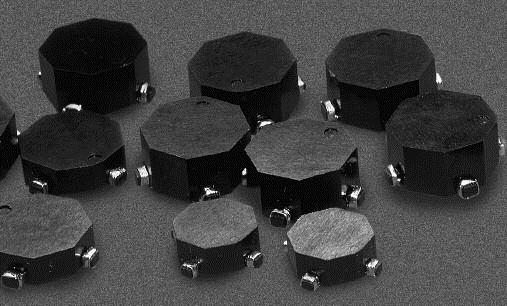
Where pulse transformers are used
Pulse transformers are commonly chosen for circuits that need to pass short-duration signals accurately from one stage to another without a direct electrical connection. This makes them useful in digital communication paths, switching power supplies, control boards, gate drive circuits, and network-related electronics where signal integrity and insulation are both important.
Compared with general-purpose power transformers, these components are typically optimized for transferring pulses rather than continuous bulk power. In many designs, the priority is not only voltage conversion but also rise time behavior, waveform fidelity, isolation, and controlled coupling between primary and secondary windings.
How pulse transformers differ from other transformer categories
Although many transformer families share the same electromagnetic principle, the intended function can be very different. A pulse transformer is generally selected when the circuit must handle fast transitions, repeated switching events, or isolated signal transfer with predictable response.
This is why it helps to distinguish them from nearby categories such as audio and signal transformers or standard power transformers. Audio and signal types are often associated with analog signal conditioning, impedance matching, or frequency-response requirements, while pulse transformers are more closely tied to digital pulses, timing-related performance, and switching-related isolation.
What to consider when selecting a pulse transformer
The right choice depends on the application rather than on a single headline specification. Engineers usually review the required isolation level, signal shape, pulse width, switching frequency, coupling behavior, mounting format, and the electrical environment around the component. In practical terms, the selected part should support the intended waveform without introducing excessive distortion, loss, or unwanted ringing.
It is also important to consider whether the transformer is being used in a communication path, a gate drive circuit, or as part of a compact switching topology. Space constraints, PCB layout, insulation requirements, and thermal conditions can all affect long-term performance. For broader isolation-related requirements in measurement or protection circuits, teams may also compare options from the current transformers range, depending on the role of the magnetic component in the system.
Representative products in this category
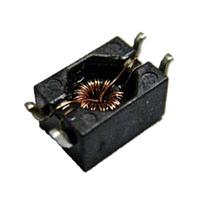
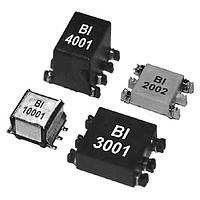
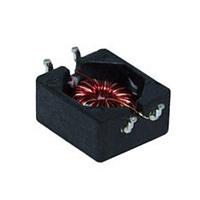
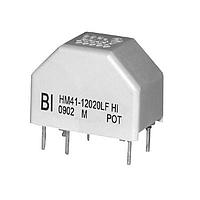
This selection includes parts that illustrate different use cases within the pulse transformer and related transformer ecosystem. For example, the Eaton LAN5VSOS24121C2 Pulse Transformers and Eaton CTX33-18971-R Pulse Transformers are representative of components used where isolated pulse transfer is required in compact electronic designs.
Other listed products help show the wider context of adjacent transformer applications. Items such as Bourns PCS040-EF1303KS Switching Transformers, BAUMER 2202-0001.C Switching Transformers, and Eaton CTX01-15364 Power Transformers demonstrate how designers may evaluate neighboring transformer families when reviewing switching stages, power conversion sections, or magnetics integration across a board-level design.
Manufacturers commonly considered for pulse transformer sourcing
Buyers often compare product availability, form factor, and portfolio depth across established component manufacturers. Within this category context, names such as Eaton, Bourns, BAUMER, Jumo, and Legrand appear in the available product mix and can help guide sourcing for both design-in and replacement needs.
Depending on the project, teams may also review broader manufacturer ecosystems that include magnetics for switching, isolation, and embedded power applications. The right supplier choice is usually influenced by electrical fit, packaging preferences, lifecycle considerations, and procurement continuity rather than by brand alone.
Pulse transformers in switching and interface design
In real-world electronics, pulse transformers are often part of a larger architecture rather than a standalone decision. They may sit near switching controllers, MOSFET or IGBT drive stages, communication interfaces, or industrial control electronics where isolation helps protect downstream circuitry and maintain cleaner signal transfer.
This is also why engineers frequently evaluate them alongside switching transformers and compact magnetics used in SMPS sections. If your application involves repetitive switching energy transfer rather than pulse coupling alone, related products such as Bourns PFBR45-ST13150S, Bourns HCTSM80308BAL-E, Jumo 582220, or Legrand 0 442 84 may be useful reference points when comparing design approaches across transformer families.
Buying pulse transformers for industrial and B2B requirements
For industrial procurement, the selection process usually extends beyond electrical compatibility. Availability, manufacturer consistency, approved vendor strategy, and documentation quality all matter when sourcing components for OEM production, maintenance stock, or scheduled replacement programs.
It is often helpful to narrow the shortlist by application first, then compare transformer category fit, mounting method, and supply continuity. If your project spans multiple signal and magnetic functions, reviewing adjacent categories such as autotransformers or other transformer families can clarify whether pulse isolation, voltage adaptation, or general power conversion is the primary requirement.
Finding the right option for your circuit
A good pulse transformer choice supports signal integrity, isolation, and integration with the surrounding electronics without overcomplicating the design. The most effective way to evaluate this category is to start with the circuit function, then review electrical behavior, packaging, and sourcing factors in parallel.
As you compare the available range, focus on the application role of each part rather than only the product name. That approach will help you identify pulse transformers that are better aligned with communication, control, and switching environments across industrial and electronic B2B projects.
Get exclusive volume discounts, bulk pricing updates, and new product alerts delivered directly to your inbox.
By subscribing, you agree to our Terms of Service and Privacy Policy.
Direct access to our certified experts