RF Transmitter
Wireless links only work as well as their transmit stage. In embedded RF design, the transmitter IC has a direct impact on range, power consumption, modulation flexibility, board space, and overall system compliance strategy. This is why engineers comparing parts for sub-GHz ISM, SRD, or 24 GHz designs usually start by narrowing the transmit architecture rather than looking at frequency alone.
RF Transmitter devices in this category are intended for applications where a signal must be generated and delivered efficiently across a defined radio band. Depending on the design goal, that may mean a compact low-voltage sub-GHz transmitter for remote sensing and control, or a higher-frequency solution for radar-style front ends and specialized wireless subsystems.
Where RF transmitter ICs are used
Transmitters appear in a wide range of electronic systems, from compact industrial wireless nodes to automotive and sensing platforms. In practical terms, designers often look for a device that matches the operating band, supported modulation, supply range, and interface method required by the host controller.
Within this selection, the strongest emphasis is on sub-GHz and ISM-band solutions, along with 24 GHz transmitter devices. That makes the category relevant for applications such as remote controls, telemetry, wireless sensing, low-data-rate industrial links, and radar-related signal generation where frequency stability and integration level matter.
Typical transmitter architectures in this category
Not every transmitter IC is built for the same signal path. Some parts are intended for lower-frequency UHF transmission and support common schemes such as ASK, FSK, OOK, or GFSK, which are widely used in short-range wireless systems. Others are optimized for 24 GHz operation and fit designs that require FMCW or related high-frequency transmit functionality.
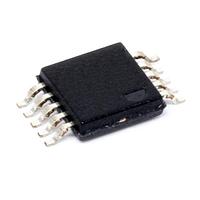
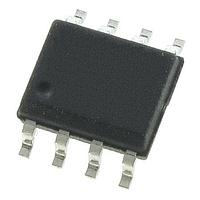
For example, Analog Devices MAX41460GUB+ and MAX41461GUB+T target broad sub-GHz ranges with digital control interfaces, while NXP PCF7900VHN/C0L/UZ focuses on UHF ISM-band use. At the higher end of the spectrum, Analog Devices ADF5902WCCPZ-RL7 and ADF5901 series support 24 GHz transmitter implementations that are more aligned with advanced sensing and radar front-end development.
In systems that also require upstream or downstream RF signal conditioning, related building blocks such as modulator / demodulator devices or phase detectors and shifters may be part of the broader signal chain.
Key selection factors for engineers
The first filter is usually operating frequency. This category includes parts covering bands such as 300 MHz to 960 MHz, fixed UHF ranges like 315 MHz or 902 MHz to 928 MHz, and 24 GHz solutions. Frequency choice should always reflect regional band planning, antenna design, link budget, and the intended wireless protocol or proprietary scheme.
The second factor is modulation support. A transmitter that offers ASK or OOK can be suitable for straightforward low-data-rate links, while FSK or GFSK may be preferable when better robustness or spectral efficiency is needed. Parts such as the MAX41464GUB+T and MAX41460GUB+ illustrate how interface and modulation options can influence firmware design and system flexibility.
Power and integration also matter. Engineers often compare output power, current consumption, voltage range, and package style together rather than in isolation. In compact embedded designs, SMD/SMT packaging and low-voltage operation are especially important because they affect layout density, power-tree design, and thermal margin.
Examples from leading manufacturers
Analog Devices is strongly represented in this category, particularly for sub-GHz transmitter ICs and 24 GHz RF solutions. Devices such as MAX2902ETI+ and MAX2903ETI+ are positioned around the 902 MHz to 928 MHz range, while the ADF5901 and ADF5902 families address high-frequency transmitter requirements in more specialized systems.
NXP contributes UHF transmitter options such as OL2385AHN/001A2Y and PCF7900VHN/C0L/UZ, both relevant when designers need compact RF transmit functionality for established wireless bands. Microchip Technology also appears with the ATA8401C-6AQY-66, a PLL transmitter IC suited to industrial UHF design scenarios where ASK or FSK signaling is part of the requirement.
Semtech is another useful reference point in this segment, with the SX1223I073TRT showing how integrated transmitter devices can fit specific narrowband or low-power RF implementations. Across these manufacturers, the practical choice depends less on brand preference and more on band coverage, interface expectations, and how much RF integration the rest of the board already provides.
Integration considerations beyond the transmitter itself
An RF transmitter IC should not be selected as a standalone part without considering the surrounding RF path. Matching networks, filters, shielding, PCB stack-up, antenna topology, and control firmware all influence whether the finished design achieves the required radiated performance. Even a well-specified transmitter can underperform if the board-level implementation is weak.
For this reason, engineers often review adjacent RF components during part selection. Depending on the design, it may be useful to evaluate RF multiplexers for signal routing or RF shields to help manage interference and layout sensitivity in dense assemblies.
How to compare sub-GHz and 24 GHz options
Sub-GHz transmitters are commonly selected for longer-reach, lower-data-rate, and power-sensitive systems. They are often easier to integrate into compact wireless products where cost, battery life, and practical range are central design priorities. Devices in the 300 MHz to 960 MHz span are therefore common in remote command, telemetry, and industrial wireless signaling.
By contrast, 24 GHz transmitter ICs belong to a different class of RF design. They are more relevant when the application centers on high-frequency sensing or radar-style functionality, where waveform generation, channel structure, and front-end integration become more specialized. Comparing these two groups directly is less useful than matching each family to the intended system architecture.
Choosing the right RF transmitter category for your design
This category is best approached as a design filter: start with frequency band, then narrow by modulation method, host interface, supply range, and operating temperature. From there, review package style and current profile to confirm that the device fits the mechanical and electrical constraints of the target hardware.
If your project needs compact UHF or sub-GHz transmission, options from Analog Devices, NXP, Microchip Technology, and Semtech provide several practical starting points. For higher-frequency development, the 24 GHz devices in this range help support more advanced RF front ends. A careful part-by-part comparison will make it easier to align the transmitter IC with the rest of the wireless system, from digital control to board-level RF performance.
Get exclusive volume discounts, bulk pricing updates, and new product alerts delivered directly to your inbox.
By subscribing, you agree to our Terms of Service and Privacy Policy.
Direct access to our certified experts