Photodiodes
When a design needs to convert light into a measurable electrical signal, the choice of sensor affects everything from detection speed to spectral response and board layout. Photodiodes are widely used in industrial electronics, instrumentation, automation, and embedded systems because they offer a direct and reliable way to detect visible light, infrared, or near-infrared energy.
On this category page, you can explore devices suited to different optical sensing tasks, whether the priority is fast response, compact SMD assembly, through-hole integration, or sensitivity around common IR wavelengths such as 850 nm, 880 nm, 900 nm, and 950 nm. This makes the category relevant for engineers working on object detection, optical communication subsystems, measurement instruments, and custom sensor interfaces.
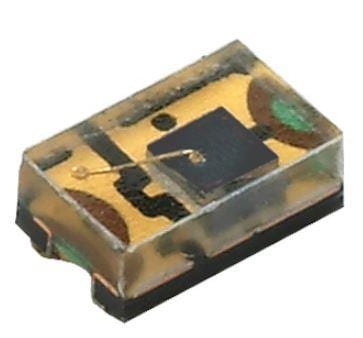
Where photodiodes fit in optical sensing systems
A photodiode is a semiconductor device that generates current when exposed to light. In practical circuits, it is often paired with amplification, filtering, or signal-conditioning stages so that a controller, analog front end, or measurement device can interpret the incoming optical signal accurately.
These components are commonly selected for applications where fast light detection and stable response matter more than human-visible indication. In broader optical system design, they are often used alongside optical transmitters when building emitter-receiver pairs, reflective sensing arrangements, or IR communication links.
Key selection factors for engineers and buyers
The most important starting point is wavelength compatibility. Many products in this category are optimized for infrared or near-infrared detection, which is especially useful in emitter-based sensing systems. If your source operates near 880 nm, 900 nm, or 950 nm, choosing a photodiode with matching spectral sensitivity helps improve signal quality and reduce unnecessary optical loss.
Package style is also critical. Surface-mount devices support compact PCB layouts and automated assembly, while through-hole parts can be easier to position in prototypes, test fixtures, or mechanically aligned housings. Response time, dark current, viewing angle, and sensitivity should also be considered together, not in isolation, because the right balance depends on whether the design is measuring ambient light, detecting pulses, or monitoring a controlled optical beam.
Typical product formats available in this category
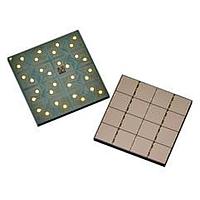
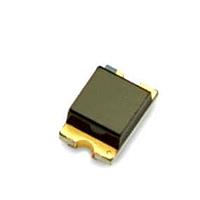
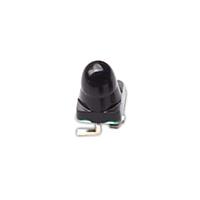
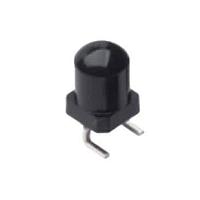
This category includes both SMD and through-hole photodiodes, giving designers flexibility across new product development and maintenance projects. Through-hole options such as the ams OSRAM SFH203PFA or SFH205FA can be suitable where mechanical alignment, leaded assembly, or discrete optical positioning is important. SMD formats such as the ams OSRAM BP104FASR or BPW34S-Z help support lower-profile layouts and denser boards.
There are also parts with different optical characteristics, including broadband silicon PIN designs and versions intended for narrow application windows around IR wavelengths. For example, the ams OSRAM SFH2202 TOPLED/Broadband Silicon PIN Photodiode is relevant where broad optical response is needed, while parts such as the Q62702P0956 and BPW34FS-Z illustrate how viewing angle, dark current, and package style can vary within the same technology family.
Representative manufacturers and product examples
ams OSRAM is strongly represented in this range, with multiple photodiode options covering different mounting styles, sensitivity levels, and response characteristics. Examples include the SFH2270R for compact SMD use, the SFH235FA for 900 nm detection in a through-hole format, and the BPW34FS-Z for applications where an SMD package and controlled optical behavior are preferred.
Broadcom also appears in the category with devices such as the SPD2004-GP Photodiodes, giving buyers another recognized source for optical receiver components. Depending on project requirements, engineers may compare package format, intended wavelength range, and interface constraints before standardizing on a preferred series.
Common application areas
Photodiodes are used in many kinds of industrial and electronic equipment. Typical use cases include beam interruption sensing, position detection, optical counters, laboratory instruments, encoder subsystems, and IR receiver stages. In automation environments, they can support fast switching and non-contact detection where electrical isolation through an optical path is useful.
They are also relevant in products that process light more intelligently at the signal level. If the application needs integrated processing rather than a raw photocurrent output, related technologies such as photo IC sensors or light to digital converters may be worth reviewing alongside discrete photodiodes.
How to narrow down the right photodiode
Start with the optical source and measurement method. If the system uses an IR LED, check the emitter wavelength first, then shortlist photodiodes with suitable spectral response. Next, define whether the signal is continuous, modulated, or pulsed, because high-speed detection requirements can push the design toward parts with very short rise and fall times.
Then look at mechanical and electrical constraints: mounting type, available board space, operating temperature range, and dark current tolerance. In low-light or precision sensing applications, small leakage current and stable response may matter more than package cost. In higher-volume designs, assembly preference and component availability can become equally important.
Related optical sensor categories to compare
Some projects begin with a photodiode and later evolve toward a more integrated optical sensing approach. For environmental brightness measurement, ambient light sensors may be a better fit than a discrete detector. For compact interruption sensing in machinery or motion systems, slot-based assemblies can simplify emitter-receiver alignment compared with building the optical path from separate parts.
That comparison is often useful during early design reviews, especially when deciding between a flexible discrete architecture and a more application-focused optical sensor solution.
Choosing with confidence
This photodiode category is intended for engineers, OEM buyers, and technical sourcing teams looking for dependable light-detection components across a range of wavelengths, package formats, and response profiles. Whether you are building an IR sensing stage, updating an existing board, or evaluating options for a new optical subsystem, the most effective choice usually comes from matching the device to the optical source, signal speed, and mechanical design constraints.
By reviewing wavelength fit, package style, response time, and current characteristics together, you can narrow the selection more efficiently and identify parts that align with real application needs rather than generic specifications alone.
Get exclusive volume discounts, bulk pricing updates, and new product alerts delivered directly to your inbox.
By subscribing, you agree to our Terms of Service and Privacy Policy.
Direct access to our certified experts