Thermal Management
Controlling heat is a practical requirement in modern electronics, power systems, industrial devices, and embedded equipment. When temperatures rise beyond the intended operating range, performance can drift, component life can shorten, and overall system reliability can suffer. A well-planned thermal management strategy helps maintain stable operation by combining heat dissipation, airflow, temperature sensing, and protective elements that fit the needs of the application.
This category brings together thermal solutions used across board-level designs, enclosures, power conversion assemblies, LED systems, and industrial hardware. Whether the priority is passive cooling for compact electronics or a broader temperature-control approach for demanding environments, the right combination of parts can make integration easier and long-term maintenance more predictable.
Why thermal control matters in electronic and industrial systems
Heat is one of the most common limiting factors in electronic design. Semiconductor devices, power packages, LEDs, controllers, and enclosed systems can all generate concentrated thermal loads during normal operation. If that heat is not transferred away efficiently, designers may face derating, unstable behavior, or premature failure of nearby components.
Effective heat dissipation is not only about lowering surface temperature. It also affects system efficiency, mechanical layout, safety margins, and service life. In many applications, thermal design needs to be considered alongside related categories such as circuit protection, especially where temperature rise may influence electrical stress and system safety.
Core product groups within thermal management
Thermal management typically includes more than one type of component. Passive devices such as heat sinks move heat from a package into the surrounding air, while active cooling devices such as fans and blowers improve airflow and lower thermal resistance under heavier loads. Temperature sensors, thermostats, thermistors, and thermal cutoffs then help monitor or control the thermal condition of the system.
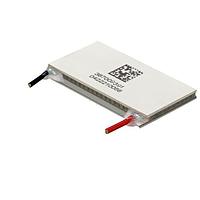
In more advanced assemblies, engineers may also use thermal interface materials, heat exchangers, cold plates, liquid cooling hardware, recirculating chillers, or thermoelectric modules. Each approach serves a different operating window, from simple natural convection cooling to tightly managed temperature control in more demanding equipment.
Passive and active cooling in real designs
A passive solution is often preferred when designers want simplicity, low maintenance, and silent operation. Products such as the Aavid TV-1500 Heat Sink Passive TO-220 Twisted Screw 14.2C/W Black Anodized and the Aavid 534302B03553G Heat Sink Passive Vertical Thru-Hole 10.4C/W Black Anodized illustrate the kind of board-level and package-level cooling used for devices such as TO-220 components. These parts are typically selected based on package compatibility, mounting style, available space, and expected thermal resistance.
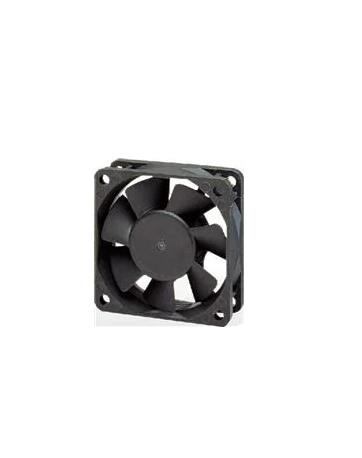
When natural convection is not enough, active airflow can significantly improve cooling performance. Examples in this category include the Aavid PEAD28038BH PF00 DC AXIAL FAN FLANGE MOUNT, Aavid PEAD28038BH MF00 DC AXIAL FAN FLANGE MOUNT, and Aavid PEAD28025BM PF00 Blowers and Fans. In practical terms, fans and blowers are often chosen when enclosure density increases, ambient temperature is elevated, or the design needs a lower junction temperature than passive cooling alone can provide.
Representative solutions from Aavid and related thermal ecosystems
Among the featured manufacturers, Aavid is especially relevant in this category because its portfolio spans multiple cooling approaches. The listed products show a mix of passive heat sinks, fan-based cooling, and accessories such as the Aavid 6110G1BD Thermal Management Accessories. That kind of range is useful when a project requires not just a single part, but a broader thermal path that includes mounting, airflow, and mechanical integration.
Other manufacturers shown for this broader components landscape, such as 3M or Advanced Energy, may also be relevant depending on the surrounding system design and material choices. In many cases, thermal performance is closely tied to neighboring hardware decisions, including mechanical interfaces and connectors used in compact or enclosed assemblies where airflow and routing space are limited.
How to choose the right thermal management approach
The first step is to understand the heat source and the allowable operating temperature. Engineers usually evaluate the power being dissipated, ambient temperature, airflow conditions, physical orientation, mounting method, and the thermal path from the device junction to the environment. For board-level packages, a compact vertical or clip-mounted heat sink may be enough; for denser assemblies, active cooling or a more advanced cooling method may be necessary.
It is also important to consider installation constraints. A solution that looks thermally effective on paper may be difficult to mount, too tall for the enclosure, or incompatible with nearby components. Accessories and supporting hardware can therefore be just as important as the primary cooler itself, especially when vibration, service access, or mechanical retention must be addressed in the final build.
Applications across electronics, power, and industrial equipment
Thermal management components are used in a wide range of systems, including power supplies, motor drives, industrial control electronics, LED assemblies, computing hardware, telecom equipment, and embedded devices. In these applications, designers are often balancing performance, reliability, noise, and footprint at the same time. A compact passive heat sink may work well in one enclosure, while another system may need forced-air cooling or more active thermal control.
Temperature-related design choices also influence maintenance planning and field reliability. For example, systems installed in harsh or variable environments may need a combination of cooling hardware and temperature sensing to detect abnormal conditions early. Where serviceability matters, it can also be useful to review support categories such as kits and tools for assembly, installation, or maintenance workflows.
Building a more reliable thermal design
A strong thermal design is usually the result of system-level thinking rather than selecting a single part in isolation. Heat source location, airflow path, enclosure layout, package style, and control logic all contribute to the final outcome. Even straightforward products such as the Aavid 437469 Heat Sinks, Aavid 6399BP2G Heat Sinks, Aavid 2286BG Heat Sinks, or Aavid SW63-2 Heat Sinks are most effective when matched to the actual thermal load and installation conditions.
For buyers and engineers sourcing parts, this category provides a practical starting point for comparing passive cooling, active airflow, sensing, and supporting thermal components. If your design needs dependable temperature control from board level to larger assemblies, reviewing the available options here can help narrow the right fit for performance, space, and operating environment.
From simple aluminum heat sinks to fan-assisted cooling and thermal accessories, the right choice depends on how heat moves through your system in real use. By aligning the cooling method with package type, airflow, and application demands, it becomes easier to build electronics and industrial equipment that operate more consistently over time.
Get exclusive volume discounts, bulk pricing updates, and new product alerts delivered directly to your inbox.
By subscribing, you agree to our Terms of Service and Privacy Policy.
Direct access to our certified experts