Audio / Video / RCA Cables
Reliable signal transmission matters anywhere audio and video equipment has to work without interruption, whether in industrial HMIs, test benches, medical programming setups, communication systems, or commercial electronics. Choosing the right cable is not only about connector shape; it also affects signal integrity, installation flexibility, and long-term durability. This is where Audio / Video / RCA Cables become an important part of a broader cabling infrastructure.
On this page, buyers can explore cable options used for video, audio, and interface-level signal transfer across different devices. The range may include application-specific assemblies for display connectivity, adapter-style solutions, and specialized programming cables, making the category useful for engineers, procurement teams, and maintenance professionals who need dependable interconnects rather than generic consumer cabling.
Where this cable category fits in real applications
In practical environments, audio and video cables are often selected to connect displays, operator interfaces, control systems, communication accessories, and service tools. Depending on the installation, the requirement may be straightforward video transmission between compatible ports, or it may involve more specialized assemblies designed for programming, field communication, or rugged equipment interfaces.
Compared with standard office cabling, industrial and technical use cases usually demand more attention to connector retention, cable length, shielding, and compatibility with the equipment already in service. For buyers comparing broader options, related solutions such as computer cables may also be relevant when the application extends beyond conventional audio/video connections.
Common cable types found in this range
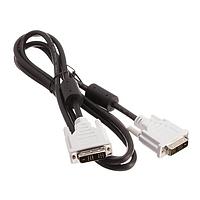
This category can cover several signal-oriented formats rather than a single connector family. One common example is DVI-based cable assemblies, which are widely used for display connections in control, instrumentation, and legacy digital video systems. Depending on the exact version, they may support different pin counts, interface styles, and cable constructions.
Products such as the Amphenol DDD-25AMMM-SL7A05 and DDD-25AMMM-SL7A02 illustrate typical DVI cable assembly options with different lengths for layout flexibility. The Amphenol DID-29AMMM-SL7A01 and DID-29AMMM-SL7A05 represent DVI-I style assemblies, while the Amphenol DDS-19AMMM-SL7A05 is an example of a DVI-D oriented cable configuration. These examples help show how connector format and cable length can change selection criteria even within the same signal family.
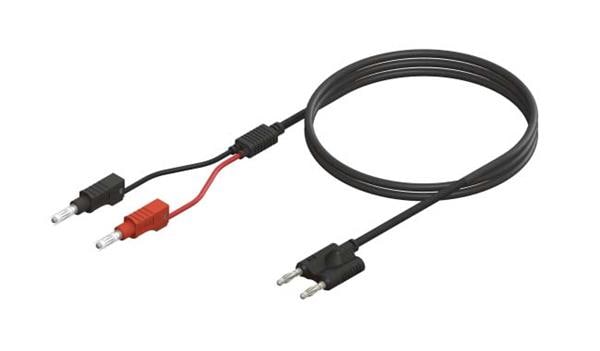
Some items in the category may also serve specialized communication or service functions rather than standard display use. Knowles hearing aid programming cables and the 3M PELTOR radio adapter cable are good examples of assemblies designed for specific equipment ecosystems, where connector compatibility and intended use are more important than broad interchangeability.
How to choose the right audio or video cable assembly
The first step is to confirm the connector interface on both ends of the connection. A cable that looks similar mechanically may still be unsuitable if the pin configuration, signal type, or mating format does not match the target devices. In procurement workflows, checking both connector type and equipment documentation helps avoid unnecessary returns or integration delays.
Cable length is the next practical factor. A shorter assembly can help reduce slack and simplify panel or bench routing, while a longer cable may be necessary for cabinet-to-display or equipment-to-equipment runs. In this category, examples range from compact 1 m options such as the Amphenol DID-29AMMM-SL7A01 to longer 5 m assemblies like the Amphenol DDD-25AMMM-SL7A05 and DID-29AMMM-SL7A05.
It is also worth looking at construction details that support long-term use, such as contact plating, conductor material, and strain-relief design where available. Gold-plated contacts and copper alloy contact materials, as seen in several listed Amphenol cable assemblies, are relevant features when stable mating performance and reliable signal transfer are important over repeated use cycles.
Specialized and application-specific cable assemblies
Not every product in this category is intended for general-purpose AV routing. Some cable assemblies are built around a very specific device family or operating scenario, which is common in professional and technical markets. In these cases, the value of the cable lies in correct mating, trusted fit, and compatibility with the equipment workflow.
For example, several Knowles programming cable models in this range are associated with hearing aid programming applications. Likewise, the 3M Electronic Specialty 7100065594 adapter cable is designed for a defined radio adapter use case. These kinds of products highlight why category-level browsing is helpful: buyers can find both mainstream display interconnects and narrower application-specific assemblies in one place.
Manufacturer perspective and build quality considerations
Brand matters in cable assemblies because consistency in materials, termination quality, and connector fit can affect installation performance and service life. Within this category, Amphenol appears prominently with multiple DVI cable options covering different lengths and interface variants, making it a practical reference point for buyers sourcing display-related assemblies.
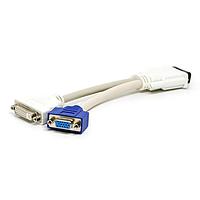
Amphenol Aerospace adds another useful perspective with a video cable assembly such as CA-628485-E81, which reflects the need for more application-focused connectivity between dissimilar interfaces. Other featured manufacturers, including 3M Electronic Specialty and Knowles, reinforce that this category is not limited to one usage pattern but supports a broader ecosystem of audio, video, and equipment-specific interconnects.
When to compare with adjacent cable categories
Some projects start in an audio/video cable category but later require a different interconnect type once the exact device ports are verified. If the application involves data I/O, serial-style hardware, or equipment communication rather than display or AV signaling, related categories may offer a better fit.
For example, systems using legacy multipin interfaces may be better served by D-Sub cables, while networked equipment racks, control panels, and distributed devices often require Ethernet-oriented assemblies instead of video cables. Reviewing the installation context, signal path, and mating connectors early can save time during both specification and purchasing.
What buyers should verify before ordering
Before placing an order, it is good practice to confirm the exact connector standard, cable length, and intended application. This is especially important for products with similar naming structures, such as DVI cable assemblies that differ by dual-link format, pin count, or cable distance. Even a small mismatch can prevent proper installation.
Buyers should also consider the operating environment. If the cable will be routed through tighter spaces, moved frequently, or used in a service context, construction quality and mechanical support become more important. For specialized assemblies, the safest approach is to match the cable directly to the target device or system documentation rather than relying only on visual similarity.
Finding the right fit for signal connectivity
A well-chosen cable assembly helps maintain stable signal transfer, simplifies installation, and reduces replacement risk later in the project lifecycle. Whether the need is a DVI display connection, a device-specific programming lead, or an adapter-style assembly for communication equipment, the right choice depends on interface compatibility, physical layout, and application intent.
This category is most useful when viewed as part of a broader connectivity strategy: not just a list of cables, but a set of solutions for linking equipment reliably. By comparing connector type, length, and intended use, buyers can narrow down the most suitable Audio / Video / RCA Cable for their system with greater confidence.
Get exclusive volume discounts, bulk pricing updates, and new product alerts delivered directly to your inbox.
By subscribing, you agree to our Terms of Service and Privacy Policy.
Direct access to our certified experts