Coaxial Cables
Reliable signal transmission starts with choosing the right cable structure, impedance, shielding, and mechanical format for the job. In RF systems, test setups, communication infrastructure, and industrial electronics, Coaxial Cables are used where controlled electrical performance matters just as much as physical durability and installation practicality.
This category brings together cable options used across a wide range of applications, from general 75 ohm distribution lines to low-loss microwave assemblies and unterminated cable for custom termination. Whether you are sourcing for production, maintenance, prototyping, or system integration, the goal is usually the same: stable signal integrity, predictable attenuation behavior, and a cable construction that matches the environment.

Where coaxial cable fits in modern electrical and RF systems
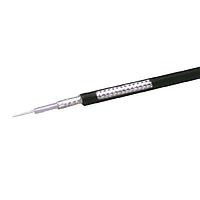
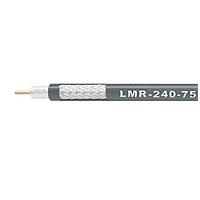
A coaxial cable uses a central conductor, dielectric insulation, shielding, and an outer jacket to carry signals while minimizing interference from the surrounding environment. This design makes it a practical choice for RF distribution, instrumentation, video transmission, antenna feeds, and many embedded or communications-related systems that require controlled impedance.
Compared with more general-purpose wire types, coax is selected when shielding, impedance consistency, and signal containment are important. In projects where different media are evaluated side by side, teams may also compare coax with fiber optic solutions for bandwidth, distance, and installation constraints, depending on whether the signal path is electrical or optical.
Common cable types found in this category
This range includes both classic coaxial constructions and closely related high-frequency cable formats. For example, products such as Belden RG-6/U and RG-59/U variants support familiar transmission use cases, while Molex microwave coax options address applications where smaller gauge, lower loss characteristics, or higher-frequency handling are part of the design brief.
You will also see cable styles intended for custom assembly rather than immediate plug-and-play installation. Molex 1000680107 unterminated coaxial cable is a good example of a format suited to engineers or cable houses that need to terminate to specific connectors or prepare custom lengths. In contrast, a product such as Molex 1001935047 50 OHM 28 AWG FOAM MICROWAVE COAX points toward precision signal applications where impedance and dielectric construction are central considerations.
How to choose the right coaxial cable
The first selection factor is usually impedance. In many applications, 50 ohm cable is associated with RF, wireless, and test environments, while 75 ohm cable often appears in video and signal distribution contexts. Matching cable impedance to the equipment, connectors, and system architecture helps reduce reflections and preserve signal quality.
Next, consider conductor size, shielding approach, jacket material, and overall diameter. A thicker cable may offer lower attenuation or better mechanical robustness, but it can also be less flexible in dense routing environments. Smaller microwave coax constructions, such as Molex 1000671047 29 AWG MICROWAVE COAX, may be appropriate when space is limited, while heavier constructions may be preferred for longer runs or harsher handling.
Installation method also matters. If your team plans to build or terminate assemblies in-house, unterminated bulk cable can be the right fit. If the application involves mixed cable types in the same machine or control panel, it may also be useful to review specialized cables for neighboring requirements outside the coaxial signal path.
Examples from leading manufacturers
This category includes products from established cable suppliers such as Molex and Belden, each serving different use cases within the broader coaxial ecosystem. Molex entries in this range highlight microwave and twinax-oriented constructions, including 1001935086 086 MICROWAVE COAX FOAM 23 AWG, 1000671141 Low Loss Microwave Coax 19 AWG PFA, and 1000680065 32 AWG 100 OHM TWINAX for applications where signal performance and compact routing are key design factors.
Belden products in this category reflect more traditional bulk coaxial formats used in infrastructure and equipment wiring. Examples include Belden 9116P 010U1000 RG-6/U, Belden 533945 0091000, Belden 8281 010500 RG-59/U, and Belden 82241 877U500. These product types are often considered when buyers need known cable families, spool quantities, and dependable shielding constructions for installation or maintenance work.
Application considerations for industrial and technical buyers
For OEMs, panel builders, system integrators, and maintenance teams, coaxial cable selection is rarely only about electrical rating. Routing space, bend handling, environmental exposure, and connector compatibility all influence the final decision. A cable that performs well in a lab bench setup may not be ideal for repetitive movement, long conduit runs, or field installation conditions.
Temperature exposure and surrounding cable density can also affect planning. In mixed installations, coax may be installed alongside power, control, and sensor wiring, so organization and cable management become part of the system design. Where broader harness organization is part of the project scope, related accessories such as cable ties can support cleaner routing and easier serviceability.
Coaxial cable, microwave coax, and twinax in the same sourcing workflow
Although coaxial cable is the main focus here, buyers often encounter adjacent cable formats during specification review. Microwave coax is typically chosen for higher-frequency signal paths where loss control and impedance stability are important. Twinax, while structurally different, may appear in the same engineering conversation when differential signaling, compact interconnect design, or specific equipment interfaces are involved.
That is why this category is useful not only for direct replacement purchasing, but also for early-stage design comparison. Reviewing options such as Molex 1001935047, Molex 1001935086, or Molex 1000680065 can help engineers align cable choice with connector strategy, expected signal behavior, and assembly constraints before committing to a final BOM.
What to review before placing an order
Before selecting a cable, confirm the target impedance, required cable length, conductor gauge, shielding style, and jacket material. It is also worth checking whether the project needs bulk spool quantities, boxed cable, or cut-to-length preparation by your own team. These details affect both installation efficiency and downstream termination quality.
If the cable will be used in a measurement, communications, or RF environment, compatibility with the full signal chain should be reviewed carefully. That includes the connector family, expected frequency range, mounting method, and any transition points between cable types. A well-matched cable helps reduce avoidable performance issues later in testing or deployment.
Choosing with application fit in mind
Coaxial cable selection works best when electrical requirements and installation realities are considered together. Some projects need a familiar RG-style cable for distribution and field use, while others call for compact microwave coax or unterminated cable for custom assemblies and high-frequency integration.
By comparing impedance, construction, cable format, and intended use case, buyers can narrow the range quickly and make a more confident choice. This category is designed to support that process with practical options from recognized manufacturers and product types suited to both standard and more specialized signal transmission needs.
Get exclusive volume discounts, bulk pricing updates, and new product alerts delivered directly to your inbox.
By subscribing, you agree to our Terms of Service and Privacy Policy.
Direct access to our certified experts