Ground Wire & Ground Braid
Reliable grounding is one of the quiet essentials of any electrical system. In control panels, machinery, power distribution assemblies, and industrial equipment, the right conductor for grounding helps create a low-impedance path for fault current, supports safety practices, and improves overall system integrity. This is why selecting suitable Ground Wire & Ground Braid matters well beyond simple cable routing.
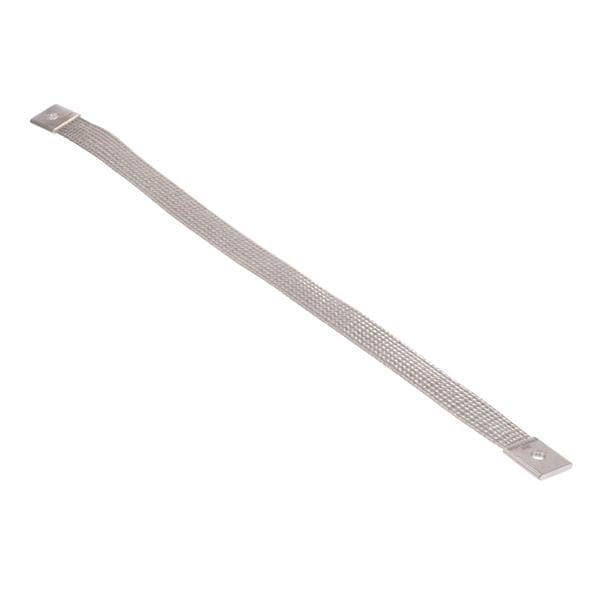
This category is intended for engineers, maintenance teams, panel builders, and sourcing professionals looking for grounding conductors and related termination options for industrial and electrical applications. Depending on the installation, selection may involve conductor flexibility, termination style, stud size compatibility, material choice, and how the grounding path fits into the broader wire and cable system.
Where ground wire and ground braid are typically used
Grounding conductors are commonly used to bond cabinets, machine frames, doors, power equipment, and metallic structures back to a designated grounding point. In many practical installations, a conventional insulated conductor is used for fixed routing, while ground braid is often preferred where flexibility, vibration tolerance, or movement between bonded parts is important.
Typical examples include control enclosures, switchgear, industrial automation panels, power conversion equipment, and OEM machinery. In these environments, the grounding path has to remain mechanically secure and electrically reliable over time, especially where thermal cycling or motion can loosen poor connections.
Why conductor and termination selection should be considered together
When specifying a grounding solution, the conductor itself is only part of the decision. The termination has to match the wire size, stud or bolt interface, and installation constraints so the completed assembly can be mounted correctly and maintain good electrical contact. That is why lug terminals and power terminals often appear alongside ground wire or braid in real-world designs.
Examples from this category context include termination options from TE Connectivity and Molex, with products covering different stud sizes, conductor sizes, and copper-based constructions. Parts such as the TE Connectivity 710026-8 Lug Terminal 3AWG Tin Plating Copper or Molex 192210239 Lug Terminal 1AWG series illustrate how grounding assemblies are often completed with crimped lug connections rather than bare conductor ends.
Common material and finish considerations
In grounding applications, copper conductors and copper-based terminals are widely used because of their conductivity and mechanical suitability for power and bonding duties. Several representative products in this category context use copper or copper alloy bodies, while tin plating is also common on the terminal surface.
Tin-plated terminations can help support stable contact performance and are widely used in practical electrical assembly work. For buyers and engineers, the important point is not just the base material, but the full interface: conductor type, termination method, contact surface, and the mounting hardware used at the grounding point.
How to choose the right grounding solution
A practical selection process usually starts with the application. For a static internal cabinet connection, a standard ground wire with an appropriate lug may be sufficient. For bonding a cabinet door, moving panel, or equipment section exposed to vibration, a braided grounding strap or flexible braid-based solution may be more appropriate because it can better accommodate repeated movement.
It is also important to match the termination to the conductor size and stud size. The products listed in this category context show a broad range, from smaller stud interfaces such as 8 mm up to larger formats including 12 mm and 12.7 mm, with conductor capacities ranging from 3 AWG and 1 AWG to larger sizes such as 1/0, 3/0, and 4/0 AWG. This range reflects the fact that grounding requirements vary significantly between compact control applications and higher-current bonding or power equipment installations.
- Check the required conductor cross-section or AWG size.
- Confirm the stud or bolt size at the bonding point.
- Consider whether the installation is fixed or subject to movement.
- Review conductor and terminal material compatibility.
- Account for available installation space and bend radius.
Representative products in this category context
Several listed items help illustrate the types of terminations used with grounding conductors. The TE Connectivity 709818-3 Lug Terminals and TE Connectivity 605685-1 Lug Terminals represent lug-style connections used in bonded electrical assemblies. For larger conductors and heavier-duty attachment points, products such as TE Connectivity 325305 Power Terminal and TE Connectivity 327286 Lug Terminals show the kind of format often associated with higher-capacity cable terminations.
From Molex, the 192210228 Lug Terminal 6AWG and 192210239 Lug Terminal 1AWG provide further examples of ring or lug-based terminations matched to specific cable sizes and stud interfaces. These examples should be read as part of a grounding system approach: the wire or braid, the termination, the hardware, and the mounting surface all contribute to final performance.
Fit within the wider wire and cable ecosystem
Grounding products are rarely selected in isolation. In many projects, they are specified alongside routing, bundling, and cable management components so the complete installation remains organized and serviceable. For example, cable ties are often used to secure conductors inside panels, while the main conductor run may depend on suitable hook-up wire elsewhere in the assembly.
For more specialized electrical environments, engineers may also evaluate conductor performance in relation to insulation system demands, temperature exposure, and mechanical routing. In those cases, adjacent categories such as temperature wire and cable or other specialized cable families can help complete the broader design picture without overcomplicating the grounding path itself.
What buyers and engineers should review before ordering
For B2B purchasing, grounding components are often selected under time pressure during panel production, maintenance shutdowns, or replacement cycles. A quick review of the mechanical and electrical interface can prevent mismatches later. Focus on conductor size, stud size, terminal body material, plating, and whether the application calls for a flexible bonding connection or a standard wire run.
It is also useful to confirm how the part will be installed in the field. Crimp tooling, mounting hardware, enclosure layout, and service access can all affect which termination style is practical. This is especially relevant when comparing multiple lug formats from the same supplier family, such as the various TE Connectivity copper and tin-plated terminal options shown in this category context.
Final thoughts
A grounding connection may look simple, but its role in equipment safety, bonding continuity, and dependable electrical performance is significant. Choosing the right ground wire, braid, and termination combination helps create cleaner installations and more dependable long-term results.
Whether you are building new panels, maintaining industrial equipment, or sourcing replacement parts, this category supports a more informed selection process by bringing together grounding-related conductors and compatible terminal options in one place.
Get exclusive volume discounts, bulk pricing updates, and new product alerts delivered directly to your inbox.
By subscribing, you agree to our Terms of Service and Privacy Policy.
Direct access to our certified experts