USB Cables
Reliable USB connectivity matters in more places than office desktops. In industrial panels, embedded systems, test benches, and machine interfaces, cable choice affects signal stability, installation flexibility, and long-term serviceability. This category brings together USB Cables suited to a range of integration needs, from standard interconnects to more ruggedized assemblies for demanding environments.
Whether the requirement is a short internal link, a panel-mount USB extension, or a cable assembly that must tolerate wider temperature conditions, selecting the right format helps reduce downtime and simplifies deployment. The products shown here are especially relevant for engineers, maintenance teams, and OEM buyers looking for practical USB connectivity options within a broader wire and interconnect ecosystem.
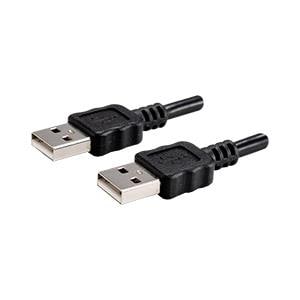
USB cable options for equipment, panels, and system integration
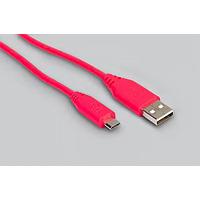
USB is widely used for data transfer, programming, HMI connections, and peripheral communication across industrial and commercial electronics. In these applications, the cable is not just an accessory; it is part of the overall connection path and can influence mechanical fit, routing, and maintenance access. That is why this category includes assemblies with different connector formats, cable lengths, and termination styles.
You will find examples such as USB Type A to USB Type A assemblies, USB Type B options, and receptacle-based configurations that support enclosure or interface integration. Some products are better suited for straightforward equipment connectivity, while others fit applications where sealed or panel-ready designs are useful. For buyers working with broader interconnect requirements, related solutions in specialized cables may also be worth reviewing.
Typical configurations found in this category
The range includes both conventional and more application-specific USB assemblies. Standard-length options can support bench equipment, controllers, industrial PCs, or peripheral links where straightforward USB communication is needed. Shorter lengths, such as 0.3 m or 0.5 m, are often useful inside cabinets or for compact device-to-device connections where excess slack is undesirable.
Several featured products from Amphenol illustrate this variety. Examples include the 10084089-Z0050YYLF and 10084089-Z0300YYLF USB cables, which provide different cable lengths for installation flexibility, as well as USB Type A and Type B cable assemblies intended for practical equipment connectivity. More rugged-oriented items in the USBFTV and USB3F TV family are relevant when a more durable interface approach is needed.
How to choose the right USB cable
A useful starting point is the connector type. USB Type A to Type A assemblies may fit legacy device links, service interfaces, or internal equipment layouts, while Type B formats are common on instruments, printers, and some control hardware. Receptacle-to-plug or receptacle-based assemblies can be helpful when extending a connection to an enclosure wall or operator-access point.
The next factor is cable length. A 0.3 m to 1 m assembly may work well in compact control systems, while 2 m to 5 m options can support more distributed layouts. Buyers should also consider whether the application requires solder, crimp, or pigtail-style integration, especially when the USB path becomes part of a custom harness alongside hook-up wire or other internal wiring.
Finally, review the environmental demands. Some featured cable assemblies list operating ranges up to -40 to 85 °C, which may be relevant in industrial enclosures or outdoor-adjacent equipment. Where repeated handling, vibration, or exposure are concerns, a more robust assembly design can be more appropriate than a general-purpose office-style cable.
Examples of product types in the range
For standard USB interconnect needs, products such as the Amphenol UA-20BFMM-SL7A01, UA-20BFMM-NL7A02, and UA-20AMFM-SL7A02 show how this category supports everyday connector and cable length variations. These are useful examples for buyers comparing plug or receptacle formats, plating options, and common installation styles.
For harsher environments or panel integration, assemblies such as the Amphenol USBFTV2PEMSA2G10A, USBFTV7PEMSA2G03A, USBFTV2SA2N03A, and USB3FTV7SA03GOPEN represent a different part of the ecosystem. These products help illustrate where rugged USB connectivity becomes important, especially in machinery, outdoor electronics, transportation-related systems, or maintenance access points that benefit from stronger mechanical protection.
There are also receptacle-and-cordset style options such as the Amphenol USBFTV2SA2N05A and the USBF TV 2S A 2 G 03 OPEN sealed square flange receptacle with pigtail. These are relevant when USB needs to be brought to a panel or device boundary in a more integration-friendly format.
Where USB cables are commonly used
In B2B and engineering environments, USB cables often support device configuration, firmware loading, data logging, test instrumentation, camera or sensor links, and operator interface connections. They are also common in kiosks, embedded computers, industrial displays, and service ports built into automation equipment. The required cable is often determined less by the USB standard alone and more by the mechanical and environmental demands around the connection.
Routing and cable management should also be considered during installation. In control cabinets or dense electronic assemblies, bundling and strain relief can improve reliability over time, particularly when cables are exposed to repeated access or movement. Complementary products such as cable ties can help organize USB runs and reduce stress at the connector interface.
Why manufacturer and build style matter
Not all USB assemblies are intended for the same operating conditions. A cable selected for a workstation may not be ideal for an enclosure wall, mobile equipment, or an industrial service port. The overall build style, contact system, plating, and operating temperature range can all affect suitability for long-term use in a given installation.
Within this category, Amphenol is especially visible through multiple cable and receptacle assembly options that cover both standard and rugged use cases. Other major manufacturers represented at the broader catalog level, such as 3M, Advantech, and AMP Connectors - TE Connectivity, add context for buyers sourcing connectivity products across different application areas. The goal is to make product comparison easier based on actual integration needs rather than on part naming alone.
Finding the best fit for your application
When narrowing down a USB cable, focus on the application first: connector format, cable length, mounting style, and environmental exposure. Then compare whether the assembly is intended for straightforward device linking or for a more demanding installation that may require sealed or mechanically reinforced construction. This approach usually leads to a more reliable choice than selecting by cable length alone.
If your project involves industrial electronics, embedded hardware, or equipment-level connectivity, this category provides a practical starting point for comparing USB cable assemblies with different form factors and use cases. Review the available options carefully, especially where panel access, ruggedness, and routing constraints are part of the design requirement.
Get exclusive volume discounts, bulk pricing updates, and new product alerts delivered directly to your inbox.
By subscribing, you agree to our Terms of Service and Privacy Policy.
Direct access to our certified experts