Igniter Tester
When resistance must be checked on igniters, squibs, bridgewires, and other sensitive firing circuits, measurement safety matters as much as accuracy. A standard ohmmeter may introduce too much current for these applications, which is why many engineers and maintenance teams look specifically for an Igniter Tester designed around low-current, failsafe measurement principles.
In this category, the focus is on instruments used to verify continuity and resistance without unnecessarily stressing delicate components. These tools are commonly selected for field service, defense-related maintenance, aerospace support, pyrotechnic handling, and any workflow where safe resistance testing is part of the procedure.
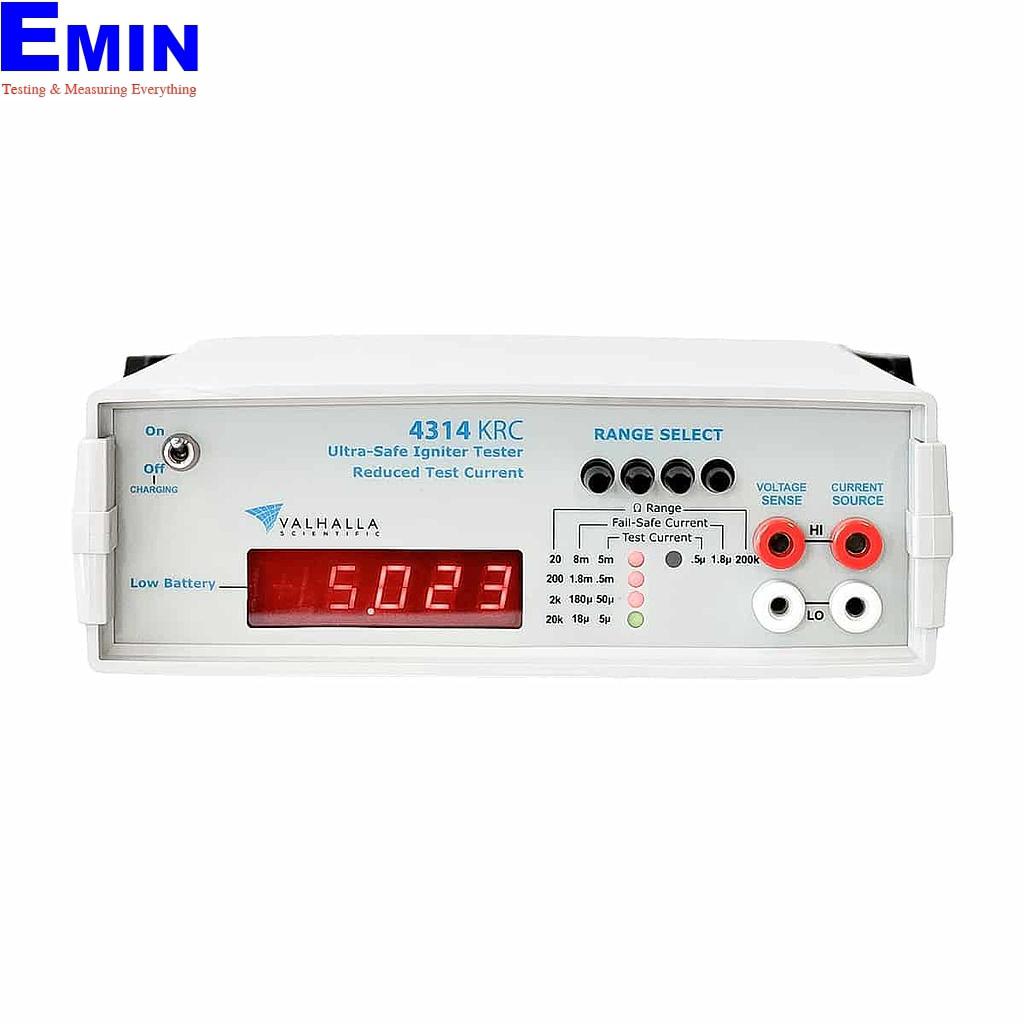
Why igniter testing requires specialized instruments
An igniter circuit is not measured in the same way as general electrical wiring or routine bench electronics. The instrument must control test current, open-circuit voltage, and measurement method so the device under test can be checked reliably while reducing the risk of unintended activation or damage.
This is where failsafe and intrinsically safe designs become important. Compared with a general-purpose multimeter, an igniter tester is typically chosen for controlled low-level resistance measurement, portable operation, and application-specific safety features such as self-test or dedicated terminal arrangements.
Typical applications for an igniter tester
These instruments are used wherever continuity and resistance values must be confirmed before installation, integration, transport, or system readiness checks. Common use cases include testing igniters and firing lines, verifying cable integrity, and checking sensitive resistance paths in maintenance environments where traceable, repeatable readings are required.
They are also relevant in workflows that overlap with broader low-resistance and insulation-related measurement tasks. In some facilities, users may compare their needs with solutions such as earth resistance and resistivity testers, but igniter testing remains a distinct application because the priority is not only resistance measurement, but safe interaction with sensitive initiator circuits.
What to look for when choosing an igniter tester
The first step is to match the tester’s measurement range to the actual components you need to verify. In this category, available examples cover low-ohm measurement for continuity checks as well as wider ranges extending into kilohms and megohms, which can be useful when testing broader circuit conditions or specific assembly requirements.
Connection method is another practical factor. Some models use 4-wire Kelvin measurement to reduce lead and contact resistance effects, which is especially helpful when measuring very low values. Others use 2-wire or specialized terminal formats better suited to field handling, portability, or established procedures.
Buyers should also consider form factor, environmental conditions, and safety philosophy. Portable battery-powered units are often preferred for on-site work, while self-test capability, ruggedized housings, and intrinsically safe designs may be important where reliability and handling discipline are critical.
Representative instruments in this category
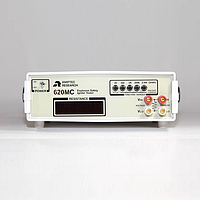
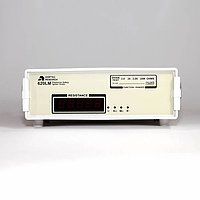
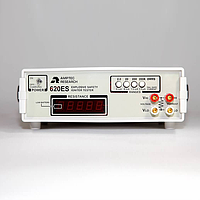
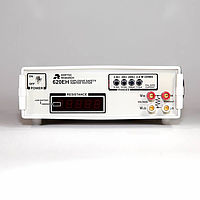
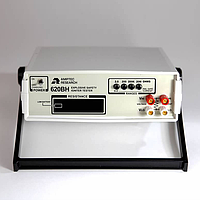
AMPTEC RESEARCH is a key brand represented in this category, with several models aimed at safe low-current resistance measurement for igniter and explosive safety applications. The lineup includes compact, ruggedized, and intrinsically safe options, allowing users to choose based on range, portability, and connection style.
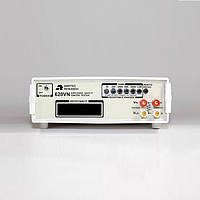
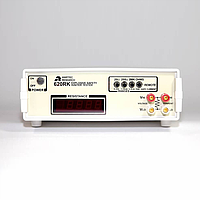
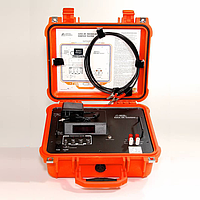
Examples include the AMPTEC RESEARCH 641RS Compact Ruggedized Failsafe Igniter Tester with Self-Test Feature, the 640N Ruggedized Mid Range Failsafe Igniter Tester, and the 620VN Wide Range Digital Failsafe Igniter Tester. For intrinsically safe requirements, models such as the 620VL-T, 620VL, and 620RK provide additional context for buyers working in environments where safety constraints influence instrument selection.
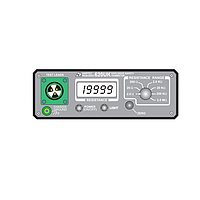
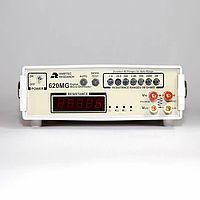
Some nearby products in the wider ecosystem are specialized failsafe ohmmeters rather than dedicated igniter testers, such as the 641N, 630ES, 630BN, 620UK-V4, 620UK, and 620MG. These can be useful reference points when comparing terminal types, range coverage, or low-resistance measurement approaches within the same application family.
Understanding range, resolution, and measurement approach
For many igniter-related tasks, low resistance resolution is essential because small value changes may matter during acceptance testing or troubleshooting. Instruments in this category include examples with fine resolution in the milliohm and micro-ohm region, helping users evaluate continuity and resistance with greater confidence.
At the same time, wider-range models can support workflows that go beyond a single low-ohm checkpoint. A tester spanning from a few ohms up to 2 MΩ may be better suited when assemblies, cables, or connected circuits need broader verification. The right choice depends on whether your priority is ultra-low resistance accuracy, wider diagnostic range, or a balance between the two.
Users comparing instruments for advanced electrical characterization may also review related categories such as SMU semiconductor test equipment. However, that type of instrumentation serves a different purpose; an igniter tester is selected primarily for safe, application-specific resistance measurement in sensitive circuits.
Ruggedized and intrinsically safe options for field work
Many buyers in this category are not working in a controlled laboratory. They need instruments that can be carried to the point of use, operate from internal power, and maintain stable readings in maintenance, staging, or outdoor conditions. That is why ruggedized enclosures and battery-powered designs appear frequently among the featured products.
Intrinsically safe models are particularly relevant when the measurement environment introduces additional operational constraints. In these cases, the instrument design supports safer use around sensitive devices and procedures, while still providing the low-current resistance testing required for verification tasks.
How this category fits within electrical measurement workflows
An igniter tester sits within a broader measurement ecosystem, but it solves a very specific problem: checking resistance in circuits where standard test methods may not be appropriate. For maintenance teams, this often complements other tools used for general troubleshooting, grounding checks, or circuit verification rather than replacing them outright.
For example, a facility may use an igniter tester for sensitive firing-path checks and a ground fault locator for cable fault investigation elsewhere in the system. Keeping the roles clear helps teams choose instruments based on actual test risk, required precision, and operating conditions.
Choosing the right model for your process
If your work centers on delicate low-ohm igniter measurements, a compact failsafe model with fine resolution may be the most practical choice. If you need broader diagnostic flexibility, a wider-range instrument may be more suitable. Where field durability or operating restrictions are major concerns, ruggedized or intrinsically safe versions deserve closer attention.
This category is built for buyers who need more than a generic resistance meter. By focusing on safe current levels, application-specific measurement design, and portable deployment, these instruments support more reliable decision-making when testing igniters and other sensitive resistance-based devices.
Review the available models based on range, terminal configuration, safety approach, and working environment to identify the igniter tester that best matches your maintenance, inspection, or integration workflow.
Get exclusive volume discounts, bulk pricing updates, and new product alerts delivered directly to your inbox.
By subscribing, you agree to our Terms of Service and Privacy Policy.
Direct access to our certified experts