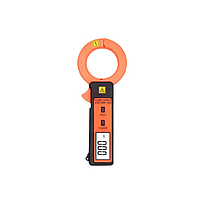
Leakage current tester
Electrical leakage is one of those issues that can stay unnoticed for a long time, then suddenly appear as nuisance tripping, unstable equipment behavior, or unexplained safety concerns. In maintenance, facility management, and electrical troubleshooting, the right leakage current tester helps identify abnormal current paths before they turn into downtime or insulation-related failures.
This category brings together instruments designed for measuring residual and leakage current in low-voltage electrical systems, panels, branch circuits, and connected equipment. Depending on the job, that may mean a clamp meter for fast non-intrusive checks, an RCD tester for protective device verification, or a logger-and-sensor setup for trend analysis over time.
Where leakage current testing is used
Leakage current measurement is relevant in many environments, from commercial buildings and workshops to production lines and utility rooms. Engineers and technicians typically use these instruments when investigating repeated breaker trips, checking insulation condition indirectly, confirming earth leakage behavior, or isolating a fault to a specific feeder or load.
In practical work, the goal is not only to detect whether leakage exists, but to understand how much current is flowing, under what operating conditions it changes, and whether the value is acceptable for the installation. This is especially important in sites with variable-speed drives, switched-mode power supplies, filters, and other electronic loads that can introduce harmonic content and make measurement more demanding.
Main types of instruments in this category
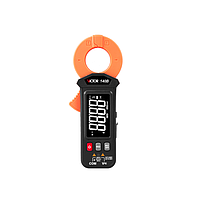
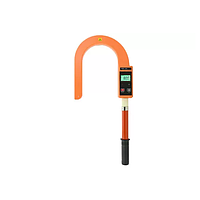
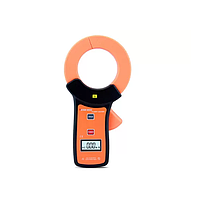
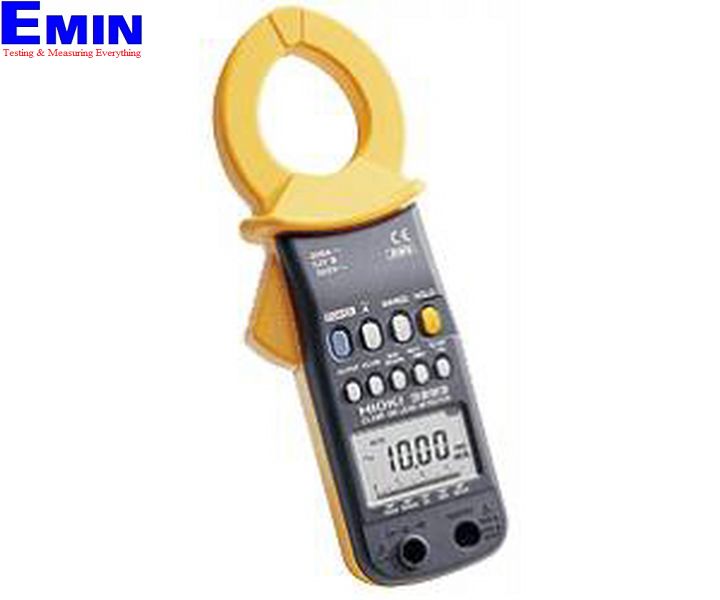
A large part of this category consists of leakage clamp meters. These tools are widely used because they allow current measurement without breaking the circuit. They are well suited to routine inspections, branch-by-branch checks, and troubleshooting in live systems where speed and minimal disruption matter.
For example, models such as the FLUKE 369 FC, FLUKE 368 FC, HIOKI CM4003, KYORITSU 2433R, KYORITSU 2413R, and KYORITSU 2413F illustrate the typical range of portable clamp-style solutions. Within the same category, there are also more specialized instruments such as the KYORITSU 5406A Tester RCD for residual current device testing and the KYORITSU 5050-00 Ior Logger for longer-term leakage analysis and waveform-related evaluation.
Some products also serve as ecosystem components rather than standalone meters. The KYORITSU 8177 and 8178, for instance, are clamp sensors intended to work with compatible analyzers or loggers, making them useful when the application requires dedicated sensing of leakage or resistive leakage components.
What to look for when choosing a leakage current tester
Selection depends heavily on the measurement task. For general maintenance, resolution at the milliamp or even microamp level is important because early-stage leakage may be small but still meaningful. At the same time, many technicians need a meter that can also cover higher current ranges for checking feeders, panels, and mixed load conditions without changing tools.
Another key factor is frequency behavior. In modern installations, leakage is not always a clean 50/60 Hz sine wave. True RMS measurement, extended frequency response, and filtering functions can help distinguish basic leakage from harmonics or noise. Instruments such as the FLUKE 369 FC, FLUKE 368 FC, and HIOKI CM4003 are good examples of portable meters aimed at this kind of field work.
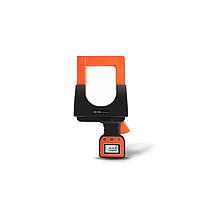
Jaw size also matters more than it first appears. Larger conductors, bundled wiring, and access constraints inside switchboards may require a wider clamp opening. Battery operation, display readability, data hold, logging capability, and safety category ratings should also be considered in relation to the working environment and the type of circuits being tested.
Clamp meters, RCD testers, and loggers serve different jobs
A common mistake is treating all leakage-related instruments as interchangeable. In reality, each type supports a different stage of diagnosis or verification. A clamp meter is usually the first-choice tool for locating leakage on live circuits quickly and with minimal interruption. It helps narrow down whether the issue is on the main incoming side, a branch line, or a specific load.
An RCD tester is more appropriate when the task is to verify protective device trip behavior rather than just measure leakage magnitude. The KYORITSU 5406A fits this use case, where test current levels and trip time evaluation are part of the inspection process.
For applications where leakage changes over time or where separating resistive and total leakage matters, a logger is often the better fit. The KYORITSU 5050-00 Ior Logger, together with dedicated sensors such as the 8177 or 8178, supports a more analytical approach. This is useful in preventive maintenance, root-cause investigation, and sites where harmonic-rich loads make quick spot checks insufficient.
Representative brands and product directions
Several manufacturers in this category are widely associated with portable electrical test and measurement. FLUKE is often selected for field-oriented leakage clamp meters with practical usability, while KYORITSU offers a broad range that spans clamp meters, RCD testers, loggers, and matching sensors for different inspection workflows.
HIOKI is also relevant where users need compact True RMS clamp measurement with broader analysis functions, and Chauvin Arnoux appears in this category through instruments such as the F65 Leakage multimeter clamps, which combine leakage measurement with additional electrical test capability. Brand choice usually comes down to preferred workflow, required measurement depth, site standards, and whether the user needs standalone testing or a larger diagnostic setup.
Related instruments often used alongside leakage testing
Leakage current data becomes much more useful when it is interpreted in the context of the wider electrical system. In many service and maintenance tasks, technicians also rely on an earth resistance tester to assess grounding conditions, especially when investigating protective conductor performance or suspected earth path issues.
A digital multimeter is also commonly used alongside a leakage tester for basic voltage, continuity, and resistance checks during fault isolation. When the problem extends beyond simple branch diagnosis and points to hidden insulation or cable faults, a ground fault locator may be the more suitable next step.
Typical applications across maintenance and inspection
In building services, leakage current testers are used to inspect distribution boards, HVAC circuits, pumps, lighting groups, and office equipment circuits. In industrial settings, they are often applied to motors, heaters, control panels, drives, UPS systems, and machinery with EMI filters, where background leakage can be present even under normal operation.
They are also useful during commissioning, periodic electrical inspection, and troubleshooting of unexplained protective device operation. Because many leakage problems are intermittent, portable clamp meters support quick on-site verification, while loggers help confirm whether the issue is load-dependent, time-based, or related to environmental changes.
Choosing the right category path for your requirement
If the main requirement is fast troubleshooting on energized systems, portable clamp-style instruments are usually the most practical starting point. If the task involves compliance-oriented inspection of protective devices, an RCD tester is the more appropriate route. If the objective is to analyze trends, separate leakage components, or document behavior over time, logger-based solutions with compatible clamp sensors are worth considering.
This category is intended to support those different use cases without forcing a one-size-fits-all approach. By matching the instrument type to the maintenance objective, users can make leakage current measurement more reliable, more repeatable, and more useful in day-to-day electrical diagnostics.
For facilities teams, contractors, and industrial maintenance engineers, a well-chosen leakage current tester is not just a meter for one-off checks. It is a practical tool for improving fault isolation, validating protective behavior, and building a clearer picture of electrical system health over time.
Get exclusive volume discounts, bulk pricing updates, and new product alerts delivered directly to your inbox.
By subscribing, you agree to our Terms of Service and Privacy Policy.
Direct access to our certified experts