
Motor Start, Motor Run Capacitors (AC)
Reliable motor performance often depends on a component that receives far less attention than the motor itself. In HVAC systems, pumps, compressors, blowers, and general industrial drive assemblies, Motor Start, Motor Run Capacitors (AC) help support starting torque, smoother operation, and more stable electrical behavior in single-phase AC motor circuits.
This category is intended for buyers who need to identify the right capacitor type for replacement, maintenance, or new equipment builds. Whether you are sourcing for panel assembly, OEM production, or MRO needs, understanding the difference between start-duty and run-duty parts helps reduce mismatch risk and improve system reliability.
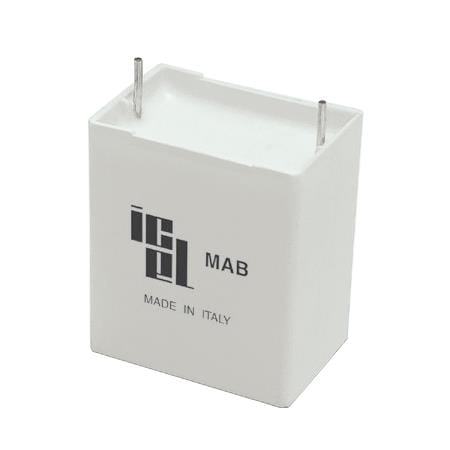
Where AC motor capacitors are used
AC motor capacitors are commonly found in single-phase motor applications where extra phase shift is needed to create starting torque or maintain efficient running characteristics. Typical installations include air conditioning units, ventilation equipment, refrigeration systems, pumps, and other machinery that must start under load or operate with stable torque.
In practical terms, these capacitors support motors that cannot reliably start or run at the required performance level using the supply waveform alone. Selecting the correct part matters not only for electrical compatibility, but also for equipment uptime, service life, and maintenance consistency across installed assets.
Motor start vs. motor run: understanding the difference
Motor start capacitors are designed for short-duration duty during motor startup. Their role is to deliver the temporary boost needed to overcome inertia and help the motor reach operating speed. Once that point is reached, the start capacitor is typically disconnected from the circuit.
Motor run capacitors, by contrast, remain energized during normal operation. They are used to improve running efficiency, support torque characteristics, and contribute to smoother motor behavior. Because the electrical duty is different, start and run capacitors are not interchangeable unless the motor design explicitly allows it.
For buyers handling replacements, the distinction is essential. A wrong substitution can lead to hard starting, overheating, unstable operation, or premature component failure. If your application involves other capacitor technologies outside motor circuits, it can also be useful to compare with options such as ceramic capacitors or aluminum electrolytic capacitors, which serve very different electrical purposes.
What to check when selecting a replacement
The most important starting point is matching the required electrical rating and intended function in the motor circuit. Buyers typically verify capacitance value, AC voltage rating, physical form factor, terminal style, and whether the part is specified for start or run duty. Environmental conditions also matter, especially in equipment exposed to heat, vibration, or long continuous operating cycles.
When reviewing product options, it is also worth checking fit within the broader capacitor ecosystem. Some applications require specialized construction or different packaging than general-purpose parts found in categories such as aluminum polymer capacitors. For motor systems, the selection logic should remain focused on AC motor duty rather than general electronic circuit use.
- Confirm whether the motor requires a start capacitor, a run capacitor, or both.
- Match the nominal capacitance and voltage requirements specified by the equipment design.
- Check mounting constraints, case dimensions, and terminal compatibility.
- Consider operating temperature and expected service conditions.
- For maintenance programs, standardize approved replacements where possible.
How this category fits into industrial sourcing
For B2B procurement teams, this category is often part of a larger maintenance or production workflow rather than a one-off purchase. Motor capacitors may be ordered for field replacement, preventive maintenance stock, contract manufacturing, or integration into finished equipment. That means availability, specification clarity, and consistent part identification are often just as important as the component itself.
Because AC motor systems appear across many industries, purchasing decisions are frequently made by maintenance engineers, electricians, OEM buyers, and technical sourcing teams. A well-structured category helps narrow the search based on intended application rather than forcing buyers to sort through unrelated capacitor families such as other capacitor products that may not suit motor duty.
Representative manufacturers and product references
This category may include solutions associated with established capacitor manufacturers such as KYOCERA AVX, along with other recognized names in the broader capacitor market including KEMET, EPCOS, Murata, Nichicon, TDK, PANASONIC, and Chemi-Con. Brand familiarity can help with sourcing continuity, but the correct selection should still be based on application fit and circuit requirements.
Representative product references in the wider catalog include parts such as KYOCERA AVX 100B181JTN300XT1K, 100C270GW2500XT, 800E471GMS3600X, and 700A1R8BCA150X. These examples show the breadth of capacitor inventory available across different use cases, but buyers should verify that any chosen part is appropriate specifically for AC motor start or AC motor run service before use in a motor application.
Common application considerations for engineers and maintenance teams
In the field, capacitor failure is often investigated together with motor symptoms such as slow starting, humming, reduced torque, overheating, or intermittent shutdown. While the capacitor is not always the root cause, it is a common checkpoint in troubleshooting because its condition directly affects phase shift and motor behavior in many single-phase systems.
For maintenance planning, keeping accurate cross-references and documenting approved replacements can shorten downtime. In OEM or panel-building environments, standardizing component choices across equipment families may also simplify servicing and spare stock management over time.
Choosing with more confidence
A suitable motor capacitor should align with the motor design, operating duty, and installation environment rather than being selected only by appearance or general capacitor type. Paying attention to the difference between start duty and continuous run duty, along with the required electrical ratings, helps avoid costly replacement errors.
If you are comparing options in this category, focus first on function, compatibility, and operating conditions. That approach makes it easier to identify the right AC motor capacitor for maintenance, retrofit, or production use while keeping your sourcing process efficient and technically sound.
Get exclusive volume discounts, bulk pricing updates, and new product alerts delivered directly to your inbox.
By subscribing, you agree to our Terms of Service and Privacy Policy.
Direct access to our certified experts
