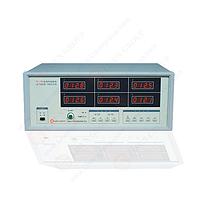
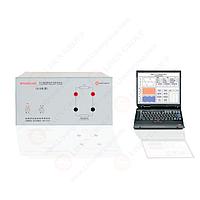
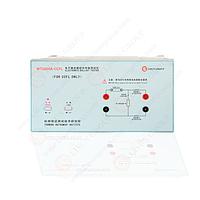
Fluorscent Lamp Tester
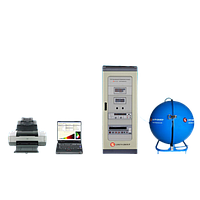
Accurate evaluation of fluorescent lamp systems depends on more than a simple power reading. In laboratory, production, and quality-control environments, engineers often need to verify electrical behavior at both the input and ballast output side, review harmonic content, and capture stable measurement data over time. That is where a Fluorscent Lamp Tester becomes a practical part of a lighting test setup.
This category focuses on instruments used to analyze fluorescent lamp and ballast performance with the level of repeatability expected in technical B2B applications. Whether the goal is product development, incoming inspection, or routine verification, these testers help users measure core operating parameters and compare performance across different lamp configurations.
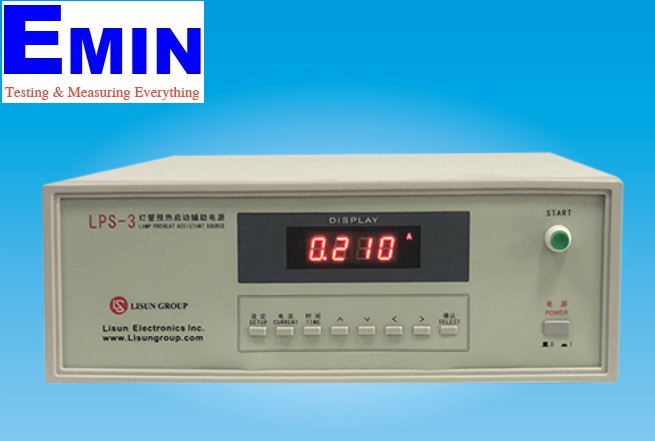
What this category is used for
Fluorescent lamp testing usually involves checking how a lamp operates together with its ballast under controlled electrical conditions. In practice, users may need to evaluate line input values, ballast output behavior, power performance, and waveform-related characteristics that affect stability and compliance testing.
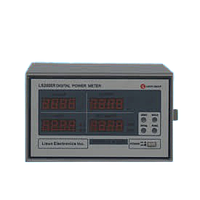
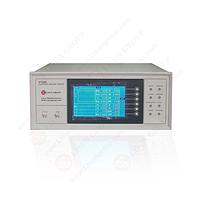
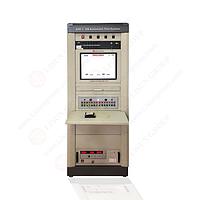
Compared with basic bench measurement using separate instruments, a dedicated tester or ballast analyzer provides a more integrated workflow. This is especially useful when repeatable testing is required for single-tube or multi-tube assemblies, and when historical logging or graphical review of harmonic behavior can support troubleshooting and reporting.
Typical measurement scope in fluorescent lamp and ballast analysis
A well-selected tester in this category is relevant when the application calls for electrical analysis of lamp-ballast systems rather than only visual or photometric inspection. Common measurement needs include voltage, current, and power at the line side, along with corresponding output-side values from the ballast.
Another important area is harmonics and waveform-related assessment. In many lighting test environments, harmonic data can help identify abnormal ballast operation, confirm expected drive conditions, or support product comparison during development. Continuous sampling and data logging are also useful when engineers need to observe performance trends rather than relying on a single snapshot reading.
Representative tester options in this range
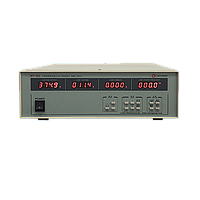
This category includes analyzer models from Vitrek, with configurations designed around different tube counts. For example, the Vitrek 822-2571R Single Tube Ballast Analyzer fits applications centered on one-lamp setups, while the Vitrek 822-2572R supports two-tube testing where paired-lamp operation must be evaluated under the same platform.
For higher-capacity requirements, the Vitrek 822-2573R and Vitrek 822-2574R extend the concept to three-tube and four-tube configurations. Across these examples, the value lies less in tube count alone and more in matching the instrument to the actual DUT arrangement used in your lab, production line, or qualification workflow.
How to choose the right fluorescent lamp tester
The first selection point is the number of lamps or tubes involved in the test fixture. If your work is focused on compact single-lamp validation, a single-tube analyzer may be sufficient. If you routinely handle multi-lamp assemblies, choosing a model aligned with the expected tube count can simplify setup and reduce test variation.
The second point is the required measurement detail. For some users, stable readings of volts, current, and power are enough. Others may also need harmonic review, graphical results, or long-duration logging for investigation and documentation. Interface needs can matter as well, especially in environments where test data must be exported, printed, or incorporated into a broader QC process.
It is also worth considering the rest of the measurement chain. Electrical test results are often interpreted together with optical verification, so teams working on complete lighting evaluation may also review related tools such as light meters or color sensors depending on the scope of the project.
Where these testers fit in lighting workflows
In R&D, a fluorescent lamp tester can help compare ballast designs, verify operating conditions, and identify abnormal electrical behavior before a product moves further in the validation cycle. During manufacturing, the same type of instrument may be used for spot checks, reference testing, or failure analysis when lamp assemblies do not perform as expected.
In service or technical support settings, testers in this category can also support root-cause analysis. If a system shows inconsistent lamp operation, excess power deviation, or suspected ballast-related issues, measured input/output data and harmonic trends provide a much clearer basis for diagnosis than visual inspection alone.
Why integrated ballast analysis matters
Fluorescent lamp systems are influenced by the interaction between the lamp and the ballast, so separating those elements during evaluation can miss important behavior. An analyzer that looks at both sides of the system gives a more complete picture of operating conditions, especially when frequency effects, output variation, or time-based changes need attention.
This is one reason dedicated analyzers remain relevant in technical environments that require repeatability. Instead of building a temporary setup from multiple general-purpose instruments, users can work with a test platform intended for consistent ballast and lamp measurement, helping improve comparability between test runs and reducing setup-related uncertainty.
Related equipment for broader optical and lighting test setups
Electrical analysis is only one part of lamp evaluation. Depending on the application, teams may complement fluorescent lamp testing with additional optical instruments for brightness, UV, or imaging-based inspection. For example, some workflows also involve UV meters when spectral or radiation-related checks are relevant to the broader test environment.
Looking at the full measurement ecosystem can help buyers choose equipment more efficiently. If your process combines ballast analysis with optical verification, reviewing neighboring categories in the same lighting and optical instrumentation range can make it easier to build a practical and scalable test bench.
Choosing with application context in mind
The best fit usually comes from aligning the tester with the actual lamp format, test frequency, reporting needs, and operator workflow. A compact bench setup for routine verification may not require the same capacity as a development station used for comparative analysis and long-run data capture.
Within this category, the available fluorescent lamp tester options are best viewed as tools for structured electrical evaluation of lamp-ballast systems. By selecting the right tube configuration and measurement depth, buyers can support more reliable testing, clearer diagnostics, and better consistency across lighting product assessment.
Get exclusive volume discounts, bulk pricing updates, and new product alerts delivered directly to your inbox.
By subscribing, you agree to our Terms of Service and Privacy Policy.
Direct access to our certified experts