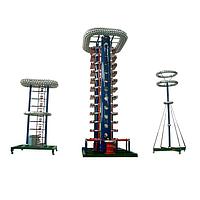
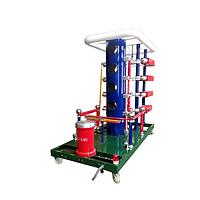
Impulse Test System
When insulation faults are intermittent, buried, or difficult to pinpoint with conventional methods, a controlled high-voltage impulse test can provide the extra diagnostic clarity needed. On medium- and high-voltage cable networks, this type of equipment is widely used to identify weak points, support fault location workflows, and verify cable condition before maintenance decisions are made.
Impulse Test System solutions in this category are intended for electrical testing environments where pulse energy, DC testing capability, and practical field operation all matter. They are especially relevant for utilities, cable service teams, maintenance contractors, and industrial plants that need dependable tools for troubleshooting underground cable faults and related insulation problems.
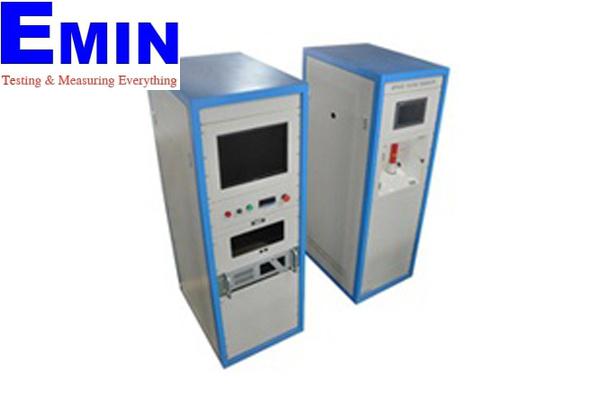
Where impulse testing fits in electrical diagnostics
An impulse-based test system is commonly used when technicians need to apply a high-voltage surge to a cable in order to reveal or locate a fault. In practice, this approach is often part of a broader cable testing workflow that may also involve insulation verification, sheath testing, or follow-up measurements using other specialized instruments.
For applications that require broader dielectric evaluation, teams may also work alongside instruments such as a Very low frequency tester (VLF) or equipment for withstand voltage testing. These categories serve different diagnostic purposes, but together they help build a more complete picture of cable condition and insulation performance.
Typical functions users look for in this category
Most buyers in this segment are not simply comparing model names; they are evaluating the combination of impulse voltage range, pulse energy, DC testing capability, burn mode, and ease of field deployment. The right balance depends on cable class, fault characteristics, and whether the instrument will be used mainly for surge testing alone or as part of a multi-step fault investigation process.
Within the products shown here, there are configurations covering different voltage ranges such as up to 16 kV and up to 32 kV, with energy levels including 1000 J and 2000 J depending on model. Some versions also include DC test mode and optional sheath testing, which can be useful when maintenance teams want one platform to support more than one stage of cable assessment.
Representative systems available in this range
Several listed models from MOTWANE illustrate how this category is structured. For example, the MOTWANE SWT 32DPTS High Voltage Surge Tester and MOTWANE SWT 32DPT High Voltage Surge Tester are designed for higher-voltage surge testing applications, while the SWT 16D2PTS and SWT 16DPT variants address lower voltage ranges within the same product family logic.
There are also models that separate pure surge functionality from more versatile test capability. Units such as the MOTWANE SWT 32DS or SWT 32D focus on surge testing needs, while models like the SWT 32CPTS, SWT 32DPTS, or SWT 16DPTS add features such as DC test mode and optional sheath testing. This distinction matters when selecting equipment for routine fault location versus more flexible cable diagnostic work.
How to choose the right impulse test system
The first selection factor is the cable system you need to work on. Voltage class, cable length, installation environment, and the expected nature of faults all influence the required test output. A system intended for 16 kV applications may be appropriate for some field tasks, but networks requiring higher surge levels may call for a 32 kV class instrument with greater energy delivery.
The second factor is workflow. If your technicians only need surge generation for fault stimulation, a simpler configuration may be enough. If they also need DC test mode, controlled burn current, or optional sheath testing, then a broader-function unit may reduce the need for multiple separate instruments and improve efficiency during field service.
Portability and operating conditions also deserve attention. In real service environments, dimensions, weight, power input compatibility, cable accessories, and durability affect how practical the system is to transport and deploy. These operational details are often just as important as headline voltage figures, especially for teams working across multiple sites in one day.
Understanding product differences without overcomplicating the decision
Many products in this category follow a family structure, where the main differences relate to output range, stored energy, and added test functions. In the listed MOTWANE range, the jump from 1000 J to 2000 J can be significant for applications that need stronger impulse energy, while the presence or absence of an ARM module may matter for users integrating the system into a more advanced fault location process.
It is also important to separate optional or supplementary features from core requirements. Not every job needs sheath testing, and not every maintenance team requires a combined surge and DC platform. A clear understanding of your test sequence helps avoid overspecifying the equipment while still ensuring enough capability for the cable types and fault scenarios encountered in practice.
Brand and ecosystem context
This category includes solutions from recognized manufacturers active in electrical testing and cable diagnostic equipment, including BAUR, HILO-test, LEAPTRONIX, MOTWANE, EPHIPOT, MultiTech, and Puton. Depending on the project, buyers may compare platform philosophy, portability, service familiarity, or compatibility with other instruments already used in the field.
In many maintenance programs, impulse testing does not operate in isolation. It may be complemented by equipment such as a high-voltage or step-up transformer for other test setups, or by a capacitance and tan δ meter when deeper insulation condition analysis is required. Looking at the full test ecosystem can help purchasing teams choose equipment that fits both immediate fault location tasks and longer-term asset management needs.
Common applications in the field
Cable fault location is the most obvious use case, especially on underground power cables where visual inspection is impossible. By applying a controlled impulse, technicians can trigger the fault in a way that supports downstream location methods and speeds up repair planning.
These systems are also used in maintenance and commissioning workflows where insulation weakness, sheath integrity, or post-repair verification needs to be checked. In industrial facilities, utilities, and service companies, the value of an impulse test system often comes from its role in reducing downtime and making fault investigation more systematic rather than purely trial-and-error.
Final considerations before purchase
A good category comparison should focus less on marketing labels and more on the test tasks your team performs most often. Output range, impulse energy, optional DC and sheath testing, portability, and compatibility with your existing diagnostic process are usually the key criteria that shape a practical buying decision.
If you are evaluating models in this Impulse Test System category, it helps to start with the cable voltage class and the exact field workflow you need to support. From there, the differences between surge-only units and more feature-complete systems become much easier to assess, leading to a solution that matches real maintenance and troubleshooting demands.
Get exclusive volume discounts, bulk pricing updates, and new product alerts delivered directly to your inbox.
By subscribing, you agree to our Terms of Service and Privacy Policy.
Direct access to our certified experts