
Waterproof Scale
In production areas, food handling zones, wet laboratories, and washdown workstations, a standard bench scale is not always enough. When moisture, splashing water, dust, or frequent cleaning are part of daily operation, choosing a Waterproof Scale helps protect weighing performance while reducing maintenance issues and unexpected downtime.
This category focuses on weighing equipment designed for environments where durability matters as much as measurement quality. Alongside stable readings and practical counting functions, many models in this range are built for easy use in demanding industrial settings where cleanliness and resistance to contamination are important.
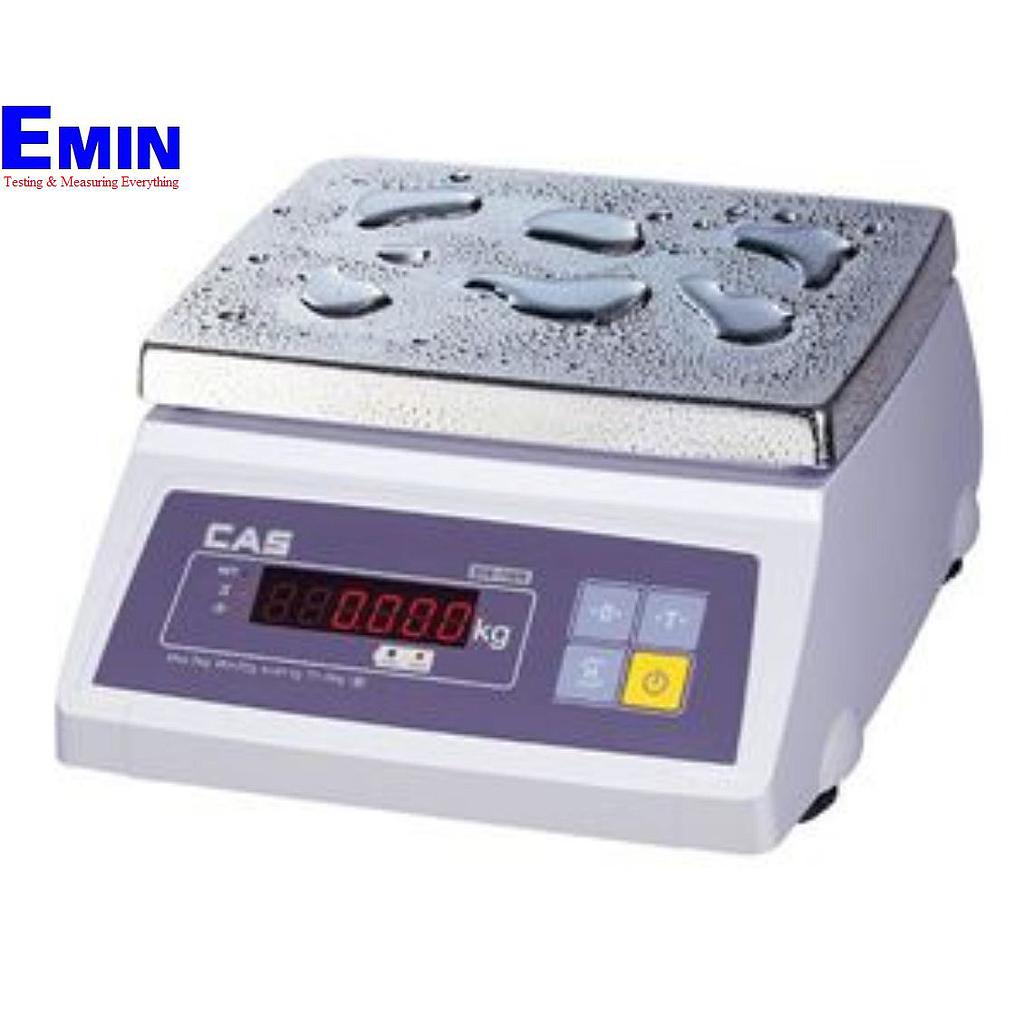
Why waterproof construction matters in industrial weighing
Moisture and airborne particles can affect both the electronics and the mechanical parts of a scale. In real applications, that means cleaning procedures, humid rooms, powder handling, or liquid-filled containers may shorten equipment life if the scale is not suited to the environment.
A waterproof design, often paired with IP65 protection in the products shown here, helps the scale resist dust ingress and water exposure during normal operation. This makes such equipment a practical fit for food processing, chemical preparation, packaging lines, warehouse batching, and general manufacturing where spills and regular wipe-downs are common.
Typical applications for a waterproof scale
These scales are often selected for operations that need a combination of robust housing, quick stabilization, and dependable readability. They are suitable for bench weighing tasks such as raw material portioning, ingredient control, inbound checking, and repetitive weighing on shop floors.
Several models in this category also support counting mode, which is useful when weighing is tied to piece-count verification. This can help with parts counting, kit preparation, packing control, and inventory handling. If your main priority is quantity verification by sample weight, you may also want to explore a dedicated counting scale range for comparison.
Representative models in this category
The available range includes waterproof electronic balances from AND, covering different capacity and readability combinations. For example, the AND GX-30K and AND GF-30K are suited to higher-capacity bench weighing at 31 kg with 0.1 g readability, while models such as the AND GX-10K or AND GF-10K provide finer 0.01 g resolution at around 10.1 kg capacity.
For users working with medium loads, options such as the AND GX-12K, AND GF-12K, AND GX-20K, and AND GF-20K offer a balance between capacity and fine measurement. The lineup also includes variants like the AND GF-32K and AND GF-8K2, which may be relevant when the process requires different readability behavior across weighing ranges.
Across these examples, common practical traits include fast stabilization, compact bench form factors, and suitability for piece counting. Rather than focusing on a single specification alone, the right choice usually depends on how your process balances capacity, minimum readable value, and environmental exposure.
How to choose the right waterproof scale
The first step is to define your actual working range. A scale that regularly operates near its maximum capacity may be less convenient than a model with more headroom, while choosing too much capacity can reduce the level of detail available in small measurements. In many industrial settings, selecting the proper combination of capacity and readability has a direct impact on usability.
Next, consider the operating environment. If the scale will be installed in an area with washdown routines, powder, or splash risk, ingress protection becomes a key requirement rather than an extra feature. Dimensions of the weighing pan also matter when containers, trays, or parts must sit securely during measurement.
It is also worth reviewing how the scale will be used beyond basic weighing. If your workflow includes sample-based parts counting, repeatable batching, or internal calibration preferences, those factors may narrow the choice between series and models. For applications that demand finer laboratory-style resolution, a precision scale may be a better fit than a heavier-duty waterproof unit.
Understanding the difference between waterproof and precision-oriented weighing
A waterproof scale is typically chosen for resilience in harsher working conditions, but not every process has the same priority. Some users need protection against water and dust, while others need maximum sensitivity for small samples, formulation, or analytical work.
That is why category selection matters. If your weighing task involves highly detailed measurement of small masses, there are cases where an analyzer scale or other high-resolution weighing solution may be more appropriate. On the other hand, when the process environment is less controlled and cleaning resistance is essential, waterproof bench scales are usually the more practical option.
Operational benefits in daily use
In busy industrial environments, weighing equipment should support fast, routine work without becoming a maintenance burden. Models in this category commonly feature quick response times, helping operators move through repetitive tasks more efficiently. This is especially useful where incoming goods, production lots, or packed items must be checked one after another.
Another benefit is easier integration into hygienic or controlled cleaning procedures. Waterproof construction does not replace correct operating practice, but it does make the scale more suitable for stations where surfaces are cleaned regularly. To support long-term performance, users may also consider suitable weighing accessories such as protective components and related setup items where needed.
What to review before purchasing
Before selecting a model, it helps to confirm a few practical points: the maximum load you expect to weigh, the smallest increment that still needs to be meaningful in your process, the physical size of the platform, and the degree of exposure to water or dust. These points often influence the final choice more than brand preference alone.
It is also useful to think about operator workflow. If the scale will be shared across departments, readability, display update behavior, and ease of cleaning may matter just as much as measurement specifications. For businesses comparing multiple weighing technologies, this category serves as a strong starting point for applications that need both robustness and reliable bench-scale performance.
Conclusion
Choosing the right waterproof weighing solution is mainly about matching the instrument to the real conditions of use. Capacity, resolution, counting needs, cleaning routine, and environmental exposure should all be considered together rather than separately.
This Waterproof Scale category is intended for users who need dependable weighing in wet, dusty, or frequently cleaned work areas. By comparing the available models carefully, it becomes easier to find a scale that supports stable operation, practical day-to-day handling, and a better fit for your industrial process.
Get exclusive volume discounts, bulk pricing updates, and new product alerts delivered directly to your inbox.
By subscribing, you agree to our Terms of Service and Privacy Policy.
Direct access to our certified experts


