Air Quality Sensors
Reliable air monitoring starts with choosing sensing components that match the environment, target contaminant, and integration method. In industrial systems, smart buildings, HVAC equipment, laboratory devices, and embedded electronics, Air Quality Sensors help turn invisible conditions into measurable data that supports control, safety, and maintenance decisions.
This category brings together sensor solutions for detecting gases, particulates, and related air contaminants in applications where stable measurement and system compatibility matter. Whether the goal is leak detection, indoor air monitoring, equipment protection, or environmental analysis, selecting the right sensing technology is just as important as choosing the final controller or transmitter.
Where air quality sensors are used
Air quality sensing is relevant across a wide range of technical environments. In building automation, sensors are used to monitor indoor conditions and support ventilation strategies. In industrial settings, they can help detect hazardous gases, track process conditions, or provide early warning when air composition changes outside normal limits.
These devices are also common in portable instruments, smart monitoring nodes, environmental data loggers, and OEM products. Some designs focus on broad air quality trends, while others are intended for more specific targets such as ammonia, carbon monoxide, ozone, hydrogen sulfide, chlorine, fluorine, or particulate matter.
Different sensing needs require different technologies
Not every application uses the same sensing principle. A system designed to detect toxic gas exposure may require an electrochemical gas sensor, while a device focused on airborne particulates may use a dedicated dust or particulate sensing element. Infrared-based approaches are also used in gas measurement where the target gas and operating conditions support that method.
This is why a broad category like air quality sensing often includes both gas and particle detection components. For projects that need a more complete environmental monitoring setup, it may also be useful to review related air and gas transmitters, especially when the requirement extends beyond the sensor element to a ready-to-deploy output device.
Representative products in this category
Several listed products illustrate the range of sensing tasks covered here. The Amphenol PS1-NH3-10 Gas sensor is an example of targeted gas detection for ammonia-related monitoring, while the Amphenol PS1-CO-10PROC-MOD Gas sensor addresses carbon monoxide applications where dedicated measurement is required. For ozone detection, the Amphenol PS4-O3-50-MOD Gas sensor shows how this category supports application-specific gas monitoring rather than one-size-fits-all sensing.
Particulate monitoring is represented by products such as the Honeywell IH-PMC-002 Intelligent Particulate Matter Sensor and the Integrated Device Technology - IDT SGAS701 Particle, dust sensor. These types of components are useful when the design objective is to detect dust concentration or airborne particles rather than individual gas species.
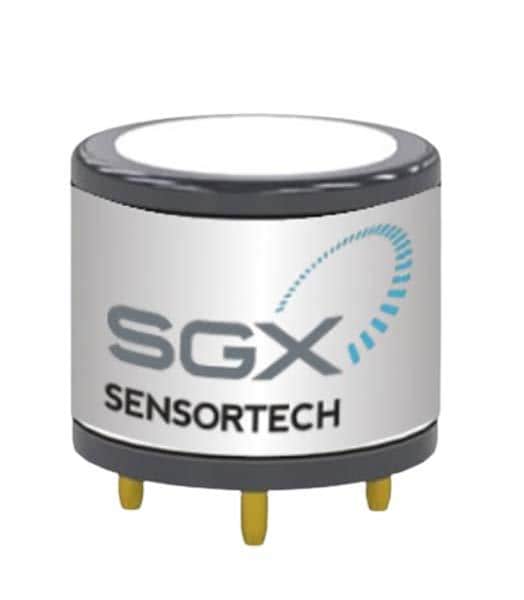
For more demanding chemical detection scenarios, models such as the Amphenol SGX-CL2-50 Electrochemical Gas Sensor and Amphenol PS4-H2S-5000 Electrochemical Gas Sensor reflect use cases involving chlorine or hydrogen sulfide monitoring. In these cases, the choice of sensor should align with the target gas, expected concentration range, response requirements, and maintenance strategy.
Leading manufacturers and ecosystem fit
Within this category, Amphenol stands out with a broad presence across gas sensing applications, including ammonia, carbon monoxide, ozone, chlorine, fluorine, and hydrogen sulfide-related products shown on this page. This makes it relevant for designers who need consistency across multiple gas targets within one project family.
Honeywell is also important in applications involving particulate matter and air monitoring components for commercial or industrial systems. Integrated Device Technology - IDT appears here in the particulate and dust sensing segment, supporting designs where compact embedded sensing is needed. Depending on the project, users may also evaluate broader sensing ecosystems from manufacturers such as Advantech, Bosch Sensortec, or Infineon when integrating air-related data into larger electronic systems.
How to choose the right air quality sensor
The first selection step is to define what you need to measure. Some applications require detection of a specific gas, while others need a general indication of airborne particles or air cleanliness trends. A sensor intended for ammonia monitoring is not interchangeable with one built for ozone or particulate matter, even if both appear under the same category.
The second step is to look at the integration environment. Consider whether the sensor will be used in a portable device, fixed equipment, HVAC assembly, industrial safety system, or development platform. Mechanical format, electrical interface, calibration approach, warm-up behavior, and long-term service expectations can all affect which product is suitable.
It is also important to distinguish between a raw or semi-integrated sensing element and a more complete monitoring solution. If you are building a finished measurement device, you may want to compare sensor components here with broader air quality sensor options already filtered for this category, or expand into adjacent solutions such as transmitters if a standard output is required at system level.
Air quality sensors in broader monitoring systems
In many installations, the sensor is only one part of a larger measurement chain. Data may be combined with temperature, humidity, airflow, or occupancy information to improve control logic and create a more reliable interpretation of indoor or process conditions. This is especially common in ventilation control, smart facility management, and connected industrial monitoring.
For applications that need a wider view of the environment, related categories such as ambient light sensors can also be relevant in building or smart-space automation. In more specialized aerosol and test workflows, an aerosol generator may support validation, calibration, or controlled particulate studies around air monitoring setups.
Practical buying considerations for B2B and OEM projects
For engineering teams and procurement buyers, the best choice is usually the one that balances sensing principle, target medium, design effort, and lifecycle support. A compact particulate sensor may be suitable for embedded indoor monitoring, while an electrochemical gas sensor may be more appropriate for safety-oriented detection of a known gas in a controlled concentration range.
When reviewing products, it helps to compare the target substance, intended application environment, package style, and how the sensor fits into the surrounding electronics and maintenance plan. That approach leads to a better shortlist than choosing by name alone, especially in projects where compliance, uptime, or repeatable measurement performance are important.
Finding a suitable sensor for your application
This category is designed for buyers and engineers who need focused options for gas and particulate detection without losing sight of system context. From compact particulate modules to application-specific gas sensors for ammonia, carbon monoxide, ozone, chlorine, fluorine, and hydrogen sulfide monitoring, the range supports both prototype development and established industrial designs.
If your application depends on accurate air condition data, start by narrowing the target contaminant and the type of system you are building. From there, it becomes much easier to compare available air quality sensors and select components that fit your performance goals, installation constraints, and long-term operating requirements.
Get exclusive volume discounts, bulk pricing updates, and new product alerts delivered directly to your inbox.
By subscribing, you agree to our Terms of Service and Privacy Policy.
Direct access to our certified experts