Multi-function air environment meter
When environmental conditions need to be checked in the field, a single-purpose instrument is not always enough. Many maintenance, HVAC, building diagnostics, laboratory, and indoor air quality tasks require several parameters to be verified in the same visit, from humidity and pressure to light level, airflow, CO2, or VOC-related conditions. That is where a Multi-function air environment meter becomes especially practical.
Instead of carrying multiple handheld devices, users can work with one platform and connect the appropriate probe for the job. This category is suited to technicians who need flexible measurement capability, portable data logging, and a clearer view of indoor environmental performance during commissioning, troubleshooting, or routine inspections.
What this category is designed to cover
A multi-function air environment meter is intended for situations where several environmental variables may influence comfort, process stability, safety, or compliance. In practice, that often means checking temperature, relative humidity, differential pressure, airflow, illuminance, or indoor air quality indicators with the same instrument body and a suitable sensor.
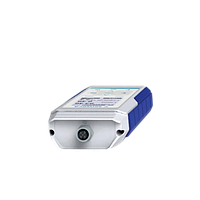
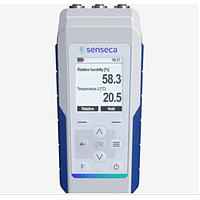
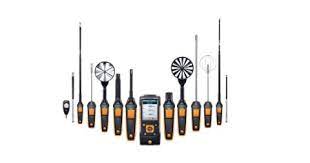
Within this category, the strongest example is the modular approach used by Senseca, where a handheld meter can be paired with digital probes depending on the application. This kind of setup is useful for field service teams that want to standardize on one meter platform while still adapting to changing measurement tasks.
Why multifunction meters are useful in field work
The main advantage of a multifunction platform is measurement flexibility. A technician can move from one checkpoint to another without switching to an entirely different instrument family. That saves time during HVAC balancing, cleanroom checks, indoor comfort surveys, duct testing, and building investigations where pressure, humidity, and air quality all need to be reviewed together.
Another important benefit is data continuity. Instruments in this category may support onboard storage, timestamped records, and USB-based transfer, which helps when measurements need to be documented for maintenance reports or trend review. If your work involves broader monitoring points rather than only handheld spot checks, it may also be useful to review air and gas transmitters for fixed-installation applications.
Typical measurement parameters and sensor ecosystem
Not every model measures every parameter by itself; in many cases, the base meter works with interchangeable probes. This matters because the value of a multifunction device is often defined by its probe ecosystem, not only by the display unit. A compatible sensor range can make one instrument suitable for routine environmental surveys, airflow work, or specific investigations such as low-pressure testing or light exposure checks.
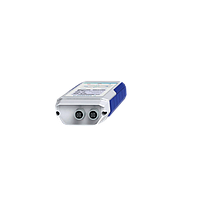
Examples in this category illustrate that range clearly. The Senseca PRO D01 handheld meter supports one digital probe channel, while the Senseca PRO D05.2 and PRO D05.3 expand that concept to two or three channels. Depending on the connected probe, the same platform can be used for temperature, humidity, absolute or differential pressure, air speed, flow rate, illuminance, irradiance, CO2, or VOC-related measurements.
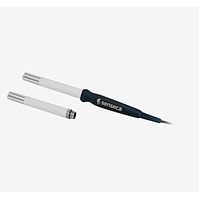
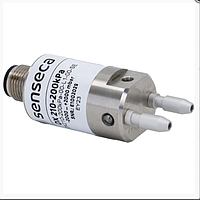
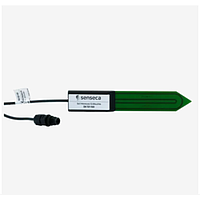
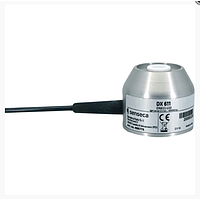
Several dedicated probes shown here demonstrate how that modularity works in practice. The Senseca DX 311-L01-00 is a digital humidity and temperature sensor, while the DX 210 series covers differential pressure ranges from very low values such as -2.500 to +2.500 mbar up to broader ranges including -7000 to +7000 mbar for gases. For more specialized tasks, the DX 641-UVA-L02 supports UVA light measurement, and the DX 721-100-L02-P is designed for soil moisture rather than indoor air work, showing how some multifunction platforms can extend into adjacent environmental measurement tasks.
How to choose the right meter configuration
The best choice depends less on the screen size or housing and more on how the instrument will be used day to day. Start by identifying whether you need single-parameter spot checks, combined measurements on one site visit, or synchronized multi-point readings. A one-channel meter may be enough for general service work, while two- or three-channel instruments are more practical when comparing multiple probes or tracking several variables at once.
Next, look at the measurement range and sensor type. Differential pressure work in cleanrooms, filters, and ventilation systems often requires low-range sensitivity, whereas process air or gas checks may need a wider range. Humidity work benefits from stable digital probes and calculated values such as dew point, while indoor air quality investigations may call for CO2 or VOC-capable sensors. If light-related checks are part of the workflow, users may also want to explore related ambient light sensors for dedicated sensor options.
Logging and connectivity should also be considered early. For example, the PRO D05 models are built around data logging capability with large storage capacity and USB communication, making them more suitable for traceable measurement records than a simple read-and-note workflow. In facilities management or validation environments, that difference can be more important than raw measurement count alone.
Examples of products in this category
For users who need a compact, modular handheld instrument, the Senseca PRO D01 is a straightforward entry point. It is built for one connected digital probe and can support a broad list of environmental measurements depending on the selected sensor. This makes it a sensible option for service technicians who typically work on one variable at a time but still want a versatile meter platform.
The Senseca PRO D05.2 and PRO D05.3 are better suited to users who need more channels and logging-oriented workflows. They are useful in applications where humidity, pressure, and airflow may be checked in sequence or where simultaneous readings improve diagnostics. The available DX probes also help tailor the setup, from the DX 311-L01-00 for humidity and temperature to the DX 210 differential pressure sensors for gas pressure checks across multiple ranges.
For a more application-specific example, the PCE AQD 10-ICA focuses on environmental monitoring with CO2, humidity, and temperature. That kind of instrument is relevant when indoor air quality screening is the primary task and a bundled sensor arrangement is preferred over a highly modular platform. If your project is centered on dedicated IAQ detection rather than broad multifunction measurement, related air quality sensors may also be worth comparing.
Common applications in industry and building services
These instruments are widely used in HVAC commissioning, ventilation troubleshooting, building performance checks, and preventive maintenance. Differential pressure probes help evaluate filters, duct sections, and room pressure relationships. Humidity and temperature probes support indoor comfort verification, condensation risk checks, and storage condition monitoring.
They also fit well in laboratories, clean or controlled spaces, and facility management programs where portable environmental measurement is needed for quick verification before deeper investigation. In some cases, light and irradiance sensors add value for workplace assessments or controlled exposure environments, while CO2-related measurements support indoor occupancy and ventilation assessments.
What to pay attention to before ordering
Before selecting a model, make sure the meter and probe architecture matches your workflow. Check the number of channels, whether probes are included or need to be ordered separately, and whether the target parameter is measured directly or through an optional sensor. This is especially important in modular systems where the handheld meter is only one part of the overall solution.
It is also worth reviewing operating conditions, ingress protection, connection type, and data export method. For field use, robust housing and practical power options can matter as much as sensor accuracy. A well-matched configuration will usually outperform a more complex setup that includes functions you do not actually need.
Final considerations
A good multifunction meter should make environmental measurement more efficient, not more complicated. The products in this category are most valuable when they help users combine the right handheld platform with the right sensing capability for pressure, humidity, temperature, light, airflow, or indoor air quality tasks.
If you are comparing options, focus on application fit, probe compatibility, channel count, and logging requirements first. That approach will make it easier to choose a Multi-function air environment meter that supports reliable field work today and remains flexible as measurement needs expand.
Get exclusive volume discounts, bulk pricing updates, and new product alerts delivered directly to your inbox.
By subscribing, you agree to our Terms of Service and Privacy Policy.
Direct access to our certified experts