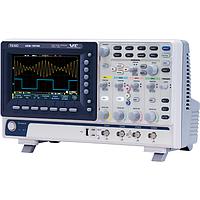
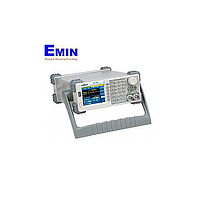
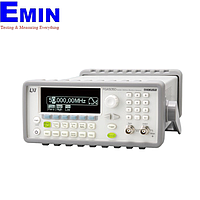
Signal Generators Repair Service
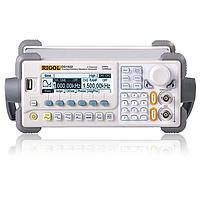
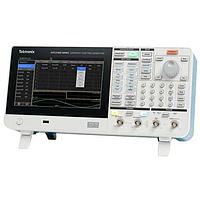
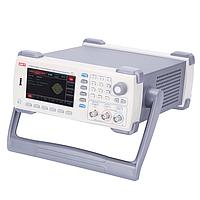
When a signal source starts drifting, failing to trigger correctly, or producing unstable output, the impact reaches far beyond one instrument on the bench. In RF development, electronics testing, production validation, and service laboratories, reliable generators are essential for repeatable measurements. This page covers Signal Generators Repair Service for organizations that need to restore performance, reduce downtime, and keep critical test workflows running smoothly.
Repair support in this category is relevant for a wide range of instruments, from RF signal generators to impulse generators used in specialized electronic test environments. Whether the issue involves output instability, interface faults, power problems, or general performance degradation, the goal is the same: bring the instrument back into dependable operating condition with service suited to its application and brand ecosystem.
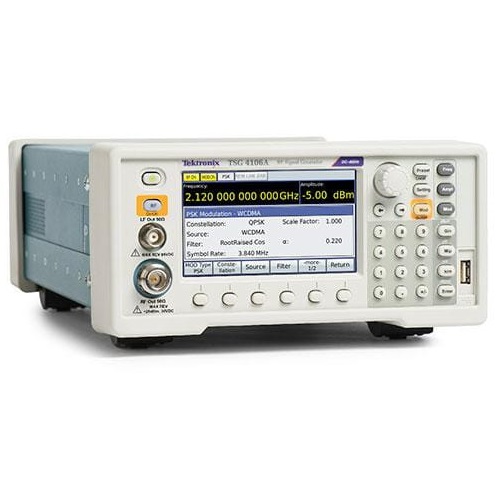
Why signal generator repair matters in technical environments
Signal generators are often part of a larger measurement chain, which means a single fault can affect troubleshooting accuracy, verification time, and overall lab productivity. A generator with frequency instability, amplitude inconsistencies, display issues, or damaged output stages can lead to misleading test results and unnecessary process delays.
For many B2B users, repair is a practical option when the instrument still fits the application, integrates with existing procedures, and would be costly or disruptive to replace. This is especially true in production lines, R&D labs, maintenance departments, and calibration-related workflows where equipment continuity matters as much as specification recovery.
Typical instruments covered in this service category
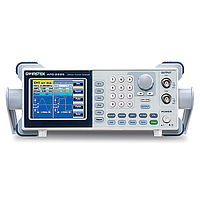
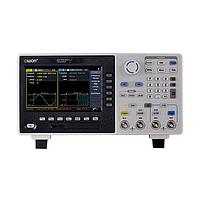
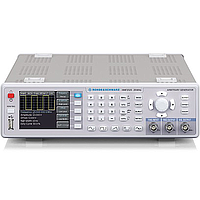
This category includes repair support for several types of signal generation equipment, with examples in both RF and pulse-based applications. Representative services include KEYSIGHT RF Signal Generator Repair Service, TEKTRONIX RF Signal Generator Repair Service, GW INSTEK Impulse Generator Repair Service, and Rohde & Schwarz Impulse Generator Repair Service.
These examples show the scope of the category rather than limiting it to one use case. RF signal generators are commonly used for communications, wireless, and high-frequency testing, while impulse generators are often associated with transient simulation, triggering, and waveform-based evaluation in electronic test setups. Different architectures lead to different failure modes, so service needs may vary by instrument type.
Common issues seen in signal generators
Symptoms can appear gradually or as sudden failure. Common service requests include no output, unstable waveform generation, incorrect frequency behavior, attenuator problems, front-panel malfunction, connector damage, boot failure, and internal power supply faults. In some cases, the instrument powers on but no longer delivers repeatable output under normal operating conditions.
For RF equipment, users may notice signal degradation, poor level control, or unexpected drift during sensitive measurements. In pulse and impulse instruments, timing irregularities and triggering problems can be especially disruptive. If your testing process also depends on related bench instruments, it may be useful to review oscilloscope and logic analyzer repair services as part of a broader maintenance plan.
Supported brands and service context
This category features repair services associated with major test and measurement manufacturers, including KEYSIGHT, PICO, Rohde & Schwarz, TEKTRONIX, BKPRECISION, GW INSTEK, KIKUSUI, METRIX, and Promax. Brand-specific service references help buyers quickly identify relevant support pathways without turning the page into a brand list.
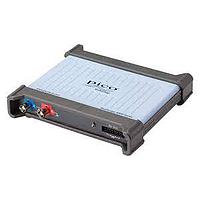
Examples from the category include Keysight Impulse Generator Repair Service, BKPRECISION Impulse Generator Repair Service, PICO Impulse Generator Repair Service, and METRIX Impulse Generator Inspection Service. Mentioning these services is useful because repair expectations often depend on instrument family, age, interface design, and the role the generator plays in the test system.
How to evaluate the right repair path
Choosing the right service starts with the instrument’s actual role in your workflow. If the unit is central to production testing or engineering verification, turnaround time, traceability, and post-repair confidence may matter more than a simple fault correction. If the generator is part of a lower-frequency maintenance workflow, a cost-focused repair decision may be more appropriate.
It also helps to consider whether the issue is isolated or linked to surrounding equipment. For example, unstable readings can sometimes be traced through the full bench setup rather than the generator alone. In mixed-instrument environments, related support such as DC/AC power supply repair service or broader electrical and electronic meter repair may be relevant when multiple devices are showing abnormal behavior.
Examples of service requests in this category
Some visitors arrive with a clear product-specific need, such as TEKTRONIX RF Signal Generator Repair Service or BKPRECISION RF Signal Generator Repair Service. Others are looking for a broader path to support because they know the instrument type but are still verifying the exact model family or fault condition. This category is structured to support both kinds of search intent.
On the pulse and impulse side, common examples include TEKTRONIX Impulse Generator Repair Service, Promax Impulse Generator Repair Service, and Keysight Impulse Generator Repair Service. These references help clarify that the category is not limited to one signal format and can cover different generator roles within electronic test systems.
Who typically uses signal generator repair services
Signal generator repair is relevant across many technical sectors. Typical users include electronics manufacturers, telecommunications teams, service and maintenance providers, third-party testing companies, laboratories, and engineering departments responsible for instrument uptime. In these environments, replacing a familiar instrument is not always the fastest or most efficient option.
Repair services are especially valuable when users need to preserve existing workflows, operator familiarity, and compatibility with established procedures. For organizations managing multiple instruments across a bench or production area, service planning often becomes part of a broader equipment lifecycle strategy rather than a one-time fix.
What to prepare before requesting service
Providing a clear fault description can make the service process more efficient. Helpful details usually include the manufacturer, product family, observed symptoms, whether the issue is constant or intermittent, and what conditions trigger the fault. Notes about startup behavior, output abnormalities, or previous repair history can also improve the initial assessment.
If possible, identify whether the problem affects RF output, pulse behavior, controls, connectivity, display response, or general power-up condition. This kind of information supports a more targeted service approach and helps determine whether the issue is likely to be localized, system-related, or linked to wear in key functional sections.
Choosing a practical service category for long-term reliability
A well-matched repair path helps extend instrument life, protect test consistency, and avoid unnecessary replacement costs. For buyers comparing options, the most useful starting point is usually the instrument type, the operational symptom, and the manufacturer ecosystem involved. From there, product-specific service pages can narrow the request further.
If your workflow depends on stable RF or pulse generation, this category provides a practical entry point for identifying suitable support across leading brands and common service scenarios. Reviewing the available repair services here can help you move from fault symptom to a more structured maintenance decision with less downtime and better continuity for your testing operations.
Get exclusive volume discounts, bulk pricing updates, and new product alerts delivered directly to your inbox.
By subscribing, you agree to our Terms of Service and Privacy Policy.
Direct access to our certified experts