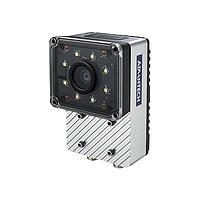
Camera Development Tools
Choosing the right imaging platform early in a project can save significant integration time later. Whether you are building an embedded vision prototype, evaluating a sensor, or preparing a proof of concept for machine vision or thermal imaging, Camera Development Tools help bridge the gap between a bare image sensor and a usable development environment.
This category brings together evaluation boards, breakout boards, camera packs, and development-friendly modules designed to support rapid testing with common embedded platforms. It is especially relevant for engineers working on edge AI, industrial monitoring, robotics, smart devices, and custom vision systems where sensor access, interface compatibility, and optical setup all matter from the start.
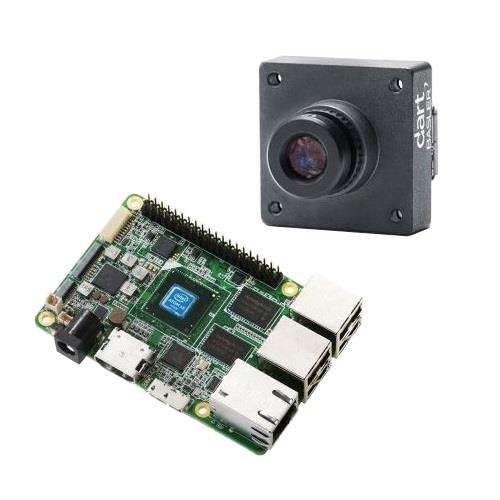
What camera development tools are used for
In practical development workflows, these tools are used to evaluate image quality, lens coverage, field of view, interface behavior, and software compatibility before moving into a final design. They are often selected during early-stage hardware validation, especially when teams need to compare sensor options or confirm that a processor platform can handle a given camera stream.
Unlike finished cameras intended only for deployment, development tools typically provide easier access to connectors, GPIO, I2C, or board-level integration features. For applications that need a more deployment-oriented imaging device, it can also be useful to compare options in cameras and camera modules or review broader industrial camera solutions.
Common product types in this category
This category can include several different hardware formats, depending on the development task. Some products are dedicated evaluation boards for a specific image sensor, while others are compact breakouts intended for single-board computers or microcontroller ecosystems. There are also thermal imaging add-ons and camera packs designed to simplify quick prototyping.
For example, the Adafruit 3622 Thermal Camera FeatherWing focuses on IR thermal sensing and can be useful where temperature visualization is more important than conventional visible-light imaging. At the same time, products such as the Adafruit 5673 OV5640 Camera Breakout and Adafruit 5839 low-distortion OV5640 breakout are better aligned with visible-spectrum image capture and embedded camera experimentation.
Some tools are more platform-specific. The Adafruit 1937 Spy Camera for Raspberry Pi and the Adafruit 3275 Raspberry Pi DIY Camera Pack are aimed at compact embedded builds, while the Adafruit PiCowBell camera breakouts add development convenience for smaller controller-based projects. In contrast, the NXP MX8XMIPI4CAM2 and NXP MXOV10635-S32V are more evaluation-oriented options for processor and image pipeline testing in advanced embedded systems.
How to choose the right development platform
A good starting point is the host platform interface. Before selecting any board, confirm whether your project expects GPIO, I2C, MIPI, LVDS, or another interface path. This directly affects not only electrical compatibility but also driver availability, software effort, and achievable frame handling in the target system.
The second factor is the imaging task itself. A thermal board and a visible-light module solve very different problems, even if both are technically camera development tools. If your application is oriented toward occupancy, hotspot detection, or basic thermal mapping, a product like the Adafruit 3622 may fit the concept stage well. If your requirement is object viewing, scene capture, or optical inspection prototyping, a visible sensor breakout or evaluation module is usually the better starting point.
It is also important to consider optics and scene coverage. Several products in this category reference wide-angle or low-distortion lens configurations, which can influence both usability and calibration needs. If your design requires a different optical setup, reviewing related camera lenses may help you plan the broader system architecture.
Representative manufacturers and ecosystems
Adafruit is prominently represented in this category with compact, developer-friendly boards that are well suited to prototyping, educational engineering work, and embedded proof-of-concept projects. These products often appeal to teams that need a quick route into image capture without building a camera interface from scratch.
NXP and STMicroelectronics appear more often in evaluation-oriented workflows tied to sensor validation, processor compatibility, or embedded vision pipeline testing. Examples such as the STMicroelectronics CAM-6GY-152VIS and CAM-6G3-152CLR modules illustrate how development tools can support direct assessment of sensor behavior, lens coverage, and board-level integration before committing to a custom design.
Other manufacturers in the broader ecosystem, including Analog Devices, can also be relevant when imaging projects intersect with signal processing, power design, or mixed embedded subsystems. The exact choice depends less on brand preference and more on interface alignment, development environment, and application goals.
Typical engineering and industrial use cases
Embedded vision development is one of the most common use cases for this category. Teams working on robotics, smart kiosks, mobile devices, or edge inference systems often need to validate a camera path quickly before refining mechanics, software, and optics. Development boards make it easier to test image acquisition, tune software, and identify system bottlenecks at an early stage.
Another common use case is sensor evaluation. Engineers may need to compare field of view, visible versus thermal imaging, or the behavior of a specific sensor under real scene conditions. Tools tied to OV10635, OV5640, VD66GY, or VD56G3 can support that process by reducing the setup effort required for first tests.
These products can also play a role in industrial and laboratory validation. When teams need to confirm whether an imaging concept is viable, a development tool often provides the fastest route to generating test data. For build-out and mounting needs around a prototype, related camera accessories may also become relevant.
Why development tools matter before final camera selection
Moving directly from concept to a production camera can introduce avoidable risk. Development tools allow teams to verify integration assumptions, observe image behavior under realistic lighting, and identify limitations in data bandwidth, optics, or software support before larger design costs appear.
This is especially important in B2B environments where camera performance is tied to a wider system: industrial automation, inspection, monitoring, HMI, or embedded control. A well-chosen development platform helps engineers shorten iteration cycles and make more informed decisions about sensors, interfaces, and companion hardware.
Final considerations for sourcing camera development tools
When comparing options in this category, focus on practical selection criteria: target processor or controller compatibility, interface type, imaging mode, optical characteristics, and whether the tool is meant for quick prototyping or deeper sensor evaluation. A compact breakout can be ideal for software experimentation, while a dedicated evaluation module may be more useful for validating a full image pipeline.
Camera development tools are most valuable when they support a clear next step in your design process. By choosing hardware that matches your platform and test objectives, you can reduce integration uncertainty and move from evaluation to implementation with better technical confidence.
Get exclusive volume discounts, bulk pricing updates, and new product alerts delivered directly to your inbox.
By subscribing, you agree to our Terms of Service and Privacy Policy.
Direct access to our certified experts