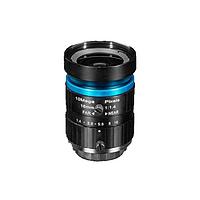
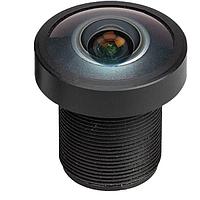
Camera Lenses
Image quality in machine vision is shaped as much by the lens as by the camera itself. A suitable lens determines field of view, working distance, distortion behavior, and how consistently details are reproduced across the sensor. For inspection, automation, and embedded vision projects, choosing the right Camera Lenses category is often the difference between a usable image and a system that struggles with accuracy.
This range focuses on optics used with industrial and machine vision setups, especially C-mount solutions matched to common sensor formats and controlled imaging environments. Whether you are building a compact inspection station, upgrading an existing vision cell, or selecting optics for a new camera platform, this category supports a more precise lens selection process.
Why lens selection matters in industrial vision
In practical applications, the camera sensor only captures what the lens delivers. Focal length affects how wide or narrow the scene appears, aperture influences light handling and depth of field, and optical design impacts distortion and edge sharpness. That is why lens choice should be considered alongside the camera, lighting, mounting geometry, and inspection target.
For many systems, the goal is not simply to “see” an object, but to capture repeatable visual data for measurement, detection, alignment, or code reading. A lens that is well matched to sensor size and working distance helps maintain stable imaging performance. If you are also selecting the imaging device itself, it can be useful to review camera modules and machine vision cameras in parallel.
Typical lens parameters to evaluate
When comparing industrial optics, a few specifications have the greatest impact on system design. Focal length determines the field of view at a given distance. Shorter focal lengths capture a wider scene, while longer focal lengths narrow the view and can help isolate smaller targets from farther away.
Aperture range affects brightness and depth of field. Wider apertures such as F1.6 or F1.8 can support lower-light imaging, while stopping down toward higher F-numbers can improve depth of field when object height varies. Sensor compatibility is equally important, since the lens image circle must adequately cover the intended format, such as 1/2.5" or 2/3". Mounting standards also matter, and many models in this category use the widely adopted C-mount interface.
It is also worth checking distortion behavior, wavelength range for visible-light use, and focus range from close working distances to infinity. These details influence how well a lens fits tasks such as dimensional inspection, object positioning, or general-purpose scene capture.
Lens options across focal lengths and sensor formats
This category includes lenses suited to different imaging geometries rather than a single one-size-fits-all option. Within the Basler range, examples for 1/2.5" imaging include the Basler C125-0418-5M F1.8 f4mm Lens camera, the Basler C125-0618-5M F1.8 f6mm Lens camera, and the Basler C125-1218-5M F1.8 f12mm Lens camera. These illustrate how the same optical family can support wider to narrower fields of view while maintaining a common mounting approach.
For applications using larger formats such as 2/3", options like the Basler C23-0816-2M F1.6 f8.6mm Lens camera, the Basler C23-2518-2M F1.8 f25mm Lens camera, and the Basler C23-5026-2M F2.6 f50mm Lens camera show the broader spread available for different working distances and framing requirements. If your project is centered on optics first, you may also want to browse the full camera lens selection to compare focal lengths and formats more directly.
How to choose the right lens for your setup
A practical selection process usually starts with the object size, the distance from lens to target, and the sensor format of the camera. If the application requires a wide overview of a conveyor or workspace, a shorter focal length may be appropriate. If the task involves a tighter region of interest, such as reading a code or inspecting a small feature from a fixed distance, a longer focal length is often a better fit.
Next, consider lighting conditions and the required depth of field. In controlled lighting, you may have more flexibility to stop down the iris for sharper and more consistent results. In lower-light environments, a faster lens can help maintain exposure. Mechanical constraints also matter, including available mounting space, focus adjustment needs, and how the lens interacts with housings or other camera accessories used in the system.
For projects that require especially consistent imaging performance, it is good practice to validate the lens with the actual camera, lighting angle, and target material before final deployment. Reflective parts, curved surfaces, and high-contrast edges can reveal limitations that are not obvious from specifications alone.
Basler and other manufacturers in the imaging ecosystem
Basler is a natural reference point in this category because the listed products show a clear spread of focal lengths, sensor coverage, and aperture ranges for machine vision use. These lenses are relevant for users building systems around industrial cameras where predictable optical behavior is more important than consumer-style photography features.
At the category level, the wider imaging ecosystem may also involve manufacturers such as Cognex, Omron Automation and Safety, Banner Engineering, ADLINK Technology, and Computar, depending on the application architecture. Even when the lens itself is the immediate focus, the final result depends on the complete chain of camera, optics, mounting, illumination, and software.
Common application scenarios
Machine vision lenses are used in automated inspection, packaging verification, pick-and-place guidance, electronics assembly, robotics, and laboratory imaging. Wide-angle models can help monitor larger zones, while longer focal lengths are often selected for detail-oriented inspection from a greater distance. The correct lens also helps reduce the need for digital cropping, preserving more effective image resolution for analysis.
In production environments, lens stability is especially important because the system is expected to perform repeatedly over long operating periods. A properly matched optical setup supports more reliable detection of edges, marks, surface conditions, and positional features. If you are evaluating the broader vision stack, reviewing an industrial camera category alongside the optics can help align sensor and lens choices.
Choosing with long-term system performance in mind
Lens selection should support not only current imaging requirements but also future adjustments in camera resolution, field of view, or inspection tolerances. A lens that fits the sensor format correctly and offers sufficient optical quality for the task can make later system upgrades easier. This is particularly relevant in B2B environments where downtime, redesign effort, and integration costs matter as much as initial procurement.
Within this category, the available range helps engineers and buyers compare focal lengths, apertures, and intended sensor coverage in a structured way. By starting from the application requirement rather than just the part number, it becomes easier to narrow down a lens that fits the real imaging task.
For industrial vision projects, the lens should be treated as a core system component rather than an afterthought. A well-matched choice improves image consistency, supports more dependable inspection results, and helps the camera perform to its actual potential across the full application lifecycle.
Get exclusive volume discounts, bulk pricing updates, and new product alerts delivered directly to your inbox.
By subscribing, you agree to our Terms of Service and Privacy Policy.
Direct access to our certified experts