EV Chargers
As electric vehicle infrastructure expands across commercial buildings, industrial sites, parking facilities, and fleet operations, selecting the right charging equipment becomes a practical engineering decision rather than a simple product purchase. The right setup needs to match the vehicle interface, available supply, installation environment, cable arrangement, and the level of control required for daily operation.
EV Chargers in this category are intended for professional eMobility projects where reliability, compatibility, and integration matter. The range includes charging solutions suited to different power levels, phase configurations, and installation concepts, helping buyers compare options for both straightforward deployments and more connected charging systems.
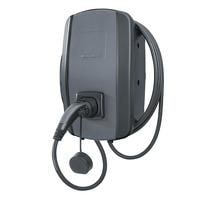
Charging solutions for different installation needs
Not every site requires the same charging architecture. Some applications call for a wall-mounted charger with an attached cable for convenient daily use, while others benefit from more modular charging sets that fit into a broader infrastructure design. This is especially relevant in offices, depots, logistics facilities, and shared parking areas where usability and maintenance access can influence the final specification.
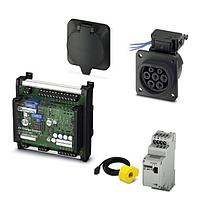
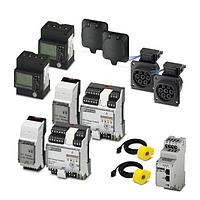
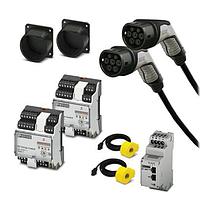
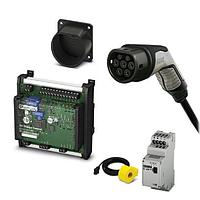
Within this category, buyers can find both wallbox-style products and charging sets from manufacturers such as PHOENIX CONTACT and Weidmuller. For example, Weidmuller wallbox models such as 2911260000 and 2911220000 illustrate integrated charging units with an attached 7.5 m cable and Type 2 plug, while PHOENIX CONTACT products such as 1628081, 1628082, 1628077, and 1628080 represent charging sets designed for different power and connection requirements.
Key electrical considerations when choosing an EV charger
One of the first selection criteria is the available electrical supply. In practice, this usually means deciding between single-phase and three-phase charging, then matching current and voltage ratings to the installation. Lower-power options can be appropriate for lighter-duty charging or locations with limited supply capacity, while higher-power three-phase systems are often preferred where faster turnaround is needed.
The products shown here reflect that spread. A model such as PHOENIX CONTACT 1628077 is positioned around 230 VAC, 16 A, and 4 kW in a 1-phase setup, which can suit more basic charging requirements. At the other end, PHOENIX CONTACT 1628081 and 1628082 are associated with 400 VAC, 32 A, 3-phase charging at 22 kW, making them more suitable where charging performance and operational efficiency are more important.
Attached cable or charging set: what changes in real use?
The cable concept has a direct impact on day-to-day operation. Chargers with an attached cable can simplify the user experience because the cable is always available at the point of charge. This can be useful in controlled environments such as company parking, service bays, or reserved fleet spaces, where fast connection and consistent handling are important.
By contrast, charging sets with shorter integrated cable sections or installation-oriented formats can offer more flexibility during system design. They may be chosen where the charger is part of a larger cabinet, post, or custom charging assembly. If the project also involves supporting components, it may be worth reviewing related products such as EV charger accessories to complete the installation properly.
Connectivity and control features in modern charging systems
Beyond electrical ratings, many projects now require a charger to support monitoring, user access, or communication functions. In this category, some products indicate features such as mobile app support, RFID/NFC access, or PLC interface capability. These elements can be relevant for access control, user identification, or integration into a managed charging environment.
For example, the Weidmuller 2911260000 wallbox includes mobile app functionality and RFID/NFC, which may be useful where charging sessions need a more controlled user workflow. PHOENIX CONTACT models such as 1628081 and 1628082 include PLC interface information, which can be important in applications where communication within the charging infrastructure is part of the design brief. Where system-level regulation is required, related charge controllers can also play an important role in the broader eMobility architecture.
Environmental and operational suitability
Charging equipment often operates in semi-exposed or variable environments, so temperature tolerance and installation conditions should not be overlooked. In industrial and commercial settings, chargers may be installed in parking structures, outdoor walls, or mixed-use technical areas where ambient conditions change throughout the year.
The Weidmuller wallbox products listed here indicate operation from -30 C to +50 C, which gives buyers useful context when assessing suitability for demanding climates. Environmental fit should always be reviewed together with enclosure design, mounting position, cable routing, and maintenance access to ensure the charger performs consistently over time.
Representative products in this category
This category includes practical examples across several charging levels and formats. Buyers looking for a connected wallbox can consider Weidmuller 2911260000, while Weidmuller 2911220000 offers a similar wallbox-style approach with mobile app support. For projects based on charging sets, PHOENIX CONTACT 1628077 provides a lower-power 1-phase option, while 1628080 supports an 11 kW, 3-phase configuration.
For higher-capacity charging, PHOENIX CONTACT 1628081 and 1628082 are notable 22 kW, 32 A, 3-phase options, with distinctions in cable arrangement and interface details. These examples help show that the category is not limited to one installation style; it covers multiple ways to build or deploy EV charging infrastructure depending on site conditions and operational goals.
How to narrow down the right charger for your project
A practical selection process usually starts with four questions: what supply is available, how quickly does the vehicle need to charge, where will the charger be mounted, and what level of user control is needed? From there, buyers can compare power rating, current, phase type, cable configuration, and communication features without overcomplicating the specification.
It can also be useful to review product ecosystems from established manufacturers such as Weidmuller when consistency across multiple installations matters. For organizations planning to scale beyond a single charging point, considering related control and accessory products early can reduce integration issues later and help create a more maintainable charging setup.
Support better eMobility deployment with the right category fit
Choosing EV charging equipment is ultimately about balancing electrical compatibility, installation practicality, and operational control. Whether the requirement is a straightforward wallbox with an attached cable or a higher-power charging set for a more engineered system, this category provides options that align with professional eMobility applications.
By comparing charging format, power level, interface features, and environmental suitability, buyers can move toward a solution that fits both current use and future expansion. That makes this category a useful starting point for sourcing charging hardware that supports reliable, well-planned EV infrastructure.
Get exclusive volume discounts, bulk pricing updates, and new product alerts delivered directly to your inbox.
By subscribing, you agree to our Terms of Service and Privacy Policy.
Direct access to our certified experts