I/O Modules
Reliable signal handling is at the heart of any automation system, especially when controllers need to communicate cleanly with sensors, switches, actuators, and remote equipment across the plant floor. I/O Modules help bridge that gap by converting field-level signals into usable data for control systems, making them a practical choice for machine builders, panel integrators, and maintenance teams that need scalable field connectivity.
In industrial environments, the right module architecture can simplify wiring, improve diagnostics, and support future expansion without redesigning the entire control cabinet. This category brings together products used in field I/O applications, including compact modules and controller-related options that fit into broader automation ecosystems.
Where I/O modules fit in industrial automation
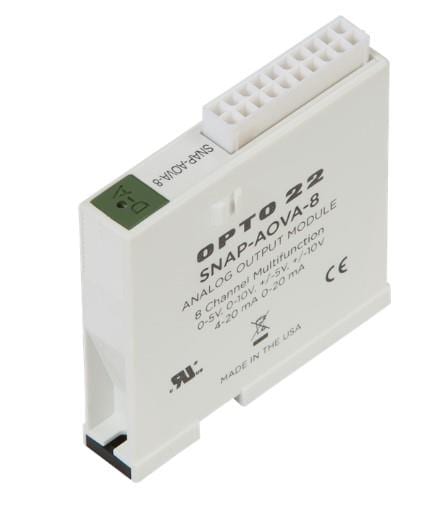
Input/output modules act as the connection layer between the physical process and the control platform. They receive signals from devices such as sensors, pushbuttons, and transmitters, then send commands back to outputs such as relays, valves, or indicators. This makes them essential in machine control, process monitoring, distributed automation, and retrofit projects.
Depending on the system design, these modules may be used close to the controller or distributed across different machine sections to reduce wiring complexity. In many applications, engineers also pair them with related interface modules to improve signal adaptation, isolation, or integration between devices operating at different electrical levels.
Common types of I/O modules in this category
This category includes a mix of field I/O components and automation hardware used to manage signal exchange in control systems. Some products are focused on data acquisition and remote signal handling, while others are part of modular controller platforms that combine logic and I/O expansion in one solution.
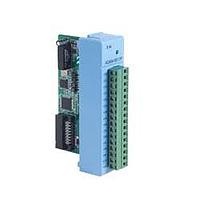
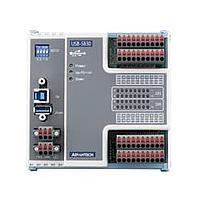
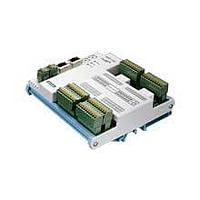
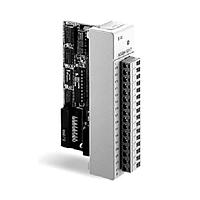
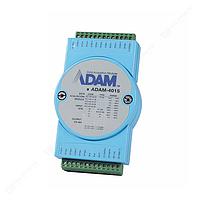
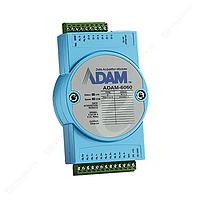
Examples from this range include Advantech ADAM series products such as ADAM-4022T-AE, ADAM-4018-D2E, and ADAM-4570L-DE, which are widely associated with industrial communication and remote I/O tasks. You will also find modular control-related items such as the Festo CPX-CEC-C1 PLC and Festo CPX-8DE-8DA PLC, as well as connectivity-oriented Amphenol I/O module references including U95Z2054081141, U95Z1054081141, and U65B045210.
What to consider when selecting an I/O module
Selection usually starts with the signal type. Buyers should confirm whether the application requires digital input, digital output, analog input, analog output, or a combination of these. It is also important to review how the module will connect to the rest of the system, especially if the project involves distributed control, remote monitoring, or integration into an existing cabinet layout.
Another key factor is installation context. A compact machine skid, a process panel, and a retrofit on legacy equipment do not always have the same needs for wiring density, expandability, or diagnostics. When evaluating options, teams often compare module role, controller compatibility, communication approach, maintenance access, and how easily the solution can scale over time.
Representative products and their role in a system
Several listed products illustrate the variety found within this category. The Advantech ADAM-4018-D2E and ADAM-4022T-AE are examples of modules suited to field signal collection and conversion tasks, while the ADAM-4570L-DE highlights how communication and I/O infrastructure can overlap in practical industrial networks. These kinds of products are often chosen in projects where signal reliability and flexible deployment matter more than a one-size-fits-all platform.
On the control side, the CPX-CEC-C1 and CPX-8DE-8DA from Festo show how modular automation systems can combine logic processing with distributed I/O functions. Meanwhile, Amphenol references such as U95Z3054071141, U95T1111001, and UE86-3G8420-00361 reflect the importance of interconnection and signal path design within larger field I/O assemblies.
Brand ecosystem and sourcing context
For many B2B buyers, consistency across brands and platforms is just as important as the individual device. This category features products associated with manufacturers such as Amphenol, Advantech, Festo, and Cutler-Hammer, each relevant to different parts of the industrial automation stack. Some projects prioritize modular control expansion, while others focus on robust connectivity or remote signal acquisition.
Because field I/O is rarely selected in isolation, it is often useful to review the broader I/O module range alongside controller and interface requirements. That approach helps procurement and engineering teams align electrical design, panel space, signal count, and maintenance strategy before committing to a specific architecture.
Typical applications for I/O modules
I/O modules are used across packaging machinery, conveyor systems, test benches, utilities, process skids, and building-related automation panels. In these setups, they help move information between field devices and the supervisory or local control layer, supporting tasks such as status monitoring, alarm handling, command execution, and analog measurement collection.
They are also valuable in modernization work. When older systems need additional signals, remote points, or cleaner integration with newer controls, modular I/O can provide a more practical path than replacing the entire automation platform. This makes the category relevant not only for new machine design, but also for upgrades, maintenance planning, and phased expansion.
Choosing with long-term maintenance in mind
A good I/O decision should support both current operation and future serviceability. Maintenance teams typically benefit from modules that are easy to identify, replace, and integrate into standard plant documentation. Clear product selection also reduces confusion during troubleshooting, especially when multiple panels or machine sections use similar signal structures.
For procurement teams, comparing form factor, platform fit, and application role can make sourcing more efficient and reduce mismatches during installation. Whether the requirement is for remote signal handling, modular PLC expansion, or connectivity within a field I/O system, the right product choice helps create a cleaner and more manageable automation infrastructure.
When reviewing this category, it is worth focusing not only on the device name but also on how the module will function inside the full control architecture. A well-matched I/O module can improve integration, simplify maintenance, and give industrial systems more flexibility as production needs evolve.
Get exclusive volume discounts, bulk pricing updates, and new product alerts delivered directly to your inbox.
By subscribing, you agree to our Terms of Service and Privacy Policy.
Direct access to our certified experts