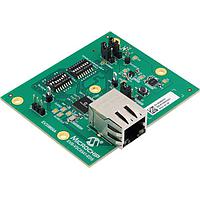
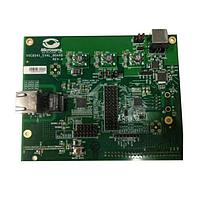
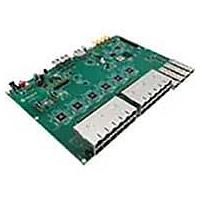
Ethernet Development Tools
Reliable wired communication is still a core requirement in embedded design, industrial networking, edge computing, and many FPGA-based development projects. When engineers need to prototype interfaces, validate data flow, or build proof-of-concept networked systems, Ethernet Development Tools provide a practical starting point for testing hardware, firmware, and communication architecture before full deployment.
This category is relevant for teams working on connected control systems, network-enabled embedded platforms, and high-speed digital designs that must exchange data with other devices or industrial infrastructure. Depending on the project, that may include evaluating programmable logic platforms, verifying interface behavior, or preparing a design that later connects with switching, optical, or broader industrial communication environments.
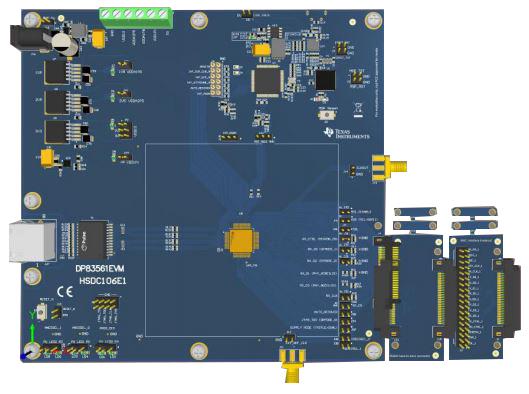
Where Ethernet development tools fit in a design workflow
In technical B2B environments, Ethernet is rarely treated as an isolated feature. It usually sits inside a larger system that may include sensors, control processors, FPGA logic, edge gateways, or industrial automation equipment. Development tools in this category help engineers assess how a platform behaves when network communication becomes part of the application, whether for deterministic control, data acquisition, remote diagnostics, or protocol development.
These tools are especially useful during early-stage validation. They can support bring-up, interface testing, firmware development, throughput checks, and integration between programmable logic and network stacks. For projects that also involve adjacent communication layers, engineers may review related options such as switch development tools or fiber optic development tools as the system architecture expands.
Typical platforms found in this category
A large part of Ethernet-related development work happens on evaluation and development board kits, particularly where programmable logic is used to accelerate packet handling, bridge interfaces, or implement application-specific networking functions. In that context, boards from Intel, AMD, and Altera can serve as flexible hardware platforms for testing communication concepts in real conditions.
Examples in this category include the Intel DK-SOC-1SSX-H-E, Intel DK-A5E065BB32AES1, Intel DK-SI-1SGX-H-A, and AMD EK-VEK280-PP-G. Altera development and evaluation kits such as DK-DEV-5CEA7N, DK-DEV-5AGTD7NES, and DK-SI-5SGTMC7N also illustrate the kind of hardware engineers may use when Ethernet is part of a broader FPGA or SoC validation task. These products are not interchangeable by default, but they show the range of platforms available for different levels of complexity and integration.
Common engineering use cases
Ethernet development tools are often selected for projects that require more than simple connectivity. Teams may need to evaluate communication between a programmable logic device and an external controller, test custom packet processing logic, or verify how an embedded platform behaves under network load. In industrial and automation contexts, Ethernet also matters for machine communication, supervisory data exchange, and system-level interoperability.
Another common use case is application prototyping around edge intelligence or acceleration. A development board may be used to test data movement between sensors, local compute resources, and remote systems over wired infrastructure. For some designs, Ethernet becomes the backbone for diagnostics, software updates, or field integration rather than the end application itself, so early verification reduces later redesign risk.
How to choose the right development kit
The best starting point is the actual design objective. Some teams need a platform for general network-enabled FPGA evaluation, while others are focused on transceiver performance, SoC development, embedded processing, or proof-of-concept work tied to a specific logic family. Matching the board to the intended workflow is usually more important than simply choosing the most advanced platform.
When comparing options, it helps to consider the processor or programmable logic environment you already use, the software toolchain your team supports, the type of I/O and expansion needed, and whether the board is mainly for learning, prototyping, or pre-production validation. For example, a kit such as the Intel DK-DEV-5ASTD5N may suit one stage of platform evaluation, while a more specialized board such as the Altera DK-SI-5SGTMC7N may be more relevant where high-speed interface behavior is central to the design process.
Why programmable logic matters in Ethernet development
Many Ethernet projects move beyond fixed-function communication. With programmable logic, engineers can implement custom data paths, bridge dissimilar interfaces, offload timing-sensitive functions, or prototype specialized packet handling behavior. That is one reason FPGA and SoC evaluation boards appear so often in this category: they allow networking functions to be tested alongside compute, memory, and real application logic.
This flexibility is valuable in industrial and embedded systems where standard communication must coexist with application-specific requirements. A board such as the Intel DK-SI-AGI040EA or the Altera DK-N2EVAL-3C25N can be relevant not because Ethernet is the only feature present, but because the platform enables network-capable design work inside a broader development environment. For more advanced communication topologies, related areas such as Ethernet development tools and neighboring network hardware categories are often reviewed together during system planning.
Representative products in this range
Several listed products are useful as reference points when evaluating the scope of this category. The AMD EK-VEK280-PP-G represents a modern programmable logic development approach for complex embedded and acceleration-oriented projects. Intel offerings such as the DK-SOC-1SSX-H-E and DK-A5E065BB32AES1 support teams that need development hardware for SoC or FPGA-based workflows tied to connected applications.
Altera kits remain relevant for engineers maintaining legacy platforms, educational labs, or long-life embedded environments. Products such as the NIOS-DEVKIT-1S10, DK-DEV-3C120N, and DK-DEV-5CEA7N show that Ethernet-related development often intersects with processor evaluation, memory architecture, and system integration rather than standing alone as a single-interface task.
Building around the broader networking ecosystem
In practice, Ethernet development is often one step in a larger communication design cycle. Once a board-level concept is validated, teams may move toward switching, media conversion, optical links, or integration with industrial network infrastructure. That is why this category is especially useful for engineers who need a development-stage environment before committing to production hardware.
It can also support cross-functional collaboration between hardware designers, FPGA developers, embedded software teams, and system integrators. Having a suitable evaluation platform shortens iteration time, makes interface debugging easier, and helps confirm whether the planned architecture is realistic under actual communication conditions.
Final considerations
Choosing from this category is less about finding a generic board and more about selecting a platform that fits the communication role inside your design. Whether the goal is FPGA-based networking, embedded SoC evaluation, or early-stage industrial connectivity testing, the right tool should align with your development flow, interface needs, and validation priorities.
By reviewing the available kits from Intel, AMD, and Altera in the context of your overall system architecture, it becomes easier to narrow the shortlist and move from concept to practical Ethernet-enabled development with fewer integration surprises later on.
Get exclusive volume discounts, bulk pricing updates, and new product alerts delivered directly to your inbox.
By subscribing, you agree to our Terms of Service and Privacy Policy.
Direct access to our certified experts