Fiber Optic Development Tools
When engineers are validating optical links, transceiver interfaces, or board-level communication paths, having the right development hardware can save a significant amount of integration time. Fiber Optic Development Tools are used to evaluate optical modules, test signal paths, support prototyping, and speed up design work before a system moves into production.
This category brings together evaluation boards, breakout boards, loopback boards, and related optical support components used in fiber-based communication development. It is especially relevant for teams working on transceiver verification, optical interconnects, embedded networking, and high-speed data communication in industrial and electronic systems.
Where fiber optic development tools fit in the design process
Optical communication development usually requires more than a single transceiver or connector. Engineers often need supporting hardware to access electrical and optical interfaces, measure performance, simulate link conditions, or verify compatibility between modules and host systems. That is where development tools become practical: they reduce setup complexity and make early-stage testing more repeatable.
In many projects, these tools are used alongside other interface-focused platforms such as Ethernet development tools, especially when optical links are part of a broader networked architecture. For applications involving embedded communications, industrial data transfer, or high-speed backplane connectivity, the development stage often depends on reliable access to both the optical path and the electrical host interface.
Typical product types in this category
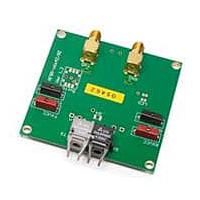
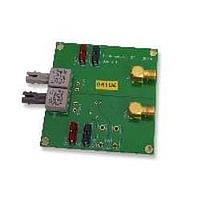
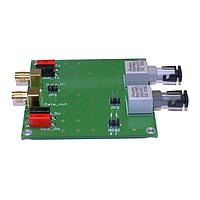
This category commonly includes evaluation boards, electrical loopback boards, breakout boards, and optical accessories that help engineers characterize modules and link behavior. Rather than serving as end-use products, these items are intended to support lab testing, prototyping, firmware development, and interoperability checks.
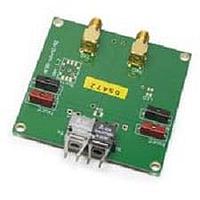
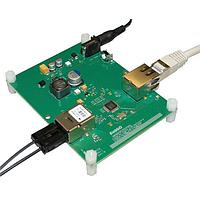
For example, the Coherent FDB-1040-EL is designed as a 40G/100G CFP electrical loop back board with USB interface support, which makes it useful when verifying CFP transceiver behavior in a controlled setup. The Coherent FDB-1019 evaluation board is aimed at 2x10 pin SFF footprints, while the Coherent FDB-1043 breakout evaluation board supports work around CXP transceiver and active optical cable environments.
Some tools in the category are targeted at specific link technologies. Broadcom AFBR-0547Z and AFBR-0548Z evaluation kits, for instance, are intended for V-Link development scenarios, helping engineers assess communication behavior with compatible optical devices under known supply conditions.
Support components for optical module integration
Not every item in this category is a board-level test platform. Some products play a supporting role in the optical ecosystem, helping developers build or refine the complete signal path. Components such as isolators can be important when working with optical subassemblies, including TOSAs and related transmitter structures.
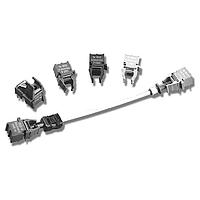
Examples include the Coherent FIF-S-55-080-RC and Coherent FIF-S-55-070-R accessories, both identified for use with TOSAs, as well as the Coherent FIR-S-55-SC-A and FIR-S-31-SC-A receptacle isolator products. These parts are not general-purpose development boards, but they are still relevant in optical R&D workflows where alignment, packaging, and optical path conditioning matter.
Representative manufacturers in fiber optic development
Several recognized suppliers appear in this category, each contributing tools for different stages of optical evaluation. Coherent is strongly represented with evaluation boards, breakout platforms, and optical support parts suited to transceiver and module-level development. This makes it a practical brand to consider when the project involves optical communication hardware and lab validation fixtures.
Broadcom also appears with evaluation kits intended for V-Link applications, while Amphenol FCI is represented by a development tool related to OBT 300 GBIT/S hardware. In adjacent design workflows, Analog Devices may be relevant when the optical path must interact with high-speed analog or mixed-signal circuitry, although product selection should always be based on the exact interface and test requirement.
How to choose the right tool
The best choice depends first on the device or module you need to evaluate. Many development tools are built for a defined form factor, transceiver family, or optical subassembly. Before selecting hardware, check whether the product is intended for SFF modules, CFP transceivers, CXP interfaces, TOSAs, or another specific optical platform.
A second consideration is the type of validation you want to perform. Some tools are intended for electrical loopback and interface verification, while others provide a breakout structure for easier access during measurement and debugging. In other cases, the tool supports optical assembly work rather than digital link testing. Looking at the “for use with” context is often the fastest way to narrow the shortlist.
It may also help to compare these products with nearby categories such as switch development tools when your design combines optical links with switching or control functions. The right development setup often spans multiple hardware layers, not just the optical module itself.
Common application scenarios
These tools are useful in environments where teams need to confirm that an optical interface behaves correctly before final hardware integration. That can include transceiver evaluation, data path debugging, lab characterization, interoperability testing, and proof-of-concept development for communications equipment.
They are also relevant when high-speed optical links need to be tested under controlled conditions before deployment into embedded or industrial systems. A board such as the Coherent FDB-1052, described as an evaluation board for R&D for tunable SFP+, reflects the kind of specialized hardware engineers may need when working with configurable optical modules. Similarly, development hardware tied to specific optical interconnect profiles can help reduce uncertainty early in the design cycle.
Why category-level selection matters
Because fiber optic development hardware is often specialized, browsing by category can be more efficient than searching by part number alone. It allows engineers and sourcing teams to compare different approaches to evaluation, from loopback testing and breakout access to optical support components used around transceiver assemblies.
This is also helpful when the exact final design path is still evolving. Instead of locking into one narrow product immediately, teams can review the available ecosystem of boards and accessories, then align selection with the optical standard, module type, and stage of development.
Final thoughts
Choosing fiber optic development hardware is less about finding a generic lab accessory and more about matching the tool to a specific optical interface, module family, or validation task. Whether the requirement is a CFP loopback board, a CXP breakout platform, a tunable SFP+ evaluation board, or an isolator used in optical assembly work, the value comes from selecting hardware that fits the real development workflow.
By focusing on compatibility, test objective, and system context, buyers can use this category to identify practical tools for faster optical prototyping, cleaner verification, and more efficient design decisions.
Get exclusive volume discounts, bulk pricing updates, and new product alerts delivered directly to your inbox.
By subscribing, you agree to our Terms of Service and Privacy Policy.
Direct access to our certified experts