Switch Development Tools
Evaluating a switch interface early in the design cycle can save significant time when moving from concept to production. Whether the goal is to test a tactile input, validate a display-enabled pushbutton, or prototype a smarter human-machine interface, Switch Development Tools help engineers work faster with less uncertainty during integration, firmware development, and user-interface testing.
This category brings together development kits, logic boards, controllers, sockets, and related accessories used to assess switch behavior in realistic conditions. For industrial controls, embedded electronics, and prototype systems, these tools are useful when you need to verify electrical compatibility, user interaction, and system response before committing to a final hardware design.
What these tools are used for in development workflows
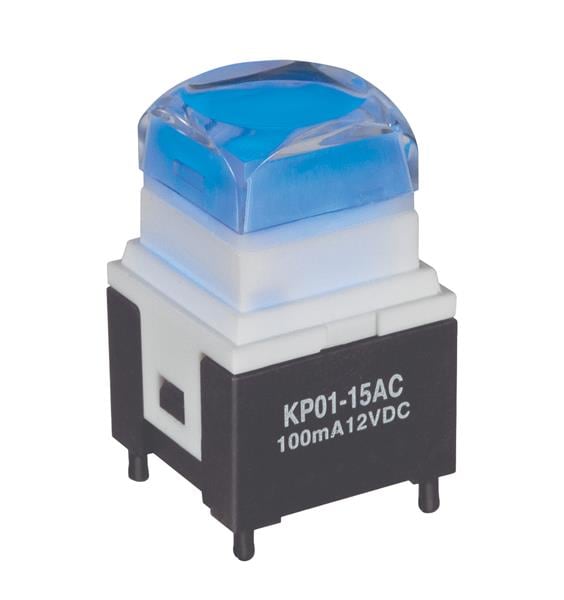
Switch evaluation hardware supports more than a simple on/off check. In many projects, the switch is part of a broader interface that may include illumination, LCD or OLED display elements, logic control, or multiple circuits. Development tools make it easier to confirm how the switch behaves within the intended application, including signal handling, power requirements, and interaction with host electronics.
They are especially useful for teams building operator panels, control stations, embedded devices, and prototype HMIs. Instead of designing test circuitry from scratch, engineers can start with purpose-built platforms such as logic boards, evaluation systems, or sockets designed for specific switch families. If you are comparing adjacent prototyping hardware for communications or interface testing, it can also be helpful to review Ethernet development tools for broader system validation.
Common product types in this category
This category typically includes several roles within the same development ecosystem. Logic boards provide the electrical platform needed to power and control compatible switches during evaluation. Sockets and accessories simplify connection, replacement, and repeated testing, especially when multiple switch variants need to be assessed on the same bench setup.
There are also complete design kits and intelligent controllers intended for more advanced work. These are useful when the switch is not just a mechanical input, but part of a richer user interface with display content, color indication, or configurable logic. In these cases, the development tool becomes a bridge between the physical switch hardware and the firmware or system-level behavior being tested.
Examples from leading manufacturers
One of the most visible names in this category is NKK Switches, with development hardware aimed at SmartSwitch and SmartDisplay evaluation. Examples include the IS-L0204-C logic board for LCD 36 x 24 RGB pushbutton testing, the IS-L02A1-C board for higher-resolution LCD switch evaluation, and the IS-L02L1-C platform designed for OLED switch sockets. These tools are relevant when a project requires more than a standard electromechanical input and needs to examine visual feedback alongside switching performance.
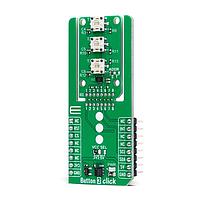
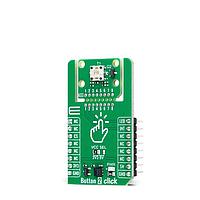
Other examples help illustrate the range of the category. The Global Specialties GSK-10 touch control switch tool fits applications where touch-based interaction is part of the evaluation process, while the Mikroe MIKROE-6275 Button 2 Click is useful in embedded development environments where compact add-on hardware supports quick input testing. Rather than serving the same purpose, these products show how switch development can span from simple button interfacing to more interactive control concepts.
How to choose the right switch development tool
The best starting point is the device you need to evaluate. Some tools are built for a particular switch family, screen size, or interface style, such as LCD 64 x 32 RGB hybrid switches or OLED rocker-based SmartSwitch products. Matching the tool to the target switch is essential, especially when sockets, logic support, or display handling are specific to a certain platform.
It is also important to consider the level of development work involved. A socket accessory such as the NKK Switches AT9704-085K is suitable when the primary need is physical interfacing for hi-resolution SmartSwitches. By contrast, a product like the NKK Switches IS-C32G1 intelligent controller or a full engineering kit such as the IS-ENG-KIT-6-HH is more appropriate when the goal includes deeper evaluation, control logic testing, or demonstration of user-interface behavior.
Power and integration requirements should be reviewed as well. Some tools operate in common low-voltage development ranges, while others are tailored to specific supply conditions or circuit configurations. For engineers working across several prototyping domains, comparing these options with other industrial development tools can help clarify where switch-specific evaluation hardware fits in the overall lab setup.
Where these tools fit in industrial and embedded applications
In practical terms, switch development hardware is often used during early-stage product design, interface validation, and proof-of-concept work. Industrial equipment manufacturers may use it to assess operator input devices for control panels, while embedded developers may use it to test how a switch or display-integrated button behaves with firmware, status signaling, or menu navigation.
These tools are also valuable in projects where user interaction matters as much as the electrical connection. A display-capable switch can influence panel layout, user feedback, and control logic all at once. Being able to evaluate that interaction on a suitable platform reduces risk before custom PCB work or enclosure integration begins.
Why ecosystem compatibility matters
Not every development tool in this category is interchangeable. Many are designed around a specific manufacturer ecosystem, connection style, or switch architecture. That is why product role matters: a logic board, controller, accessory, and evaluation kit each solve different problems even when they are used with related switch families.
For example, NKK Switches offers a layered ecosystem that includes sockets, logic boards, controllers, and design kits. This makes it easier to move from basic hardware evaluation to more complete interface testing without changing to an unrelated platform. If your team regularly works across multiple development brands, browsing manufacturers such as Mikroe can also help identify compact add-on tools that complement broader embedded prototyping workflows.
Support faster prototyping with the right evaluation platform
Choosing suitable switch development hardware is not only about testing a component; it is about shortening the path from concept to a workable interface. A well-matched tool can simplify bench validation, reduce custom test fixture work, and provide a clearer view of how the final switch solution will behave in the application.
From basic accessories to full SmartSwitch design kits, this category supports engineers who need a more efficient way to evaluate switch technologies in real development environments. By selecting tools that align with the target switch family, control architecture, and prototype goals, teams can make better design decisions with fewer iterations.
Get exclusive volume discounts, bulk pricing updates, and new product alerts delivered directly to your inbox.
By subscribing, you agree to our Terms of Service and Privacy Policy.
Direct access to our certified experts