
Power Inverters
Stable AC output is often essential when equipment must run from a DC source, whether in mobile systems, backup installations, control panels, or off-grid industrial setups. In these situations, Power Inverters help bridge the gap between available DC power and the AC loads used by machines, tools, and support electronics.
This category brings together inverter solutions used in industrial and technical environments where power quality, compatibility, and installation conditions matter. Depending on the application, users may be looking for compact standalone units, inverter components that support drive systems, or related power-conditioning parts that improve overall system performance.
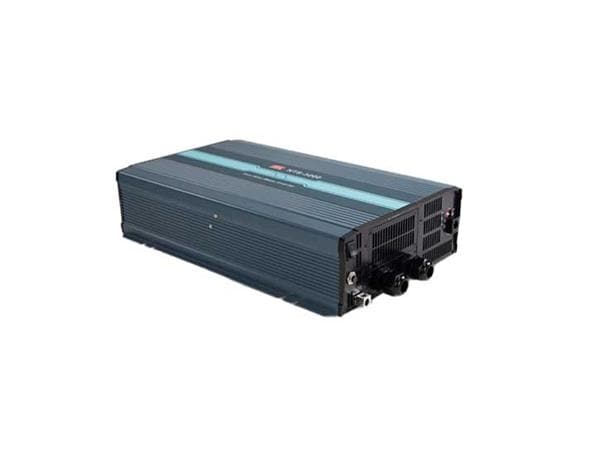
Where power inverters fit in industrial power systems
A power inverter converts direct current into alternating current so that AC-powered devices can operate from batteries, DC buses, or other DC sources. In industrial settings, this can support portable service equipment, vehicle-mounted systems, remote installations, or integrated automation architectures where power must be conditioned before use.
These products are often selected alongside other power infrastructure such as UPS systems, panel power conversion devices, and backup distribution hardware. The right choice depends not only on output requirements, but also on how the inverter will interact with upstream DC supply, downstream loads, and the surrounding electrical environment.
Different product roles within this category
Not every item in this category serves exactly the same function in the field. Some products are complete DC to AC inverters intended to deliver usable AC output from a defined DC input, while others support the inverter or drive ecosystem as accessories or line-conditioning components.
For example, models such as MEAN WELL TS-700-224B, MEAN WELL TS-3000-124A, and DANFOSS 134U2984 represent inverter-related solutions for DC to AC conversion. By contrast, the MITSUBISHI FR-HEL-7.5K DC reactor is better understood as a supporting component used to improve power conditions within an inverter or drive installation rather than as a standalone end-use inverter. This distinction matters when planning a system, because accessory parts are selected for integration performance, not simply for output power.
Representative manufacturers and product examples
This range includes products from established industrial suppliers such as OMRON, MEAN WELL, DANFOSS, and MITSUBISHI. Each brand is commonly associated with different application expectations, from automation-oriented equipment to broader industrial power conversion use cases.
Among the notable examples in this category are OMRON 3G3IV-PEZZ08386A, OMRON 3G3IV-PJVOP146, OMRON 3G3IV-PLKEB4011, and OMRON 3G3IV-PUZBAB variants, alongside MEAN WELL units such as TS-400-148A, NTU-1200-148US, and NTU-1200-224UN. These examples illustrate the breadth of the category, which can include both inverter units and supporting parts intended for different installation scales and electrical architectures.
How to choose the right inverter for your application
The starting point is the input and output power profile. Buyers typically need to match DC input conditions, expected AC output, connected load type, and operating duty cycle. Continuous loads, motor-driven equipment, and systems with high inrush current can place very different demands on an inverter compared with small electronics or intermittent utility loads.
Mechanical and installation factors are also important. Mounting orientation, available enclosure space, ventilation, vibration exposure, and wiring layout all affect long-term reliability. In more demanding environments, it is also worth considering whether the application needs related upstream or downstream products such as DIN rail power supplies or industrial control transformers as part of the broader power design.
Why supporting components matter in inverter installations
Inverter performance is shaped not only by the main conversion unit, but also by the components around it. Reactors, filters, distribution hardware, and protection devices can help reduce stress on equipment, improve power factor behavior in some architectures, and support more stable operation under varying load conditions.
The MITSUBISHI FR-HEL-7.5K DC reactor is a good example of a product that fits this system-level view. Rather than being treated as a substitute for an inverter, it should be evaluated as part of a complete electrical design where line conditioning and drive support are necessary. For engineers and buyers, this means the category is useful not only for sourcing conversion hardware, but also for identifying complementary parts used in practical deployments.
Typical applications for DC to AC conversion
Industrial power conversion appears in a wide range of use cases. Common scenarios include service vehicles, battery-backed control systems, renewable-energy-linked subsystems, field instrumentation, telecommunications support equipment, and remote automation points where utility AC is unavailable or unstable.
In these environments, the key requirement is often not just conversion itself, but dependable operation under realistic site conditions. That is why product selection usually involves load behavior, expected runtime, thermal constraints, and compatibility with the rest of the electrical system rather than choosing on wattage alone.
Evaluating a category page for technical sourcing
For B2B buyers, a useful category page should help narrow down options efficiently. Instead of treating all inverter products as interchangeable, it is more effective to separate standalone power conversion units from drive-related components, then compare the products that align with the intended system architecture.
Reviewing examples from OMRON, MEAN WELL, DANFOSS, and MITSUBISHI can help clarify what type of solution is being offered before moving into detailed specification checks. When the application also involves backup continuity or broader DC distribution design, related categories such as power supplies or UPS equipment may be relevant to the final system configuration.
Final thoughts
Choosing from a range of power inverters is ultimately a matter of matching the device to the real operating context: source power, load type, installation method, and supporting components. A well-planned selection process helps avoid undersized systems, unsuitable accessories, or integration issues that only appear after commissioning.
This category is intended to support that process by covering both inverter products and selected related components used around them. For technical buyers, maintenance teams, and system integrators, that makes it easier to evaluate practical options for reliable DC to AC conversion in industrial environments.
Get exclusive volume discounts, bulk pricing updates, and new product alerts delivered directly to your inbox.
By subscribing, you agree to our Terms of Service and Privacy Policy.
Direct access to our certified experts
