Heat Staking Machine
Joining plastic components reliably often requires more control than adhesives or simple mechanical fastening can provide. In production environments where repeatability, clean finishing, and stable cycle times matter, a Heat Staking Machine is a practical solution for forming plastic studs, securing inserts, and creating durable assemblies across a wide range of molded parts.
This category focuses on equipment used for thermal forming and plastic joining in industrial manufacturing. It is especially relevant for factories producing electronic housings, automotive plastic parts, consumer products, and other assemblies where consistent fastening quality is important.

Where heat staking fits in plastic assembly
Heat staking is a process in which a heated tool softens a plastic post or boss so it can be reshaped to retain another component. Instead of relying on screws, glue, or snap-fit features alone, manufacturers use this method to create a permanent mechanical lock with good consistency and a clean appearance.
This makes heat staking useful for joining plastic-to-plastic and plastic-to-metal parts, especially when brass threaded inserts, studs, covers, brackets, or internal components need to be fixed in place. Compared with some alternative joining methods, it can help reduce consumables and improve process stability in repetitive assembly lines.
Common machine configurations in this category
Different production setups call for different machine layouts. Some applications need a compact station for straightforward manual loading, while others benefit from a rotary table design that supports faster indexing and better throughput for repetitive work.
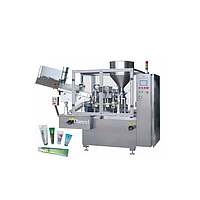
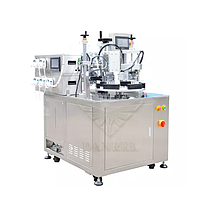
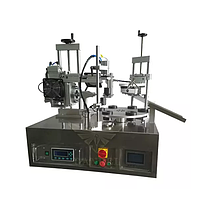
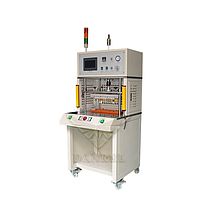
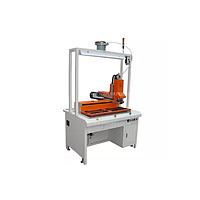
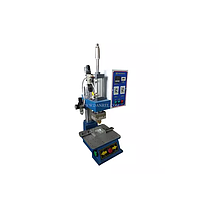
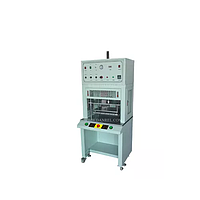
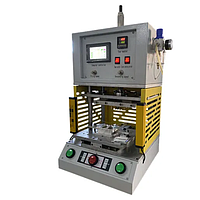
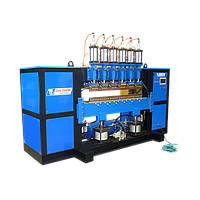
In this category, examples include the Danrel DR-1050 automatic heat staking plastic welding machine and the Danrel DR-1050A automatic rotary table heat staking machine. These models illustrate two common directions in equipment selection: a standard automated heat staking platform for controlled joining tasks, and a rotary table configuration for operations where multi-station handling and production efficiency are priorities.
Typical applications and industries
Heat staking equipment is widely used when manufacturers need secure fastening without adding bulky hardware to the final product. Typical applications include fixing plastic studs, mounting internal components into housings, pressing threaded inserts into molded parts, and retaining decorative or functional elements during final assembly.
Industries that often use these machines include electronics, electrical products, automotive components, household appliances, and general plastic product manufacturing. For operations that also depend on stable thermal management, pairing the process with an appropriate industrial chiller solution may help maintain equipment performance and process consistency in demanding production environments.
What to evaluate when choosing a heat staking machine
The right machine depends on the workpiece, required output, and production method. Buyers typically look at factors such as heating area, temperature capability, timing control, working pressure, and the level of automation provided by the control system.
For example, the products listed in this category show practical differences in working format. The DR-1050 offers PLC and touch screen operation in a compact automatic setup, while the DR-1050A adds a rotary table structure and fine staking precision for applications that need more organized part handling. If your process includes pneumatic functions, it is also worth considering the quality of the plant air system and related compressed air treatment equipment to support stable machine operation.
Automation, control, and process repeatability
In B2B manufacturing, machine selection is rarely based on heating power alone. What matters just as much is how well the system controls dwell time, weld time, temperature, and pressure from one cycle to the next. A machine with PLC control and a touch interface can make setup easier, reduce operator variability, and support more repeatable results.
This is particularly important when the finished assembly must meet internal quality standards for appearance, retention force, or dimensional consistency. For producers running medium to high volumes, a more automated platform can also simplify training, lower the risk of process drift, and make line integration more manageable.
How this category relates to other welding and forming equipment
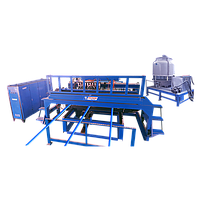
Although this category is focused on plastic heat staking, it sits within a broader industrial equipment landscape that includes very different joining technologies. Heavy-duty metal fabrication may use specialized welding units such as the Revalve USKSH series for girth seam welding of pipeline parts, while wire and reinforcement production can rely on mesh welding systems from Tân Thành.
That distinction matters during equipment sourcing. A heat staking machine is designed for controlled thermal forming and fastening of plastic components, not for arc welding, roller welding, or large-format mesh production. If your packaging or finishing line includes post-assembly sealing, you may also want to review related options such as a heat shrinking machine for downstream processing.
Featured manufacturers and product examples
This category includes representative equipment from Danrel, with models suited to automated plastic assembly tasks. The Danrel DR-1050 is positioned for controlled automatic heat staking, while the DR-1050A adds a rotary table concept that can be useful where indexing and higher production rhythm are needed.
Other manufacturers shown in the broader industrial machinery context include Revalve and Tân Thành, though their listed products in this dataset serve different joining applications such as pipeline seam welding, roller welding, and mesh welding. For buyers comparing technologies, this helps clarify whether the requirement is plastic part fastening, metal welding, or a more specialized fabrication process.
Finding the right machine for your production line
A successful purchase starts with the actual assembly requirement: material type, insert or stud geometry, target output, operator involvement, and the level of process control needed. Once those basics are clear, it becomes easier to compare machine format, heating capability, table design, and control options without over-specifying the system.
For manufacturers building plastic assemblies at scale, this category provides a useful starting point for evaluating automatic heat staking equipment that supports cleaner assembly and more repeatable fastening results. Reviewing the available models alongside your part design and workflow needs will help you narrow down the most suitable solution for long-term production use.
Get exclusive volume discounts, bulk pricing updates, and new product alerts delivered directly to your inbox.
By subscribing, you agree to our Terms of Service and Privacy Policy.
Direct access to our certified experts