
Hot Air Welding Machine
When consistent, high-strength seams are critical in flexible material production, the welding method matters as much as the material itself. Hot Air Welding Machine systems are widely used for joining thermoplastic fabrics, films, coated textiles, and industrial sheet materials where clean, reliable, and repeatable bonding is required.
On this page, buyers can explore equipment suited to banner production, ducting fabrication, tarpaulin processing, seam sealing, and other industrial applications that depend on controlled heat and pressure. The range here focuses on practical production needs, from straight-line welding to curved seams, tube work, and specialized sealing tasks.
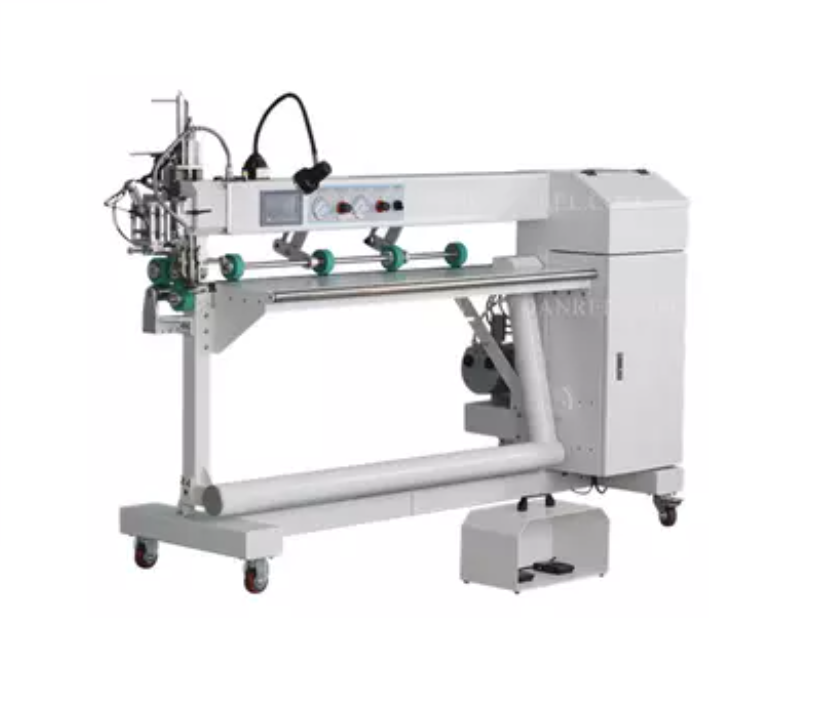
Where hot air welding machines are used
Hot air welding is commonly selected for materials that need strong seams without introducing stitching holes or extra fastening steps. In industrial production, this process is frequently associated with PVC and similar coated materials used in banners, tarpaulins, inflatable products, fan ducting, and technical textiles.
Compared with manual joining methods, machine-based welding improves temperature stability, feed consistency, and seam appearance. That is especially important in B2B environments where output quality, production speed, and repeatability directly affect downstream assembly and product durability.
How the process works in production
A hot air welding machine directs heated air into the seam area while rollers apply pressure to bond overlapping thermoplastic surfaces. The quality of the weld is influenced by several process variables, including temperature, welding speed, nozzle width, roller dimensions, and material behavior under heat.
For many production lines, the key advantage is process control. Adjustable heating and speed settings help operators match the machine to different sheet thicknesses, seam geometries, and throughput requirements. Depending on the application, buyers may also consider air supply conditions, working pressure, and whether a machine is configured for straight seams, curved workpieces, tubes, or reinforced structures.
Machine types available in this category
This category includes a range of machine formats designed for different fabrication scenarios. For example, the Danrel DR-V13 PVC Hot Air Banner Welder is suited to banner-related processing, while the Danrel DR-T300A Curve Welder Hot Air Welding Machine is intended for applications where curved paths are part of the job.
For longer or larger-format material handling, models such as the Danrel DR-T300L-1300 PVC Hot Air Welding Machine and Danrel DR-T300L-1800 PVC Tarpaulin Hot Air Welding Machine illustrate how arm length and machine layout can support wider work areas. In more specialized workflows, machines like the Danrel DR-T300B-Tube Hot Air Welding Machine, the Danrel DR-T300D-Dual Arms Hot Air Welding Machine, and the Danrel DR-T300B(Drop Stitch) Hot Air Welding Machine show that this equipment family can be adapted to very specific product structures.
Seam finishing and sealing tasks may call for a different configuration than sheet welding. A model such as the Danrel DR-F7T seam tape sealing machine is a good example of equipment used where taped seam protection is part of the final product requirement rather than broad-area material welding.
What to consider when selecting a hot air welding machine
Choosing the right system starts with the material and seam type. Buyers should look at whether the job involves banners, tarpaulins, tubes, fan ducting, drop-stitch assemblies, or seam tape applications, because each use case may require a different working space, nozzle format, roller width, and pressure behavior.
Production capacity is another practical factor. Machines in this category may offer adjustable welding speeds and high operating temperatures suitable for industrial throughput, but the right choice depends on line layout, operator workflow, and expected daily output. It is also worth checking utility requirements such as power supply and compressed air conditions, especially where the machine will be integrated into an existing production environment. If your process depends on stable pneumatic performance, related compressed air treatment equipment may also be relevant.
- Material compatibility: coated fabric, PVC sheet, banner media, ducting materials, or specialized technical textiles
- Seam format: straight, curved, tubular, reinforced, or taped seams
- Working envelope: arm length, handling space, and access to the weld area
- Process settings: temperature range, speed adjustment, pressure stability, and roller/nozzle options
- Factory integration: electrical supply, air requirement, and operator workflow
Danrel equipment in this range
Danrel is the main manufacturer represented in this category, with models covering several hot air welding and seam-processing tasks. The product lineup shows a focus on industrial fabrication where adjustable speed, controlled heating, and application-specific machine formats are important.
Representative models include the DR-T300S Hot Air Welding Machine for general welding work, the DR-T300B(Hot Air + Hot Wedge) version for processes that may benefit from an alternative heating approach, and the DR-T300B-VD Hot Air Welding Machine for larger or more specialized production setups. The range also includes supporting material items such as the Danrel DR-TP17/19/21/23 PVC reinforced flexible fan ducting raw material set, which reflects the broader production ecosystem around welded ducting products rather than stand-alone machine selection alone.
Supporting equipment and adjacent process considerations
In actual manufacturing environments, hot air welding rarely operates in isolation. Material conditioning, airflow quality, cooling, and post-processing can all influence weld consistency and production efficiency. Facilities that run continuous or high-volume thermal processes sometimes also evaluate industrial water cooler and chiller systems where surrounding equipment or process temperature management needs support.
There can also be overlap with other thermal packaging or finishing methods depending on the product being made. For some operations, buyers comparing joining and finishing technologies may want to review related heat shrinking machine options to better understand where welding fits within the overall production line.
Who this category is for
This category is relevant for manufacturers, OEM buyers, fabrication workshops, and industrial distributors looking for machinery for flexible material joining. It is especially useful for teams sourcing equipment for banner production, technical textile fabrication, PVC processing, inflatable structures, ducting assembly, and seam sealing applications.
Because machine choice depends heavily on the end product and workflow, the best approach is to compare equipment based on application logic rather than on headline power figures alone. A banner welder, a curve welder, and a seam tape sealing machine may all use heated air, but they serve different production goals and should be selected accordingly.
Final considerations
A well-matched hot air welding machine can improve seam consistency, reduce manual variability, and support more efficient production of thermoplastic and coated-fabric products. The models in this category represent different machine layouts and application focuses, making it easier to compare solutions for straight seams, curved paths, tubular fabrication, tarpaulin work, and taped seam finishing.
If you are evaluating equipment for a new line or upgrading an existing process, start with the material type, seam structure, and operating environment. That approach will help narrow the selection to the machine format that best fits your production requirements.
Get exclusive volume discounts, bulk pricing updates, and new product alerts delivered directly to your inbox.
By subscribing, you agree to our Terms of Service and Privacy Policy.
Direct access to our certified experts
