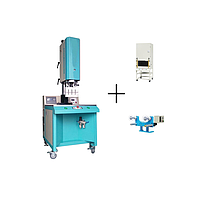
Ultrasonic Welding Machine
In plastic assembly and high-speed manufacturing, consistent joining quality often matters as much as cycle time. When screws, adhesives, or heat-based joining create limits in cleanliness, repeatability, or production efficiency, Ultrasonic Welding Machine systems become a practical option for thermoplastic welding, sealing, and part bonding across many industrial processes.
This category brings together equipment used for ultrasonic plastic welding in standalone, rotary-table, and application-specific formats. It is especially relevant for manufacturers looking for controlled weld time, stable pressure, and repeatable output in production environments where part geometry, throughput, and sealing quality all need to be considered together.
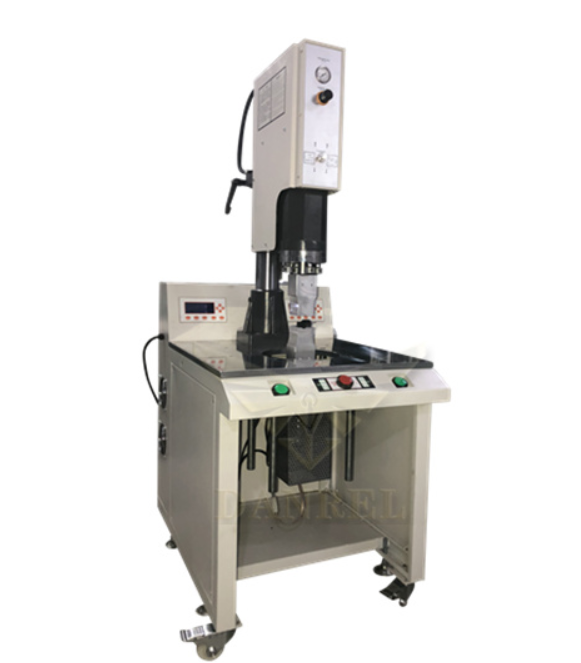
Where ultrasonic welding fits in industrial production
Ultrasonic welding uses high-frequency mechanical vibration and pressure to join compatible thermoplastic parts. In many production lines, this process is chosen because it can reduce consumables, support short cycle times, and deliver consistent joints without adding extra fasteners.
Typical use cases include plastic housings, fan components, consumer product assemblies, sanitary parts, and other molded components that require repeatable bonding or sealing. For facilities building automated workstations or expanding process stability, this category also connects naturally with supporting utilities such as compressed air treatment equipment, since many ultrasonic welding systems rely on pneumatic actuation.
Equipment types available in this category
The product range in this category covers both standard welding presses and higher-throughput production solutions. For example, the Danrel DR-i2022, DR-i1542, and DR-i1556 represent standalone ultrasonic plastic welding machine formats with different power and frequency levels, making them suitable for different part sizes and welding demands.
For increased productivity, rotary-table configurations such as the Danrel DR-i2022A, DR-i1542A, and DR-i1556A are relevant when operators need indexed stations and smoother workflow between loading, welding, and unloading. This type of layout is often considered in semi-automatic or automatic manufacturing cells where reducing idle time is important.
There are also application-oriented machines in the category, including solutions designed for fan blade welding, shower head sealing, spikes welding, and scouring pad manufacturing. These examples show that the category is not limited to a single machine format; it also includes equipment adapted to more specific production tasks.
Key selection factors before choosing a machine
When comparing models, buyers typically start with frequency, power, and weld area. Lower frequencies such as 15 kHz are often associated with larger or more demanding plastic welding tasks, while higher frequencies such as 20 kHz or 35 kHz may be more suitable for smaller parts or applications requiring different energy delivery characteristics.
Power level should be matched to material behavior, part geometry, and required joint strength rather than viewed in isolation. In this category, available examples range from compact systems in the 600 to 1000 W class up to higher-power machines such as 6000 W units, giving buyers a useful spread for both lighter and more demanding applications.
It is also important to review machine motion and production method. Pneumatic drive, stroke capability, station count for rotary systems, and time-setting controls all affect process repeatability. If the welding process generates sustained heat during intensive production, supporting thermal management with an industrial water cooler or chiller may also be part of the broader equipment planning, depending on the line design.
Examples from the Danrel product range
Danrel is the main featured manufacturer in this category, with a range that spans general-purpose welding equipment and more specialized production machines. For instance, the Danrel DR-3510 Noise Free Autotune Ultrasonic Plastic Welding model is positioned for ultrasonic plastic joining in a lower power range, while the DR-i series covers heavier-duty machine options with greater output levels.
For manufacturers focused on indexed production, the automatic rotary-table models offer a practical path toward better handling rhythm and station-based workflow. Where application demands are more specific, machines such as the Danrel DR-1532-FAN for cross-flow fan blade welding or the DR-1542-D double-head configuration for sealing and strong weld applications illustrate how ultrasonic systems can be adapted to different part types.
The category also includes supporting components such as the Danrel MM-20MR-6MT-350B-FX-A monochrome display used for the Danrel DR-2020 ultrasonic welding machine. This is useful for buyers managing equipment maintenance, replacement parts, or lifecycle support rather than only sourcing complete machines.
How to match machine configuration to production needs
A compact standalone welder may be sufficient for job shops, pilot production, or lower-volume assembly where flexibility is more important than maximum throughput. In these cases, operators often prioritize easy setup, stable weld parameters, and a machine footprint that fits existing workstations.
Rotary-table equipment becomes more attractive when production requires repetitive part handling and faster takt time. Multiple stations can help separate loading and welding steps, improving operator efficiency and making the process easier to integrate into a broader automation flow.
For product-specific manufacturing, a dedicated machine design may offer better fixture compatibility and more stable results than a generic setup. That is especially relevant when part shape, sealing geometry, or output targets create process demands that go beyond standard bench-style ultrasonic welding.
Process considerations beyond the machine itself
Successful ultrasonic joining depends not only on machine rating but also on the full process setup. Material compatibility, joint design, horn and fixture matching, pressure control, and timing parameters all influence weld quality. Even a high-power system will not deliver reliable output if the part design and process window are not aligned.
Production planners should also consider maintenance access, spare part availability, and utility requirements. Pneumatic operation means air quality can affect consistency over time, while high-duty applications may require attention to surrounding line equipment and environmental conditions. If the welded parts move directly into packaging, downstream equipment such as a heat shrinking machine may also be part of the complete packaging workflow.
Who this category is suitable for
This category is relevant for manufacturers, OEMs, integrators, and industrial buyers sourcing equipment for plastic part assembly, sealing, and dedicated ultrasonic production tasks. It is also useful for maintenance teams looking for replacement machine components tied to existing ultrasonic welding installations.
Because the available products include both standard welding presses and more application-focused machines, buyers can compare options based on throughput, part size, process precision, and integration requirements. That makes the category suitable for both new line planning and upgrades to current manufacturing processes.
Choosing the right ultrasonic welding solution
The most effective choice usually comes from balancing part material, weld geometry, required output, and the level of automation needed on the shop floor. Instead of focusing on power alone, it is better to evaluate how machine format, frequency, control range, and handling method fit the real production task.
With a focused range of Danrel equipment and related machine components, this category helps buyers review practical options for plastic welding and sealing in industrial environments. If you are comparing standalone welders, rotary-table systems, or application-oriented machines, a clear understanding of process needs will make it much easier to narrow down the right configuration.
Get exclusive volume discounts, bulk pricing updates, and new product alerts delivered directly to your inbox.
By subscribing, you agree to our Terms of Service and Privacy Policy.
Direct access to our certified experts