Drawn Arc Welding
When a production line, sheet metal workshop, or repair operation needs secure fastening of studs onto metal surfaces, process stability matters as much as welding speed. Drawn Arc Welding is widely used in these situations because it supports repeatable stud welding with strong penetration and better control of the welding cycle, especially in industrial environments where consistency cannot be left to trial-and-error settings.
On this category page, you can explore equipment built for stud welding tasks on steel or aluminum components, from lighter single-phase setups for sheet metal applications to higher-output systems intended for more demanding industrial use. The range is particularly relevant for users looking for controlled arc performance, practical setup options, and equipment suited to repetitive fastening work.
Where drawn arc welding fits in industrial work
Unlike general-purpose welding processes that focus on seams or joints, drawn arc systems are commonly selected for attaching studs, supports, and similar fasteners directly to a metal surface. This makes them useful in fabrication, enclosure manufacturing, panel work, and selected bodywork repair tasks where attached parts must be welded efficiently without turning the operation into a slow manual process.
A key advantage of this process is its suitability for repetitive jobs. With the right machine and gun setup, operators can maintain a stable arc and achieve more predictable results from one weld to the next. For buyers comparing different joining methods, this category can also be considered alongside a bolt welding machine solution when the application centers on fastening elements rather than conventional weld beads.
Why this process is chosen for stud welding
The main reason engineers and workshop managers choose drawn arc technology is the balance between penetration, repeatability, and process control. Compared with simpler approaches, drawn arc welding is often preferred when weld quality must remain consistent across many cycles and when shielding options are needed to reduce contamination during the weld.
It is also a practical option for thin sheet and added-part applications, particularly where a controlled welding sequence helps reduce unnecessary rework. In some use cases, the process supports cleaner finishing requirements and more reliable fastening performance, which is important in production environments where welded studs become part of a larger assembly.
Product examples in this category
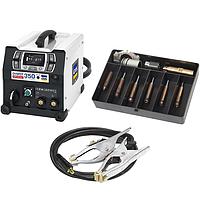
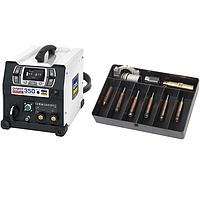
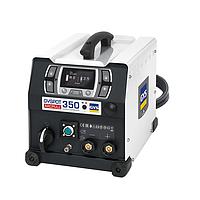
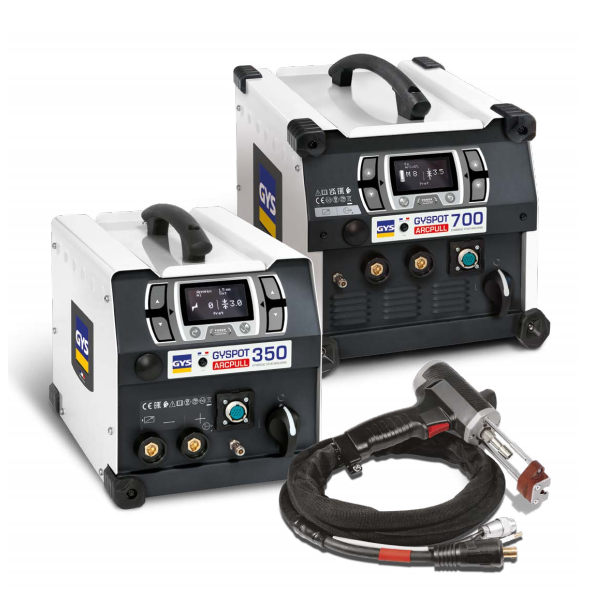
The product selection here includes several machines from GYS, illustrating how the category covers both lighter-duty and more industrial configurations. The GYS GYSPOT ARCPULL 350 and related ARCPULL 350 packs are designed for single-phase 230 V operation, making them relevant for sheet metal work, stud welding up to M8, and tasks that benefit from a compact format and simplified control.
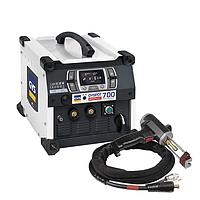
For higher-output requirements, the GYS GYSPOT ARCPULL 700 is intended for more demanding industrial workflows, with support for welding studs and stud supports up to Ø 13 mm. This model family highlights an important difference within the category: some systems are better suited to workshop flexibility and repair-oriented tasks, while others are aimed at higher throughput and larger fastening applications.
Features that matter when selecting a machine
One of the first things to review is the power supply. In this category, there are both 1-phase 230 V and 3-phase 400 V machines, which directly affects installation requirements and the type of workplace where the machine can be deployed. A smaller single-phase machine may be more practical for mobile or compact workshop use, while a 3-phase system is often the better fit for continuous industrial production.
Output range also matters because it influences the types of studs and materials the machine can handle. The machines shown here range from lower-current setups for lighter applications up to substantially higher output for more demanding stud welding. Buyers should also consider gun design, cable length, interface simplicity, and whether the machine provides preset welding modes or more detailed manual control for experienced operators.
Another useful point in this category is digital control. The highlighted ARCPULL series emphasizes controlled welding cycles and simplified parameter handling, which can help reduce setup errors and improve repeatability. For production teams that want to save proven settings, built-in program memory can also be a practical advantage.
Manual, synergic, and application-oriented operation
Not every welding environment needs the same level of adjustment. Some users want a straightforward workflow with predefined settings, while others need room to fine-tune the process for specific studs, sheet thicknesses, or production requirements. That is why welding modes are worth reviewing before purchase.
Within the products listed here, synergic-style operation supports faster setup and easier day-to-day use, while manual or expert-oriented modes allow more control over the welding cycle. This combination is especially relevant for businesses that have mixed operators, varying job types, or a need to move between repetitive production work and more specialized applications.
How to choose between compact and high-output systems
A compact machine such as the GYSPOT ARCPULL 350 can make sense when the priority is accessibility, lighter installation, and sheet metal-related stud welding. These models are also suitable when the work involves smaller studs, workshop flexibility, or operations where a single-phase supply is more realistic than a dedicated industrial electrical setup.
A larger system such as the ARCPULL 700 is better aligned with industrial throughput, heavier stud welding demands, and applications where a stable arc at higher output is required. In practice, the right decision usually depends on stud diameter, material type, production volume, available power infrastructure, and how much process repeatability is needed across shifts.
If your production needs extend beyond stud attachment, it may also be useful to compare adjacent processes such as a spot welding machine for sheet joining or a plasma cutter for material preparation and cutting tasks.
Typical users and working environments
This category is relevant for metal fabrication shops, industrial assembly operations, sheet metal processors, and repair environments that need controlled fastening of studs or welded attachments. It is also suitable for users who value structured machine interfaces, predictable arc behavior, and systems designed to support repeated use rather than occasional manual welding only.
For buyers in automotive-related repair or bodywork contexts, some ARCPULL models also support tasks connected to pulling rings, rods, or rivet extraction workflows. That makes the category broader than a simple stud-welding listing: it covers equipment that can play a role in both manufacturing and specialized repair operations, depending on the model selected.
Choosing the right drawn arc welding solution
The best choice usually comes down to matching the machine to the real operating conditions: available input power, stud size, production frequency, and the level of operator control required. A compact single-phase unit may be enough for sheet metal and lighter fastening tasks, while a 3-phase machine is often more appropriate for higher current demands and more intensive industrial use.
By comparing the available GYS ARCPULL models in this category, buyers can identify a setup that fits their workflow without over-specifying the equipment. If you are selecting a system for stud welding, added-part attachment, or repeatable fastening work, this category provides a focused starting point for evaluating practical stud welding equipment for your application.
Get exclusive volume discounts, bulk pricing updates, and new product alerts delivered directly to your inbox.
By subscribing, you agree to our Terms of Service and Privacy Policy.
Direct access to our certified experts