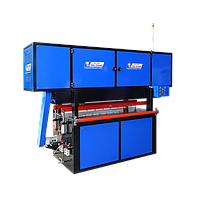
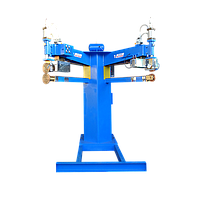
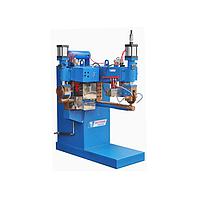
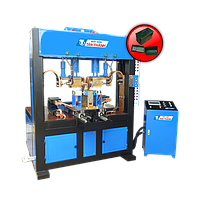
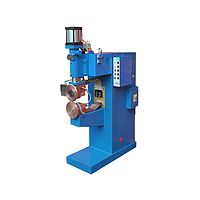
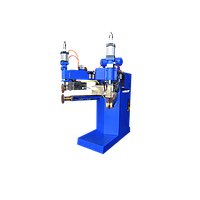
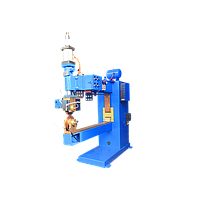
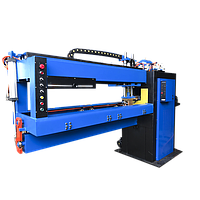
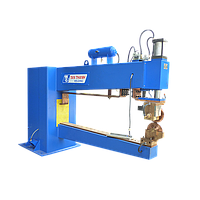
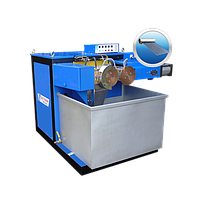
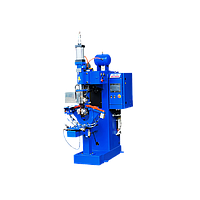
Roller welding machine
For manufacturers working with thin sheet metal, tanks, ducts, cans, or continuous seam joints, consistent weld quality often depends on choosing the right process rather than simply increasing power. Roller welding machines are designed for this type of production, helping create continuous or closely spaced weld seams with repeatable pressure, heat input, and travel control across long joint lines.
In industrial fabrication, this equipment is commonly selected where productivity, uniform seam appearance, and stable joint quality matter. On this page, you can explore machines suited to different seam welding tasks, from general sheet joining to specialized tank body and bottom applications.
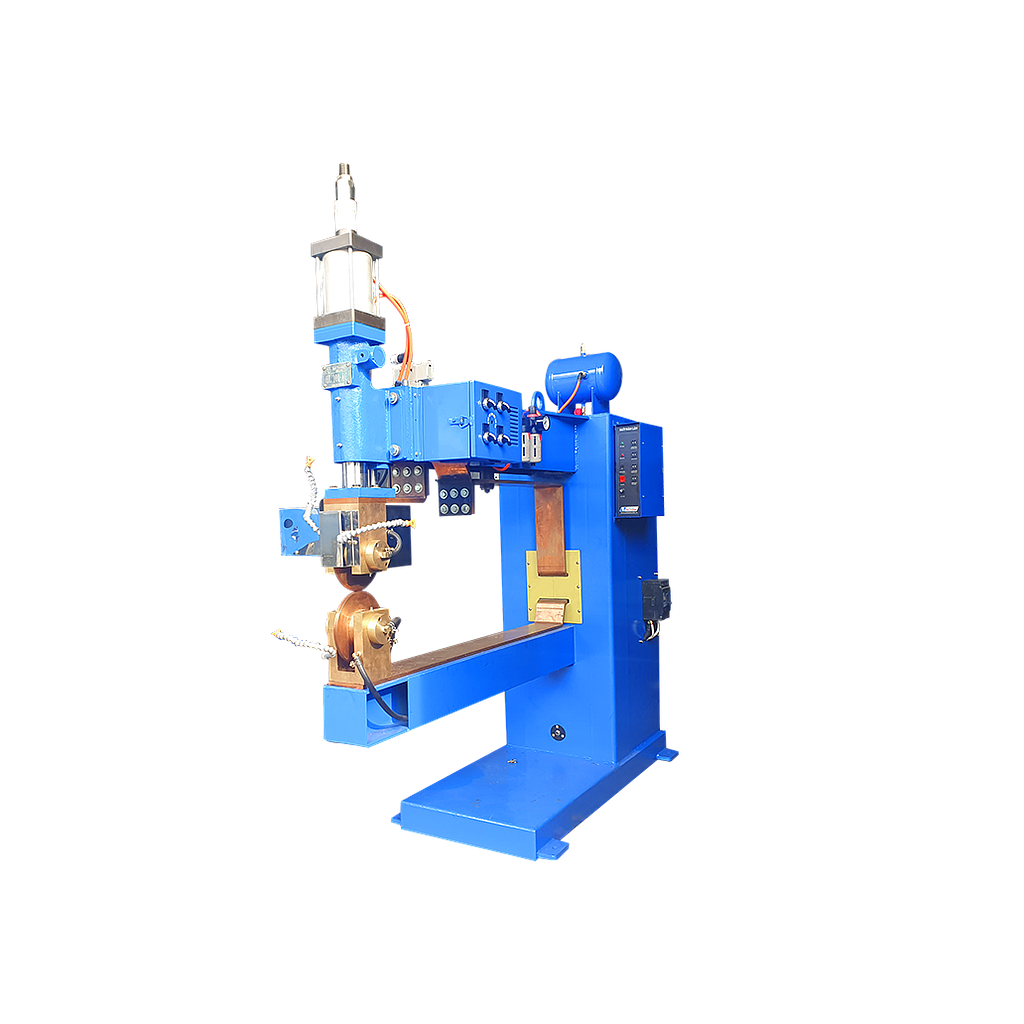
Where roller welding machines fit in production
A roller welding machine uses rotating wheel electrodes to create a continuous or overlapping series of resistance welds along a joint. This makes the process especially suitable for parts that need long, straight, or circumferential seams, particularly when working with relatively thin metal sheets in repetitive manufacturing environments.
Compared with equipment intended for isolated weld points, seam welding is often preferred when the goal is a cleaner, more continuous joint. It is widely used in fabrication lines for containers, tanks, formed sheet assemblies, and similar products where weld consistency over length is important. In some production cells, it may also be considered alongside a spot welding machine when comparing point joining and continuous seam joining requirements.
Typical machine configurations in this category
This category includes several machine formats built around different seam welding needs. Some models focus on general-purpose seam welding, while others are configured for more specific tasks such as joining tank bodies, welding tank bottoms, or handling coil-to-coil sheet connections in metal processing lines.
Examples from Tân Thành include the HL-100AC Roller Welding Machine for general seam welding applications and the HANLAN100KVA Inverter Roller Welding Machine (100KVA), which highlights an inverter-based configuration. For production layouts that require application-specific geometry, models such as the SEAM-BODY-TANK, SEAM-BOTTOM-TANK, and SEAM-SOLAR-TANK are relevant references within this product range.
Applications commonly served by seam and roller welding
Roller welding is often selected where the joint runs continuously across the workpiece or around a formed component. Common use cases include sheet metal enclosures, cylindrical bodies, tank shells, tank bottoms, and products made from galvanized or light-gauge steel that require repeatable seam quality over multiple cycles.
The available products here reflect that application diversity. For example, the Tân Thành HN-CUON TON machine is intended for joining galvanized steel coils, while seam body and seam bottom tank machines support production tasks associated with welded tank assemblies. Dual-head and two-way roller welding machines can also be useful when throughput, welding path arrangement, or part handling efficiency becomes a key part of the process design.
What to evaluate before choosing a roller welding machine
The right selection usually depends on more than one specification. Buyers should consider the material type, sheet thickness range, part geometry, seam length, required duty cycle, and whether the machine will be used for manual loading, semi-automatic operation, or integration into a broader production workflow.
Electrical supply and machine structure also matter. The listed products show configurations around 380 V input with capacities ranging from moderate to higher-output setups such as 50 kVA, 100 kVA, 120 kVA, and 150 kVA. Some models are intended for thinner sheets, while others support wider welding thickness ranges, so matching the machine to the actual workpiece and production rate is more important than choosing by capacity alone.
It is also worth reviewing whether the application requires AC or inverter-based welding behavior, single seam or multi-path operation, and specialized frame dimensions for tank or formed-part access. In applications where process flexibility is a priority, some users may also compare seam welding with a multi-function welding machine or evaluate whether a dedicated process-specific system will deliver better long-term efficiency.
Representative products in this range
Several products in this category illustrate the breadth of available configurations. The Tân Thành HÀN LĂN DC DC Roller Welding Machine (50kVA) represents a more compact capacity point for lighter seam welding work, while the HL-2DAU Dual Head Roller Welding Machine (120KVA) is relevant for setups where dual-head welding can improve productivity or process arrangement.
For heavier or more specialized seam work, the Tân Thành HÀN LĂN 2 ĐƯỜNG 2-Way Roller Welding Machine (150kVA) and the SEAM-BOTTOM-TANK Roller Welding Machine (150KVA) show how the category extends into higher-capacity and application-driven systems. The HANLAN100KVA Inverter Roller Welding Machine also highlights the role of inverter technology in modern welding equipment, especially where control, efficiency, or process stability are key evaluation points.
How roller welding compares with other welding equipment
Not every sheet metal joining task needs seam welding. If the job involves cutting rather than joining, a plasma cutter may be part of the upstream fabrication workflow. If the process depends on stud attachment instead of linear seam formation, the application may be closer to a bolt welding machine solution.
Within resistance welding, the main distinction is often between isolated weld points and a continuous seam. That is why understanding the final product requirement is essential: leak resistance, seam continuity, production speed, part accessibility, and weld appearance can all influence whether a roller welding machine is the most suitable choice for the line.
Why this category is useful for industrial buyers
Instead of looking at one generic machine type, this category brings together equipment for different seam welding scenarios, including tank-focused machines, dual-head designs, inverter-based systems, and coil joining solutions. That makes it easier for procurement teams, factory engineers, and technical buyers to compare options based on actual manufacturing tasks rather than only headline specifications.
When reviewing the product list, focus on the relationship between welding thickness, power capacity, machine layout, and the type of seam you need to produce. A machine intended for tank body welding, for example, may not be the right fit for coil joining or compact general sheet work, even if some electrical figures appear similar.
Final considerations before ordering
Choosing a roller welding machine is ultimately a process-matching decision. The best results usually come from aligning the machine with the joint design, workpiece dimensions, material thickness, expected output, and production environment. Looking at representative models such as HL-100AC, HL-2DAU, SEAM-BODY-TANK, SEAM-BOTTOM-TANK, and HANLAN100KVA can help narrow the shortlist according to real operating needs.
If you are comparing machines for seam welding in sheet metal or tank fabrication, this category provides a practical starting point for identifying suitable configurations. A careful review of application type, duty requirements, and machine structure will make it easier to select equipment that supports stable weld quality and efficient day-to-day production.
Get exclusive volume discounts, bulk pricing updates, and new product alerts delivered directly to your inbox.
By subscribing, you agree to our Terms of Service and Privacy Policy.
Direct access to our certified experts