Chemicals Storage Cabinet
Essential standards for a safe Chemical storage cabinet
A chemical storage cabinet must strictly comply with international standards to guarantee safety. For instance, OSHA requires fire-resistant chemical storage cabinets to withstand at least 10 minutes of fire exposure, featuring a double-walled steel structure with 38mm of insulating air space. NFPA 30 further limits the maximum storage to 120 gallons of flammable liquids per cabinet.
Furthermore, FM Approval verifies fire resistance for up to 90 minutes for certain high-end models. These standards ensure that the chemical storage cabinet prevents fire from spreading outward, protecting personnel during emergencies.
Additionally, EN 14470-1 (the European standard) classifies cabinets based on fire resistance duration: Type 30, 60, or 90 minutes. You should prioritize cabinets with dual OSHA-NFPA certification to suit modern laboratory requirements. An excellent example is the Sysbel WA810860 explosion-proof cabinet, which is FM and CE certified with a 340L capacity and a 100kg shelf load. This product is ideal for production workshops where unexpected fires may occur.
Moreover, anti-corrosion epoxy coatings and dual vents are mandatory. These small technical details help the chemical storage cabinet maintain clean air and prevent the accumulation of toxic fumes. Finally, three-point linkage locks and self-closing doors ensure security, giving you peace of mind that everything is under strict control.
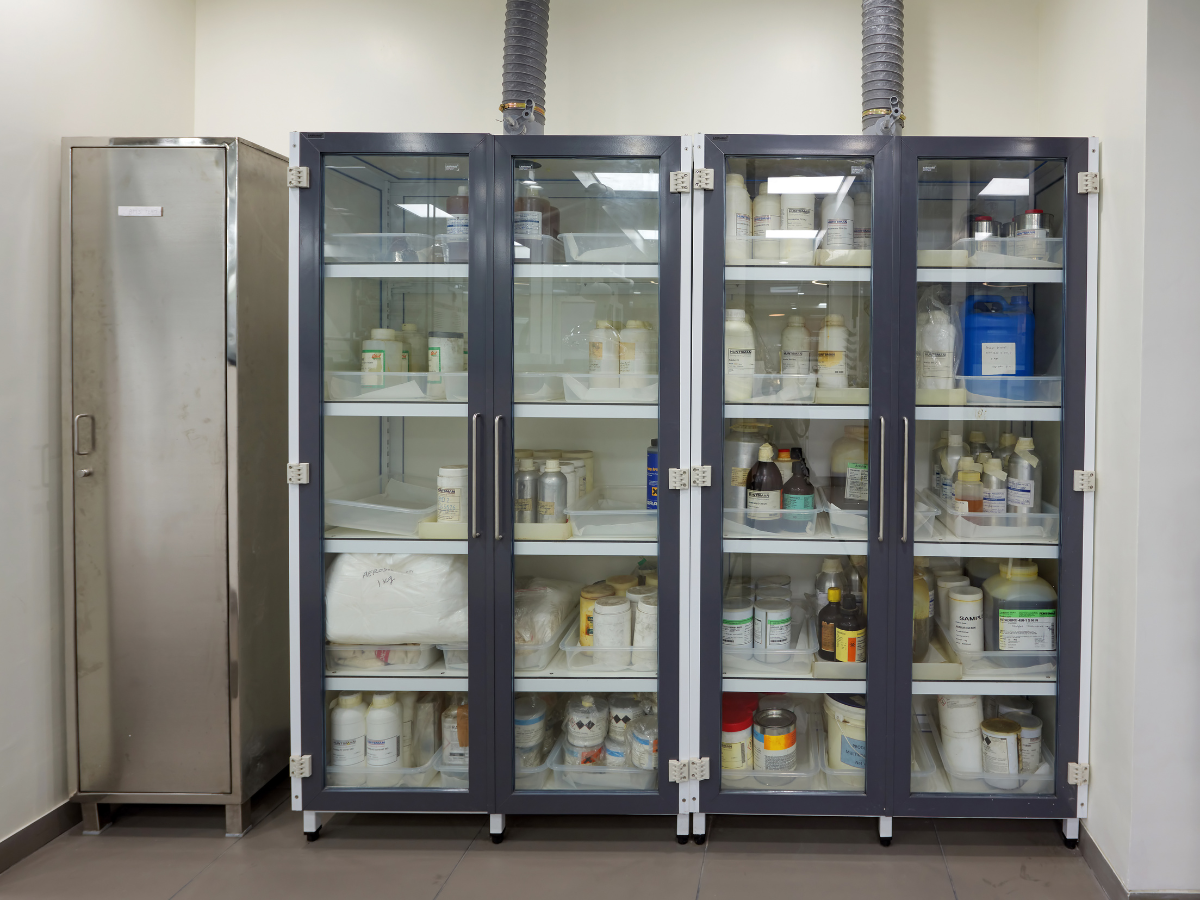
Priority chemicals for storage in a Chemical storage cabinet
Not all chemicals can "cohabitate" within the same chemical storage cabinet. You must categorize them clearly to avoid dangerous reactions, such as acid meeting bases. The top priority is flammable substances (Class I, II, III) such as solvents and gasoline.
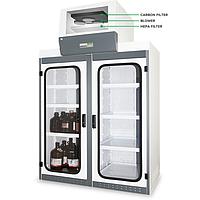
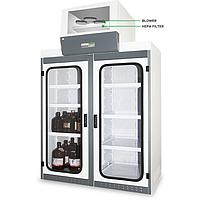
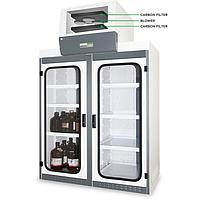
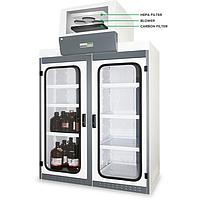
Next, corrosive acids like H2SO4 and HNO3 require specialized cabinets. These substances can eat through standard metal if the cabinet lacks a polyethylene liner. Strong bases and hazardous toxins also need dedicated storage; because they generate toxic vapors, the chemical storage cabinet should be equipped with a HEPA filtration system.
In practice, chemistry labs prioritize storing volatile solvents first to reduce the risk of fire spreading from a small spark. Consider the Labconco 9903400 Safety Cabinet, a 24-inch wide unit designed for flammable solvents. It features self-closing doors, making it a perfect fit for pharmaceutical research labs. Additionally, oxidizers like peroxides require separate cabinets. Correct classification helps you optimize space and safety. Always check for the FM or OSHA label on the chemical storage cabinet to ensure compatibility with the chemicals you use daily.
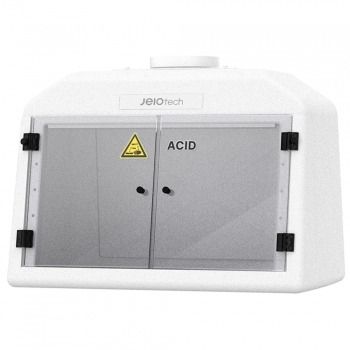
Common types of Chemical storage cabinets
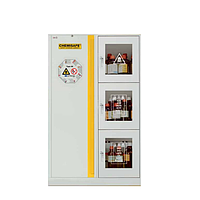
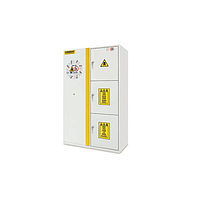
The market offers a wide variety of chemical storage cabinets, ranging from fireproof to corrosive-resistant models. You can easily choose the right one by understanding their practical applications.
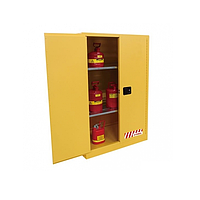
Flammable Cabinets (Yellow): Designed for flammable materials with double-walled construction and 10–90 minutes of fire resistance. These are common in chemical plants.
Acid/Base Cabinets (Blue): These utilize polyethylene to resist corrosion. They are ideal for analytical labs where sulfuric acid is frequently used.
Solvent Cabinets: Equipped with dual vents to prevent vapor buildup, ensuring safety for R&D rooms. The JEIOTECH PCC-720 corrosive storage cabinet (720x472x535mm) is made of monolithic polyethylene and can withstand strong acids. In biology labs, it stores HCl without leakage concerns.
Heavy-Duty Production Models: The Sysbel WA810860 stands out with a 90-gallon capacity and manual double doors. It handles heavy loads, making it suitable for large chemical warehouses.
Compact Lab Models: The Labconco 9903400Labconco 9903400 features a standard 24-inch height and self-closing doors. It is used for acetone solvents, reducing fire risks in medical labs.
Furthermore, modular cabinets allow for adjustable shelving to fit different bottle sizes, while mobile cabinets with wheels are popular in smaller labs for their flexibility and ease of movement between work zones.
Get exclusive volume discounts, bulk pricing updates, and new product alerts delivered directly to your inbox.
By subscribing, you agree to our Terms of Service and Privacy Policy.
Direct access to our certified experts