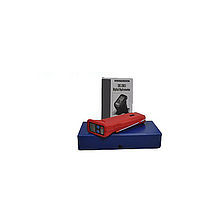
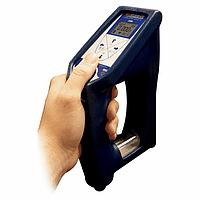
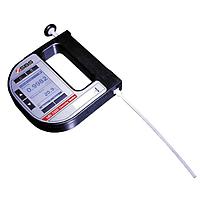
Density meter
When material consistency, concentration, or product quality depends on mass per unit volume, choosing the right density meter becomes an important part of laboratory and industrial control. In practice, density measurement is used across chemicals, coatings, coolants, battery fluids, construction materials, and many other applications where a small variation can affect process stability or final product performance.
This category brings together instruments and related tools used to determine density or specific gravity in different sample types. From portable refractometer-based checks for liquids to electronic densimeters and pycnometer-style cups for laboratory workflows, the selection supports both quick routine testing and more controlled measurement tasks.
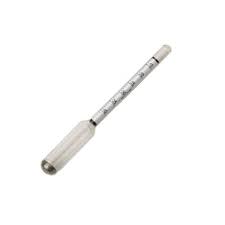
Different density measurement methods for different sample types
Density is not measured in the same way for every material. Liquid samples such as coolant, antifreeze, or battery fluid are often checked using refractometers or specific gravity devices, especially when fast field verification is needed. For solids, powders, or test specimens, electronic densimeters can provide a more structured weighing-based method in air and in liquid.
This is why the category includes both direct measuring instruments and supporting laboratory tools. For example, pycnometer cups are widely used when a defined sample volume is needed, while electronic systems are more suitable when repeatability, digital readout, and easier data handling are priorities.
Typical instruments found in this category
For liquid condition checks, the ATAGO MASTER-BC Battery Coolant Checker is a practical example of a refractometer designed for battery fluid and antifreeze evaluation. It is useful where operators need a compact method for checking freezing point ranges or specific gravity in maintenance and service environments.
For digital and laboratory-oriented work, the PCE SCD 50 Density meter is aimed at density-related measurement in test environments, while Aczet models such as the CY 3102GT, CY 612GT, and CY 613GT illustrate the role of electronic densimeters for more controlled weighing and density determination. In coating and materials labs, TQCSheen products such as the LD0560 densimeter and VF2099 or VF2100 specific gravity cups show how density testing can be integrated into routine QC procedures.
How to choose the right density meter
The first step is to match the instrument to the sample form. If you mainly test fluids like antifreeze, battery electrolyte, or cleaning solutions, a handheld refractometer-style device may be more suitable than a benchtop densimeter. If your samples are small solid parts, coatings, or materials that require weighing-based density calculation, an electronic densimeter is generally the better fit.
Next, consider the required resolution and repeatability. Some applications only need a quick pass/fail check, while others require finer discrimination between similar materials. Capacity also matters: a higher-capacity model may be necessary for larger samples, whereas lower-capacity, higher-resolution instruments can be more appropriate for smaller specimens that need more precise measurement.
It is also worth reviewing the workflow around the test. Features such as digital display, interface connectivity, sample size requirements, and ease of cleaning can influence day-to-day efficiency just as much as the core measuring principle.
Density meters in laboratory and industrial workflows
In many facilities, density measurement is part of a broader inspection or formulation routine rather than a stand-alone task. A lab may verify raw materials before mixing, check intermediate batches during processing, and confirm final product consistency before release. In these workflows, the right instrument helps reduce variability and supports clearer decision-making on acceptance, adjustment, or rework.
Density-related testing is also closely connected to other sample preparation and handling steps. Depending on the application, users may also need supporting laboratory tools such as a blender for sample preparation or a burner and torch for related laboratory procedures. Choosing equipment in context usually leads to a more efficient testing setup than selecting a meter alone.
Examples of tools and accessories in the category
Not every product used for density work is a fully electronic instrument. Specific gravity cups such as the TQCSheen VF2097, VF2098, VF2099, and VF2100 are classic examples of simple but useful laboratory tools for determining liquid density from a known volume. Material choice, such as aluminum or stainless steel, can influence handling preference, durability, and suitability for the test environment.
For more specialized liquid testing, the TQCSheen VF2095 Pressure Density Cup supports measurements where pressure conditions are relevant to the sample. Meanwhile, the PCE DRC 1 handheld digital refractometer shows another branch of the category: compact digital devices used for fast fluid checks with small sample volumes. Together, these products reflect a category that serves both routine laboratory QC and practical field inspection.
What to review before ordering
Before selecting a model, it helps to define the sample type, expected measuring range, and required test method. Ask whether the application involves liquids, solids, suspensions, or formulated products; whether portability matters; and whether the result will be used for trend monitoring, incoming inspection, or formal quality documentation.
You should also look at practical details such as sample weight limits, measuring depth where relevant, available interfaces, and whether the instrument fits your existing lab process. For teams moving samples frequently between benches or rooms, even handling accessories such as laboratory carts and trolleys can improve workflow around testing and storage.
Choosing by application instead of specification alone
Comparing technical data is useful, but the best selection usually comes from understanding how the instrument will actually be used. A maintenance team checking coolant condition in the field has different needs from a coating lab measuring specific gravity under controlled conditions. Likewise, a materials lab working with varied sample sizes may prioritize flexibility over maximum portability.
This category is designed to support those different use cases with a mix of handheld, benchtop, and volume-based density measurement solutions. Whether you need a simple specific gravity check or a more repeatable laboratory measurement process, reviewing the intended application first will make product comparison faster and more relevant.
Conclusion
A well-matched density measurement setup helps improve consistency, reduce testing uncertainty, and support more reliable quality decisions. By selecting the appropriate method for your sample type and workflow, you can narrow the options more effectively and focus on the instruments that fit your actual process needs.
Explore the available density meters, densimeters, refractometer-based solutions, and specific gravity cups in this category to find the most practical option for your laboratory or industrial application.
Get exclusive volume discounts, bulk pricing updates, and new product alerts delivered directly to your inbox.
By subscribing, you agree to our Terms of Service and Privacy Policy.
Direct access to our certified experts