Homogenizer
Consistent sample preparation often determines whether downstream testing is reliable or difficult to reproduce. In laboratories handling emulsions, suspensions, cell disruption, or formulation work, a Homogenizer helps create a more uniform sample in less time than manual mixing, while improving repeatability across batches and test runs.
This category covers laboratory homogenizing equipment used for different sample types and processing goals, from rotor-stator dispersing to ultrasonic treatment and bead-beating for microtubes. The right setup depends on sample volume, viscosity, particle size reduction needs, and whether the priority is dispersion, emulsification, or mechanical disruption.
Why homogenization matters in laboratory workflows
Many samples appear mixed at first glance but still contain unevenly distributed droplets, particles, or agglomerates. That lack of uniformity can affect measurement stability, extraction efficiency, and the reproducibility of analytical results. Homogenization is commonly used to reduce these variations before testing, formulation screening, or quality control.
Typical use cases include oil-water emulsions, powders dispersed in liquids, biological materials prepared for extraction, and small-batch development samples. In these situations, the goal is not simply stirring, but applying controlled mechanical or ultrasonic energy to produce a more stable and workable sample.
Different homogenizer types for different sample challenges
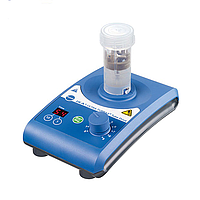
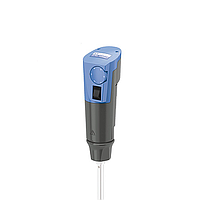
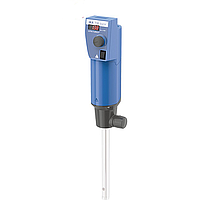
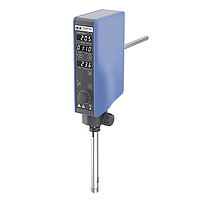
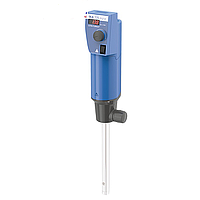
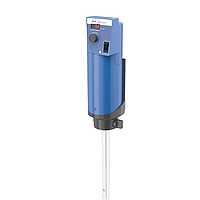
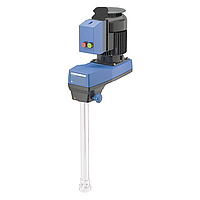
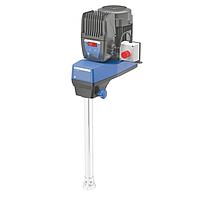
Not all homogenizers work the same way. Rotor-stator homogenizers are widely used for liquid-liquid emulsions and solid-liquid dispersions, where high shear helps break down droplets or distribute particles more evenly. This approach is suitable for many routine laboratory tasks involving low to moderate viscosity samples.
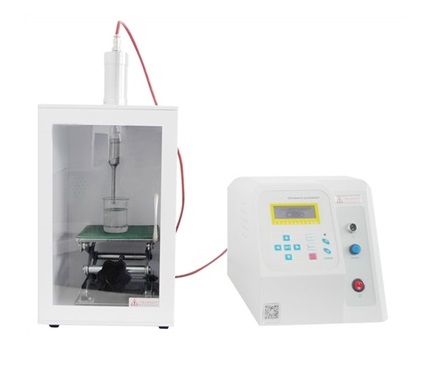
Ultrasonic homogenizers use high-frequency vibration to deliver energy into the sample, which can be useful when strong localized treatment is required. TAITEC models such as the VP-050N and VP-300N illustrate this type of configuration, with output and operating mode options that support different sample behaviors.
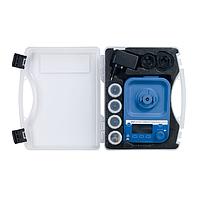
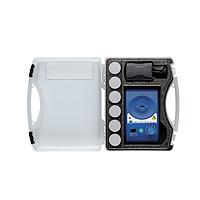
For microtube-based sample disruption, bead beater systems are often a better fit. TAITEC μT-01, μT-01N, and μT-12 are examples of bead-beating formats intended for small tubes, where rapid shaking with beads supports cell or tissue breakdown in compact laboratory workflows.
Choosing by sample volume, tube format, and processing scale
One of the first selection criteria is working volume. Small-volume formulation or analytical preparation may only require a compact rotor-stator unit, while repetitive microtube processing can be better served by bead beaters designed for one or multiple tubes per cycle. Matching the equipment to the actual batch size helps avoid underpowered operation or unnecessary oversizing.
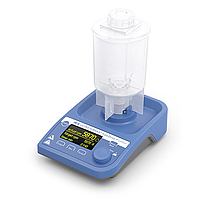
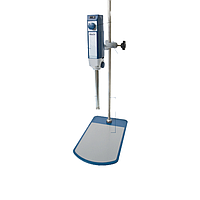
For example, the DaiHan HG-15A-Set-A is positioned for small to medium laboratory volumes with high rotational speed and interchangeable dispersing tool options. On the other hand, a system such as the VELP OV 725 Digital System Digital Disperser supports a broad working range with digital control, making it relevant when operators want more structured control over speed and operating time.
When the application is centered on microtubes rather than beakers or open vessels, bead-beating formats become more practical. For higher throughput in this area, the Benchmark Benchmark BEADBUG 6 and TAITEC μT-12 provide examples of compact lab systems built around multiple tube positions instead of traditional dispersing shafts.
What to consider when selecting a homogenizer
The most useful starting point is the sample itself: is it an emulsion, a suspension, a soft biological matrix, or a viscous liquid? From there, consider the energy input method, required fineness, acceptable processing time, and whether temperature rise during processing could affect the result. This practical view usually leads to a better decision than comparing speed values alone.
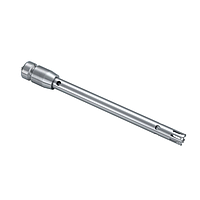
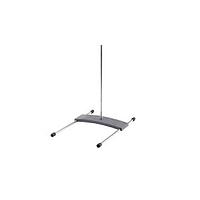
It is also important to review the tooling and support structure around the homogenizer. Some systems rely on dispersing tools, stands, clamps, or optional horns and tips to match the application. Products such as the VELP D20-S25C-P-R25C dispersing tools, IKA R1826 Plate Stand, and IKA R182 Boss Head Clamp show how accessories can be part of the working setup rather than secondary add-ons.
For labs comparing nearby sample-preparation options, it can also be useful to review related equipment such as laboratory blenders, especially when the process requirement is broader mixing rather than intensive homogenization.
Examples of configurations available in this category
This category includes several practical equipment formats rather than a single homogenization method. A rotor-stator system such as the DaiHan HG-15A-Set-A focuses on high-speed mechanical dispersion for laboratory-scale sample preparation. Digital dispersers like the VELP OV 725 add user-friendly control and compatibility with dedicated dispersing elements.
Ultrasonic configurations are represented by TAITEC units including the VP-050N and VP-300N. These are suitable for applications where controlled ultrasonic output, timing, and interval operation are relevant to the sample preparation process.
For bead-based disruption, TAITEC μT-01, μT-01N, and μT-12 support small-tube processing, while the Benchmark BEADBUG 6 offers a multi-position format. Depending on the workflow, users may choose between single-tube flexibility, multi-tube throughput, or a conventional shaft-based homogenizing approach.
Brands commonly considered for laboratory homogenization
This category includes products and related solutions from established laboratory equipment manufacturers. Brands such as IKA, DaiHan, TAITEC, VELP, and Benchmark are relevant in this space for different homogenizing formats, accessories, and laboratory use cases.
In practice, brand selection usually follows the application. Some labs prioritize digital control and accessory ecosystem, while others focus on microtube processing, ultrasonic treatment, or general-purpose sample dispersion. Looking at the available product type first, then narrowing by manufacturer, is often the most efficient approach.
Supporting more reliable results from preparation to analysis
Homogenization is often a preparatory step, but its effect can carry through the entire workflow. Better sample uniformity can improve subsampling consistency, reduce visible separation, and help make repeated measurements more comparable. This is especially important in R&D, quality control, and laboratory routines where multiple operators or repeated runs are involved.
Good results also depend on choosing a realistic operating range for the sample and using the correct accessories. A high-speed disperser, ultrasonic unit, or bead beater will each perform differently depending on vessel type, tube format, sample load, and processing objective.
Finding the right homogenizer for your lab
The best choice is usually the one that fits the sample matrix, volume, and daily workflow without adding unnecessary complexity. A compact rotor-stator system may be enough for routine emulsions and dispersions, while ultrasonic or bead-beating equipment can be more suitable for specialized preparation tasks.
By comparing processing method, sample format, and required accessories, laboratories can narrow this category to the most relevant options more quickly. If your work involves routine liquid dispersion, microtube disruption, or controlled ultrasonic treatment, this Homogenizer category provides a practical starting point for selecting equipment that matches the job.
Get exclusive volume discounts, bulk pricing updates, and new product alerts delivered directly to your inbox.
By subscribing, you agree to our Terms of Service and Privacy Policy.
Direct access to our certified experts