Colony Counter
Accurate microbial counting is a routine but critical task in food testing, environmental monitoring, pharmaceutical quality control, and clinical microbiology. When laboratories need to process Petri dishes consistently and reduce manual errors, a Colony Counter becomes an essential tool for improving workflow, traceability, and counting confidence.
On this page, you can explore colony counting solutions designed for different lab requirements, from straightforward manual counting support to more advanced automatic systems. The category is relevant for laboratories that need clearer visualization, better repeatability, and a more efficient way to record colony-forming units across daily sample analysis.
Where colony counters are used in laboratory work
Counting colonies on agar plates is common in microbiology workflows where results must be read carefully and documented reliably. Typical use cases include food and beverage testing, water analysis, hygiene control, pharmaceutical microbiology, and teaching laboratories where repeatable visual counting is important.
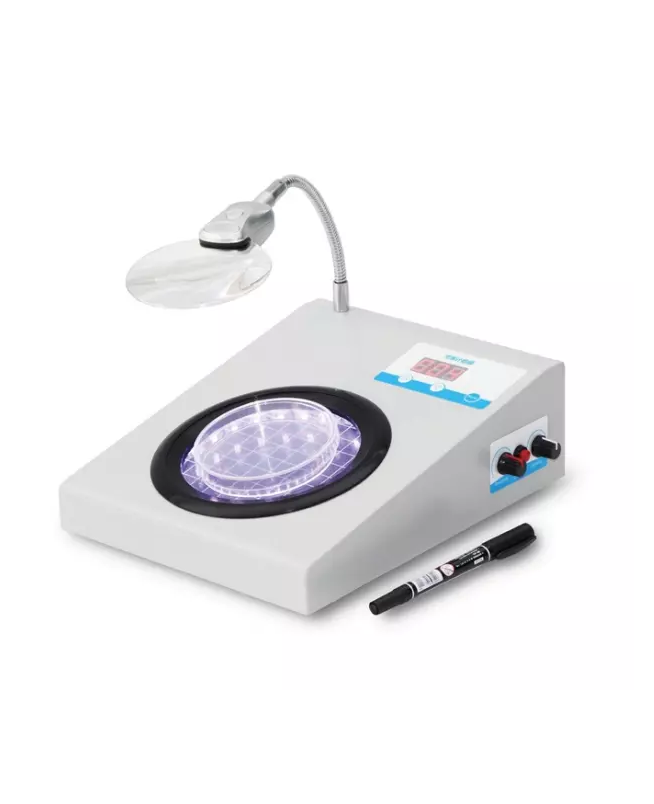
Compared with a simple manual review of Petri dishes, a dedicated colony counter provides better visibility and counting support through illuminated working areas, magnification, digital displays, memory functions, or assisted image-based evaluation depending on the model. For labs also managing cleanroom or airborne contamination checks, related instruments such as an air particle counter may be part of the broader contamination control workflow.
Manual, digital, and automatic colony counting approaches
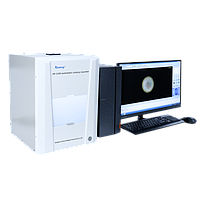
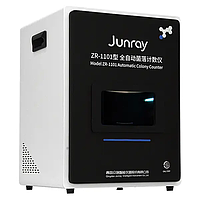
Not every microbiology lab needs the same level of automation. Some users prefer a compact digital unit that helps operators count faster while still keeping the process hands-on. Others need semi-automatic or fully automatic image-based systems to reduce operator dependence and handle larger sample volumes more efficiently.
Entry-level and mid-range instruments often focus on illuminated counting surfaces, pressure-sensitive marking, numeric displays, and memory storage. Higher-level systems can add image analysis, touchscreen interaction, profile-based operation, and automatic recognition support. This makes the category suitable for both routine bench work and labs aiming to standardize higher-throughput counting procedures.
Representative products in this category
Several models in this range illustrate how colony counters can serve different operating styles. The WITEG Galaxy 330 Colony Counter and the Rocker Galaxy 330 series are examples of digital colony counters with 2~3 X magnification, adjustable LED illumination, support for common Petri dish sizes, and USB output. These features are useful for laboratories that want a practical balance between manual control and digital record support.
For users looking for more automation, the Funke Gerber ColonyStar automatic models are positioned for broader microbiology use and support single-shot, semi-automatic, or fully automatic counting modes depending on workflow and saved profiles. The standard Funke Gerber ColonyStar Colony Counter also represents a more conventional bench setup with illuminated counting area and support for Petri dishes up to 145 mm. If the requirement is a straightforward digital counting range with simple readout, the Sansel CC 100 offers another practical option for routine counting tasks.
What to evaluate before choosing a colony counter
The right selection usually starts with sample volume and the level of operator involvement your lab can accept. A lower-throughput lab may work efficiently with a digital LED-based counter that provides magnification, count memory, and adjustable sensitivity. A busier laboratory processing many plates per day may benefit from semi-automatic or fully automatic counting to reduce repetitive work and improve consistency between users.
Petri dish compatibility is another key factor. Some instruments support a range of dish diameters and include adjustable holders or inserts for smaller plates. It is also worth checking whether the instrument offers image zoom, USB connectivity, count averaging, zero reset, or touchscreen interaction, especially if your lab needs easier result review or data transfer into a broader documentation process.
Why illumination, contrast, and counting ergonomics matter
Colony counting is not only about the maximum count range shown on a display. In daily use, operator comfort and visual clarity have a major effect on speed and repeatability. Adjustable LED lighting, glare-free observation, frosted or clear glass working surfaces, and suitable magnification can help users distinguish colonies more clearly across different media and colony appearances.
Ergonomic details also matter when many plates are counted in one session. Pressure-sensitive counting, acoustic feedback, touch-based marking, and quick correction of miscounted points can make a noticeable difference in routine work. These practical features are often more important than headline specifications because they directly affect how efficiently the instrument performs at the bench.
How colony counters fit into a broader counting and monitoring setup
In many laboratories, colony counting is only one part of a larger quality and monitoring process. Microbiology teams may also use tools for environmental checks, particulate monitoring, or simple manual counting support depending on the task. For example, users comparing related equipment may also review a particle counter for particulate measurement or a tally counter for basic manual counting applications.
This broader view is useful because it helps align the instrument with the real workflow rather than selecting only on price or display format. A colony counter should match the type of sample, the expected throughput, the need for documentation, and the level of standardization required by the laboratory.
Popular manufacturers in this category
This category includes products from established names such as Rocker, WITEG, Funke Gerber, and Sansel. Each brand represented here supports a slightly different user profile, from practical digital counting for routine microbiology work to more advanced systems intended to reduce manual effort in higher-demand environments.
Rather than focusing only on brand preference, it is usually more useful to compare operating method, plate size support, illumination design, counting interface, and data handling functions. That approach makes it easier to narrow the shortlist to models that suit actual laboratory procedures.
Choosing the right system for your lab
A good colony counting setup should help your team work faster without making the process harder to verify. For some labs, that means a simple illuminated counter with digital storage; for others, it means automated image-assisted counting that can reduce repetitive handling and improve consistency from one operator to another.
By comparing workflow needs, plate compatibility, and the level of counting assistance required, you can identify a colony counting solution that fits both current routine testing and future lab expansion. Explore the products in this category to find a model that supports clear plate evaluation, dependable counting, and a smoother microbiology workflow.
Get exclusive volume discounts, bulk pricing updates, and new product alerts delivered directly to your inbox.
By subscribing, you agree to our Terms of Service and Privacy Policy.
Direct access to our certified experts