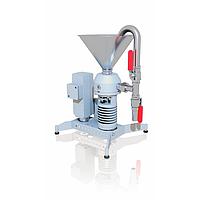
Mill
Particle size reduction and homogeneous sample preparation are common requirements in material testing, ceramics, powders, pigments, minerals, and R&D workflows. When repeatability matters, choosing the right Mill setup helps improve mixing consistency, grinding efficiency, and downstream analytical reliability.
Within this category, the focus is mainly on laboratory ball mill systems and related jar accessories used for controlled grinding, blending, and fine-particle preparation. The selection includes compact and higher-capacity configurations for different batch sizes, along with supporting components such as porcelain pot jars for practical lab use.
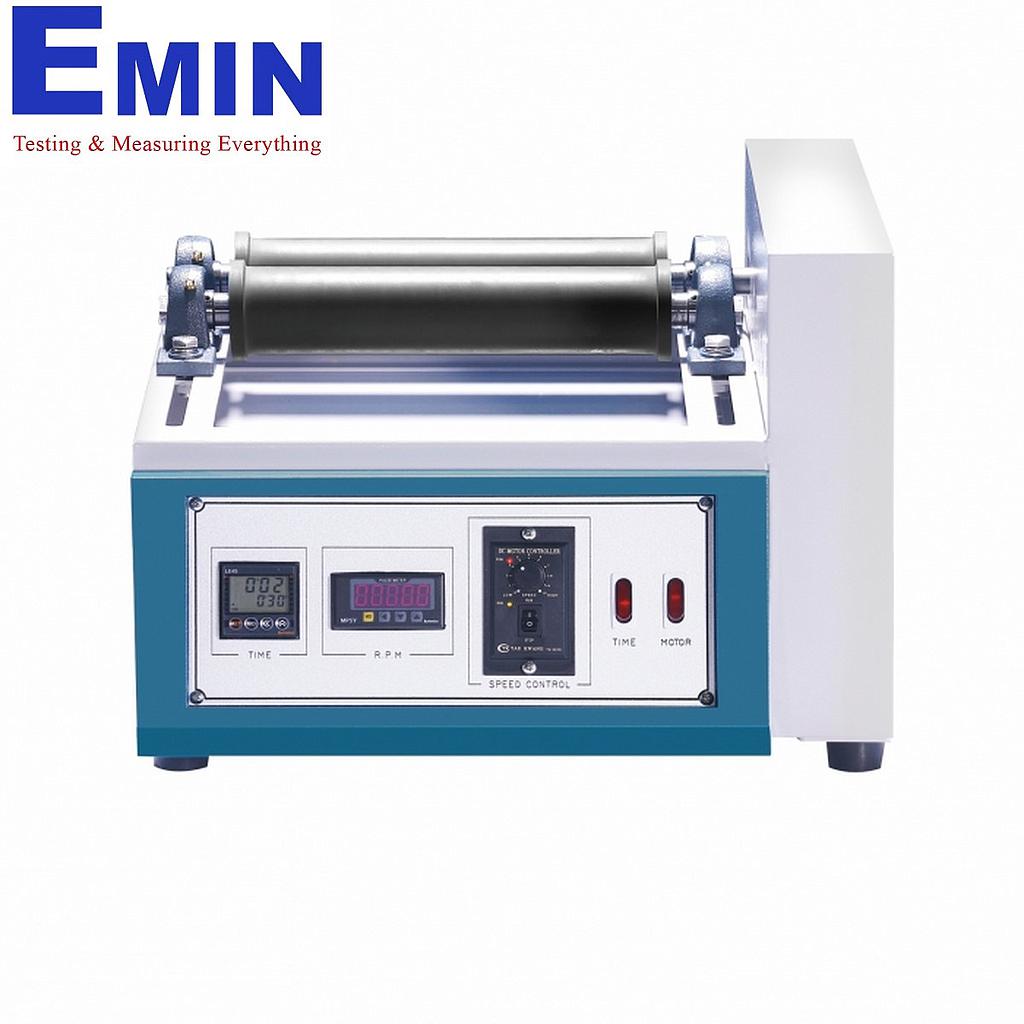
Typical laboratory uses for milling equipment
In laboratory environments, mills are commonly used to reduce particle size, disperse solids more evenly, and prepare samples before further processing or testing. This is especially relevant when working with brittle materials, dry powders, ceramic media, or formulations that require more uniform mixing than manual methods can provide.
Ball mill systems are often selected for batch work where users need stable rotational control and predictable processing time. Depending on the material and jar configuration, they can support routine preparation tasks in quality control labs, university research, pilot development, and industrial material screening.
What to look for when selecting a lab mill
The most practical starting point is batch capacity. Some labs only need a compact unit for small sample runs, while others process several jars at once to increase throughput. In this category, you can find both smaller two-place configurations and larger multi-place systems designed for heavier loading and more flexible batch handling.
Another key point is speed control. A mill with a wider rpm range gives better flexibility across different materials, while stable control helps support repeatability from one run to another. Timer functions, programmable operation, and overload protection are also useful in labs that need longer unattended runs or more standardized procedures.
Noise and installation conditions may also affect the decision. For example, some enclosed models are designed to help reduce operating noise, which can be beneficial in shared laboratory spaces. If operator handling and workflow safety are priorities, it is also worth reviewing related lab support items such as material handling carts and trolleys for moving jars, media, or heavy accessories more efficiently.
Representative ball mill options in this category
For programmable operation, DaiHan models such as the BML-2 and BML-6 provide a useful reference point. These systems offer a speed range of 50 to 600 rpm, digital control, timer functionality, and multi-step program capability, making them suitable for labs that want more controlled and repeatable batch processing.
The BML-2 is oriented toward smaller loads, while the BML-6 supports more positions and higher total load capacity for larger workflows. Optional soundproof cabinet configurations are also noted for these systems, which can be relevant where noise reduction and safer operation are part of the purchasing criteria.
For users comparing open-frame and enclosed designs, SH Scientific offers several ball mill formats in this category. Examples include compact single-stage and two-stage units such as SH-BALL300-1, SH-BALL300-2, SH-BALL700-1, and SH-BALL700-2, as well as noiseproof box versions like SH-BALL300B and SH-BALL700B. These models illustrate how footprint, roller length, stage arrangement, and enclosure style can influence the final equipment choice.
Open-frame, multi-stage, and noiseproof configurations
An open-frame mill is often easier to access during setup and jar loading, which can be convenient for routine lab work or frequent batch changes. Single-stage models generally suit lower-throughput tasks or limited bench space, while two-stage versions can help increase jar handling capacity without moving to a much larger system class.
A noiseproof mill may be a better fit when the equipment is placed in offices, teaching labs, or enclosed testing areas where acoustic control is important. Enclosed designs can also support a tidier operating environment, although users should still evaluate access, maintenance convenience, and workflow compatibility before choosing between open and boxed structures.
Accessories and jars in the milling workflow
A mill is only one part of the working setup. Jar material, jar volume, and compatibility with the equipment all affect practical performance. This category also includes porcelain pot jars from DaiHan, such as 3000 ml and 5000 ml options, which are relevant for laboratories building or replacing batch grinding configurations.
Accessories should be chosen with the intended sample type and process scale in mind. Larger jars may improve throughput, but they also influence total load, handling effort, and cleaning time. If the lab process includes pre-mixing or rough blending before milling, it may also be useful to review related equipment such as a laboratory blender when the application calls for a separate preparation step.
Operational considerations for consistent results
Consistent milling depends on more than motor power alone. The relationship between jar size, fill level, rotational speed, run time, and material characteristics plays a major role in the final outcome. In practice, laboratories often establish standard operating conditions to improve reproducibility across batches.
Accuracy and timing functions can be particularly helpful for method development and repeated sample preparation. Several models in this category include digital timing and controlled rpm adjustment, which supports process repeatability in laboratories that need documented or repeatable operating conditions rather than purely manual setup.
Routine safety and housekeeping should not be overlooked. Operators may need suitable laboratory protective apparel depending on the material being processed, especially when handling powders, fragile jars, or cleaning after milling runs.
Choosing the right mill for your application
The best fit usually depends on a few practical questions: how many jars you need to run at once, how much material is processed per batch, whether programmable control is required, and whether noise reduction is important in the installation area. Compact units can be effective for routine sample preparation, while larger or multi-place systems are often preferred for higher throughput and more flexible scheduling.
It is also worth considering the wider workflow, including loading, jar handling, and sample preparation before and after milling. Looking at the mill together with compatible jars and the actual process environment usually leads to a more reliable selection than comparing speed or size alone.
Final thoughts
This mill category is built around practical laboratory grinding and mixing needs, with options ranging from compact ball mills to larger programmable and noiseproof systems, plus essential jar accessories. Whether the priority is small-batch research, repeatable routine preparation, or improved throughput, the right configuration should align with your sample type, capacity target, and operating environment.
Review the available models and accessories carefully to match control features, structure, and batch size to your process. A well-chosen laboratory mill can make sample preparation more consistent, easier to manage, and better suited to the demands of day-to-day lab work.
Get exclusive volume discounts, bulk pricing updates, and new product alerts delivered directly to your inbox.
By subscribing, you agree to our Terms of Service and Privacy Policy.
Direct access to our certified experts