Lubricating Oils testing
Reliable lubricant analysis helps maintenance teams, laboratories, and manufacturers understand how an oil or grease will behave under real operating stress. In industrial systems, properties such as foaming tendency, water separability, oxidation stability, low-temperature performance, and wear protection directly influence equipment life, process stability, and maintenance planning. This is why Lubricating Oils testing remains a key part of quality control for both product development and routine condition assessment.
This category brings together laboratory instruments used to evaluate lubricants against recognized test principles and application demands. The range is relevant for petroleum labs, industrial maintenance environments, research centers, and quality departments that need dependable methods for comparing formulations, verifying batch consistency, or investigating performance issues in service.
Why lubricating oil testing matters in industrial applications
Lubricants do more than reduce friction. They also help control heat, protect metal surfaces, manage contamination, and support long-term machine reliability. When oil performance falls outside the expected range, the result can be poor lubrication, corrosion, unstable operation, or accelerated component wear.
Lubricant test equipment is used to quantify these risks under controlled conditions. Depending on the application, a lab may need to measure air release and foam behavior, resistance to oxidation, demulsibility, rust prevention, or friction and load-carrying characteristics. For broader petroleum lab workflows, users may also review related tools in fuels testing where adjacent test methods support overall product evaluation.
Main test groups covered in this category
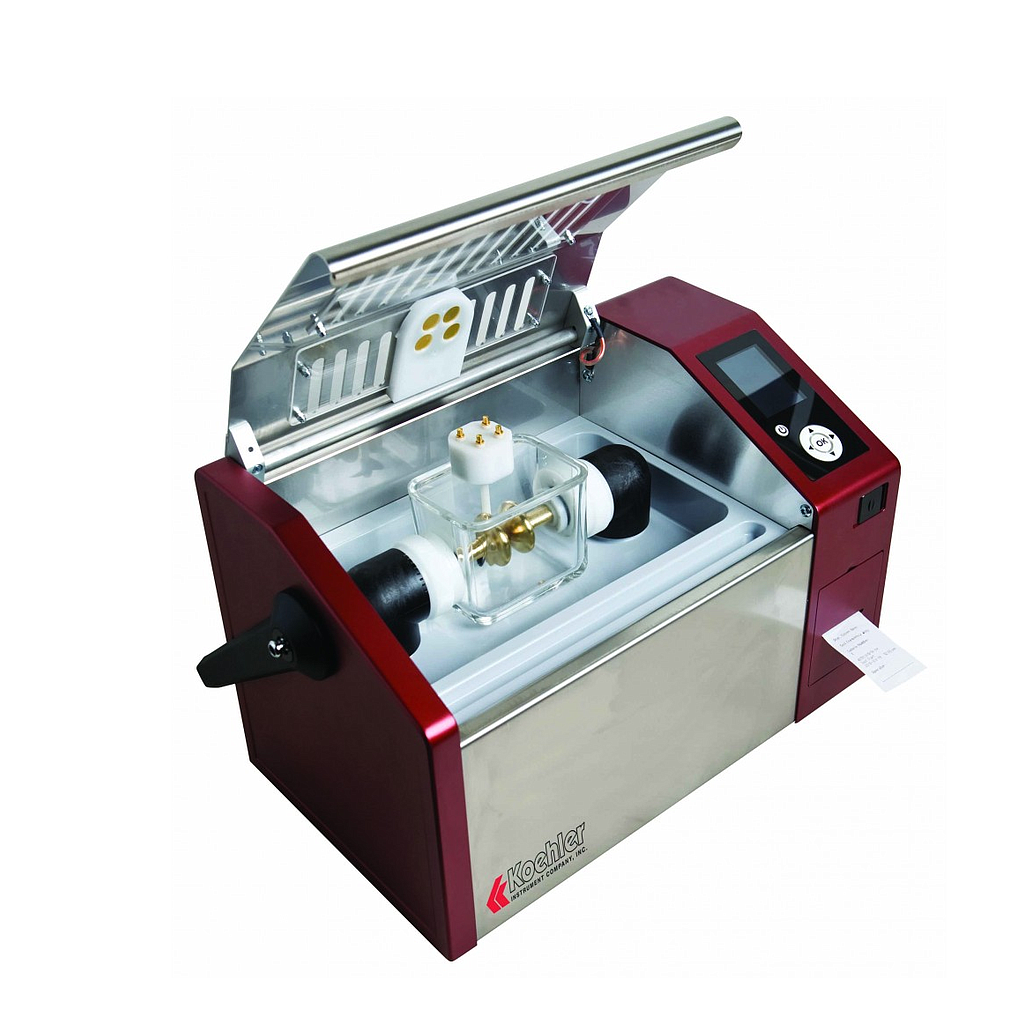
The product mix in this category reflects several common lubricant performance concerns. Foaming characteristics are important in systems with turbulence, pumping, or high-speed gearing, where excessive foam can contribute to cavitation, overflow, and reduced lubrication efficiency. Instruments such as the Samyon 12579 Foaming Characteristic Tester and Koehler K43093 Automatic Time Sequence Foaming Characteristics Test Apparatus are typical examples used for this type of evaluation.
Another important group focuses on water separability, especially for oils used in applications where water ingress is possible. The Normalab DEM CLASSIC Water Separability Of Petroleum Oils & Synthetic Fluids and the Koehler K39496 Water Separability Tester illustrate equipment intended to assess how effectively oil separates from water under controlled temperature and agitation conditions.
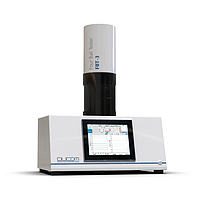
This category also includes instruments for oxidation, corrosion, rust prevention, and mechanical performance. Examples include the Koehler K35000 Corrosiveness and Oxidation Stability Test Apparatus, the Koehler K30167 Rust Preventing Characteristics Oil Bath, and tribology-focused systems such as the DUCOM FBT-3 Four Ball Tester and DUCOM LTT Low Temperature Torque Tester.
Representative equipment and how it is typically used
Foam testing systems are commonly selected by lubricant producers and QC labs that need repeatable conditions for aeration, temperature control, and timing. The Koehler K43092 Dual Twin Foaming Characteristics Test Apparatus and Koehler D892/D6082 Foaming Characteristics Test Apparatus are suited to workflows where multiple foam sequences or broader method coverage may be needed. The Samyon 12579 unit is another example for evaluating foaming behavior with controlled airflow and bath temperature conditions.
For demulsibility testing, the Normalab DEM CLASSIC and Koehler K39496 support laboratories that need to observe separation behavior after stirring and temperature conditioning. These systems are relevant for turbine oils, hydraulic oils, and other lubricants used in environments where water contamination can affect protection and service life.
Where wear, extreme pressure behavior, or grease performance at low temperature must be assessed, DUCOM instruments provide useful options. The FBT-3 Four Ball Tester is associated with friction and load-related evaluation, while the LTT Low Temperature Torque Tester is intended for grease testing under cold operating conditions.
How to choose the right lubricating oil test instrument
The first selection criterion is the test objective. Some laboratories focus on formulation development and need equipment that supports comparative analysis across multiple samples. Others are more concerned with incoming inspection, production QA, or failure analysis, where repeatability and day-to-day usability become especially important.
The second factor is method alignment. In practice, buyers usually start from the required test standard or internal laboratory procedure, then narrow the choice based on temperature range, sample capacity, agitation or airflow control, and the level of automation required. For example, a lab comparing foam behavior at different temperature sequences will have very different needs from one studying oxidation stability or rust prevention.
It is also worth considering workflow integration. Some users may need accessories and consumables that are often paired with method-specific setups, including cylinders or other lab components. In those cases, related categories such as Glass Apparatus for ASTM Test Methods can help complete the laboratory arrangement.
Leading manufacturers available in this range
This category includes instruments from established suppliers used in petroleum and lubricant laboratories. Koehler is strongly represented with equipment for foam testing, water separability, oxidation stability, rust prevention, and performance testing. That breadth makes it relevant for labs that want to build out several lubricant test capabilities within one broader equipment ecosystem.
Normalab appears in water separability testing, while Samyon offers a foaming characteristic tester suited to routine laboratory work. DUCOM covers tribology and mechanical performance evaluation, which is particularly useful when lubricant assessment must be linked to friction, torque, or wear-related behavior rather than only fluid-property testing.
Applications across labs, maintenance, and product development
Lubricating oil testing is relevant in a wide range of sectors, including power generation, manufacturing, automotive fluids, gearbox lubrication, hydraulics, and industrial maintenance. In research and product development, these instruments help compare formulations and observe how additives influence behavior under controlled stress. In quality assurance, they support batch verification and method-based acceptance testing.
For maintenance and reliability teams, the value is often practical: understanding whether a lubricant can resist foam, separate from water, protect against rust, or maintain acceptable performance at low temperature. These insights support better lubricant selection, better root-cause analysis, and more informed maintenance decisions.
Building a more complete petroleum testing workflow
Many laboratories do not evaluate lubricants in isolation. Depending on the test scope, users may also need complementary equipment for adjacent petroleum properties, sample preparation, or safety-related analysis. For example, some workflows extend into flash tester equipment when handling broader petroleum product characterization.
A well-planned lab setup usually starts with the properties most critical to the application, then expands toward supporting equipment that improves repeatability and throughput. That approach helps avoid overspecifying an instrument while still leaving room for future test requirements.
Choosing with confidence
The right platform depends on what you need to measure, how often you run the test, and how closely the equipment must fit a specific laboratory routine. Within this category, you can find solutions for foam tendency, demulsibility, oxidation and corrosion behavior, rust prevention, and tribological performance across a range of lubricant testing needs.
If you are comparing instruments for a lubricant lab or expanding an existing test setup, this category provides a practical starting point. Reviewing the intended test method, sample type, operating conditions, and preferred manufacturer can make it much easier to identify a suitable system for your workflow.
Get exclusive volume discounts, bulk pricing updates, and new product alerts delivered directly to your inbox.
By subscribing, you agree to our Terms of Service and Privacy Policy.
Direct access to our certified experts