Sample Concentrator
When solvent reduction is part of the daily workflow, the right concentration method can make a noticeable difference in throughput, reproducibility, and sample integrity. In analytical, environmental, pharmaceutical, and life science laboratories, Sample Concentrator systems are used to reduce volume efficiently before detection, storage, or the next preparation step.
This category brings together concentration equipment designed for different sample formats, batch sizes, and evaporation principles. Whether the application calls for vacuum concentration, nitrogen blowdown, automated multi-position processing, or compact centrifugal evaporation, choosing the right platform depends on sample volume, temperature sensitivity, required endpoint control, and the number of samples handled per run.
Where sample concentrators fit in the lab workflow
Sample concentration is commonly used after extraction, clean-up, or fraction collection, when a solvent must be removed or reduced before instrumental analysis. Typical goals include increasing analyte concentration, reaching a target final volume, and preparing samples for GC, LC, microplate-based assays, or further derivatization.
Different labs face different constraints. Some prioritize high-throughput processing across dozens of positions, while others need careful treatment of small batches or heat-sensitive samples. That is why this category covers multiple concentration approaches rather than a single device style.
Main concentration methods available in this category
Vacuum concentration systems are suitable when reduced pressure helps remove solvent at lower effective temperatures. This can be useful for workflows that benefit from gentle evaporation and consistent handling across multiple vials or tubes. Examples in this category include the LabTech MVP series, such as the MVP-48, MVP-12, and Flex-MVP, which are configured for different sample capacities and vessel formats.
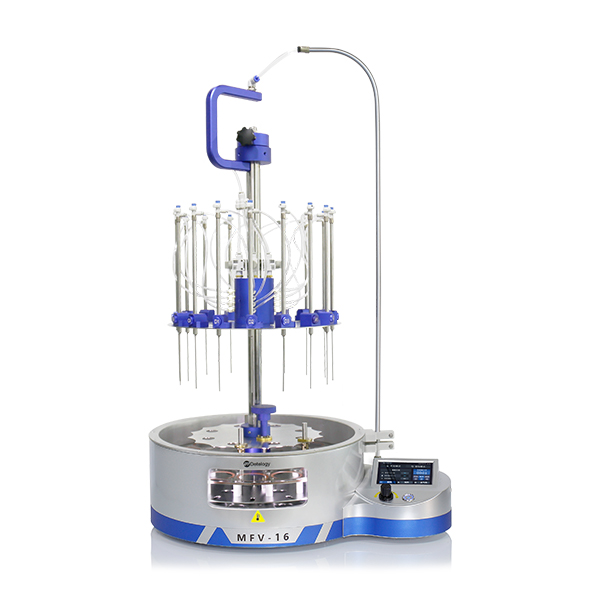
Nitrogen blowdown concentrators use a controlled gas stream, often combined with heating, to accelerate solvent evaporation. These systems are widely used in residue analysis and sample prep workflows where multiple channels or positions need to be processed in parallel. Models such as the LabTech MultiVap 6, MultiVap 10, MultiVap 64, and MultiVap 96 illustrate how the same principle can scale from compact bench work to automated, higher-capacity operation.
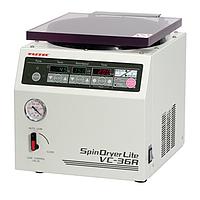
Centrifugal concentrators combine rotation, heat, and vacuum to support evaporation while helping reduce bumping and sample loss in certain applications. In this category, TAITEC systems such as the VC-15S, VC-15SP, VC-36R, and VC-96R represent compact and bench-scale options for laboratories that need controlled concentration under centrifugal conditions.
How to choose the right sample concentrator
The first selection factor is sample format and batch size. If the lab routinely works with many small tubes or microplates, a multi-position system may be more efficient than a unit designed for larger cups or lower position counts. A platform such as the LabTech MultiVap 96 is aligned with microplate workflows, while the MVP-48 and MultiVap 64 are more suited to handling larger sets of individual samples.
The second factor is thermal sensitivity. Some samples tolerate moderate heating well, while others require a gentler approach to reduce the risk of analyte degradation or loss of volatile components. In these cases, vacuum-assisted concentration or carefully controlled nitrogen evaporation may be preferable to a simpler open-heating method.
Another important point is endpoint control and operator involvement. Automated features such as adjustable gas flow, touch-screen programming, or liquid endpoint detection can improve repeatability and reduce manual supervision. For labs balancing consistency and labor efficiency, these functions are often just as important as nominal capacity.
Representative equipment in this range
The LabTech MVP family is designed for vacuum concentration across different vessel sizes and sample loads. The MVP-48 supports higher position counts for smaller containers, while the MVP-12 is oriented toward larger concentration cups. The Flex-MVP adds more flexibility for users who need individual sample handling during the process.
For nitrogen evaporation, the MultiVap line covers several practical scenarios. The MultiVap 6 is a compact parallel concentrator for lower-throughput tasks, while the MultiVap 10 and MultiVap 64 add more automation and larger capacity. The MultiVap 96 is specifically tailored to microplate concentration, making it relevant for screening and plate-based preparation workflows.
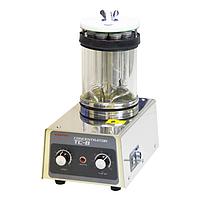
For centrifugal evaporation, TAITEC offers compact systems with different control and capacity levels. Models such as the VC-15S and VC-15SP serve smaller-scale tasks, while the VC-36R and VC-96R provide broader operating ranges for labs that need more flexible processing conditions. The TAITEC TC-8F test tube concentrator is also relevant where test-tube-based concentration with controlled heating is required.
Practical considerations before installation
Beyond the concentration principle itself, laboratories should review utilities and operating conditions before purchase. Depending on the model, this may include nitrogen supply, vacuum pump compatibility, exhaust handling, electrical requirements, and available bench space. These points affect not only installation but also routine usability and safety.
It is also worth checking whether the intended workflow needs direct sample visibility, independent channel control, or compatibility with specific tube, vial, cup, or plate formats. For labs building a broader preparation area, related laboratory support items such as carts and trolleys can also improve movement and organization around shared equipment stations.
Why concentration method matters for analytical quality
Concentration is not only a volume-reduction step; it can also influence recovery, repeatability, and downstream measurement quality. Uneven heating, uncontrolled gas flow, or over-drying can create variation between samples, especially in methods that depend on tight final-volume control. Equipment with stable temperature management and more consistent process control can help reduce these risks.
In busy laboratories, repeatable concentration conditions also support better method transfer between operators and shifts. This becomes more important when concentration is part of a validated or routine workflow that feeds directly into chromatographic or spectrometric analysis. For laboratories equipping a wider sample-preparation area, categories such as laboratory blenders may also be relevant depending on the upstream sample homogenization step.
Finding a suitable configuration for your workflow
This category includes systems ranging from compact units for smaller batches to automated platforms for larger sample sets. If the main requirement is handling many samples at once, capacity and automation will likely drive the decision. If sample sensitivity is the bigger concern, the focus should shift toward concentration principle, temperature control, and endpoint handling.
Brands highlighted here include Labconco, LabTech, and TAITEC, with product examples in the current range centered on LabTech and TAITEC platforms. Reviewing sample volume, vessel type, throughput target, and available utilities is usually the fastest way to narrow down the most appropriate system.
Choosing the right sample concentrator is ultimately about matching the instrument to the real laboratory process, not just to a specification sheet. A well-selected system can improve turnaround time, support more consistent evaporation results, and fit more naturally into the broader sample preparation workflow.
Get exclusive volume discounts, bulk pricing updates, and new product alerts delivered directly to your inbox.
By subscribing, you agree to our Terms of Service and Privacy Policy.
Direct access to our certified experts