Ultrasonic Cleaners
Cleaning small parts, laboratory tools, and hard-to-reach surfaces often requires more than manual scrubbing. When residues collect inside narrow gaps, threads, joints, or delicate components, Ultrasonic Cleaners offer a practical way to improve cleaning consistency while reducing the risk of surface damage caused by abrasive methods.
In laboratory and technical environments, these systems are widely used to clean glassware, metal parts, fixtures, reusable instruments, and precision components. By combining ultrasonic energy with a suitable cleaning liquid, they help remove contaminants from areas that are difficult to access by hand, making them a useful part of many preparation, maintenance, and quality-control workflows.
How ultrasonic cleaning works
The cleaning process is based on high-frequency sound waves transmitted through a liquid medium. This creates rapid pressure changes in the solution, leading to the formation and collapse of microscopic bubbles. This phenomenon, commonly known as cavitation, generates localized cleaning action across immersed surfaces.
The main advantage of this method is its ability to reach crevices, recesses, and fine geometries that are difficult to clean manually. In laboratory and industrial settings, that makes ultrasonic cleaning especially useful for components that need repeatable cleaning without aggressive brushing or disassembly.
Common applications in laboratories and technical environments
Ultrasonic cleaning is relevant across many routine and specialized tasks. In laboratories, it is often used for glassware, sample containers, metal tools, and reusable accessories where cleanliness directly supports reliable work. In maintenance areas, it can help remove oils, residues, dust, and light deposits from parts before inspection, assembly, or further processing.
It is also well suited to cleaning small mechanical parts, holders, fixtures, and items with detailed surfaces. Where contamination control matters, users typically combine the cleaner with appropriate handling practices and supporting items such as laboratory protective apparel to maintain safer and cleaner working conditions.
Choosing the right tank size and configuration
One of the first selection criteria is tank capacity. Smaller units are typically chosen for compact parts, routine bench work, and lower-throughput cleaning. Larger systems are better suited for batch cleaning, oversized components, or applications where baskets, holders, and multiple items need to be processed together.
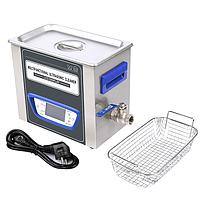
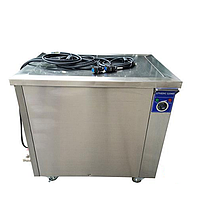
The products in this category illustrate that range clearly. Compact models such as the Aczet CUB-2.5 Ultrasonic Cleaner (2.5L) and Aczet CUB-5 Ultrasonic Cleaner (4.5L) fit smaller cleaning tasks, while the Aczet CUB-30 Ultrasonic Cleaner (27L) and Aczet CUB-60 Ultrasonic Cleaner (53L) are more aligned with higher-volume workflows. For larger-capacity requirements, systems like the DaiHan DH.WUC.N60H and DaiHan DH.WUC.N74H provide a broader tank format for bigger loads.
Beyond volume, buyers should also consider internal tank dimensions, available bench space, and whether the parts require accessories such as baskets for safer handling. For example, the Elma 100 4271 stainless-steel basket is an accessory designed for Elmasonic 300, showing how support components can improve loading, unloading, and part protection during cleaning cycles.
Key features that influence cleaning performance
Most buyers look first at capacity, but daily usability depends on several settings working together. Ultrasonic frequency, timer control, and temperature adjustment all affect how the cleaner fits a given process. In this category, several units operate at 40 kHz, a commonly used frequency for general-purpose cleaning of laboratory items and technical parts.
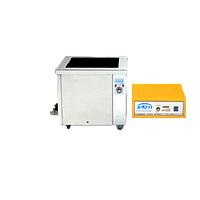
Timer functions help standardize cleaning cycles, which is useful when the same items must be processed repeatedly. Temperature control is also important because heated cleaning solutions can improve the removal of some contaminants. Models such as the Aczet CUB series offer adjustable time and temperature settings, while selected DaiHan units add digital interfaces and, in some configurations, remote generator arrangements for larger-capacity operation.
If your workflow includes related preparation or heating steps, it can also be useful to review nearby categories such as burners and torches where relevant to the broader laboratory setup.
Brand and product landscape in this category
This category includes equipment and accessories from recognized laboratory and technical suppliers. Among the available names, Aczet, DaiHan, and Elma stand out in the current product selection for illustrating different use cases, from compact benchtop cleaning to larger-capacity systems and accessory-based setups.
Aczet models cover a practical span from 2.5 L to 53 L, which can be helpful for users comparing bench-scale and medium-capacity options. DaiHan products in the lineup show digital and large-capacity configurations, including models such as the DH.WUC.D22H and DH.WUC.N30H. Elma is represented here through a dedicated basket accessory, highlighting that a complete ultrasonic cleaning workflow may involve not only the tank itself but also compatible handling accessories.
For buyers who prefer to compare by supplier ecosystem, the broader manufacturer portfolio also includes names such as DaiHan, JEIOtech, PCE, Yamato, Cole parmer, Rocker, and others listed on the site.
Practical buying considerations
Before selecting a unit, it helps to define what is being cleaned, how often, and in what quantity. A small cleaner may be sufficient for occasional cleaning of sample tools or compact parts, but repeated batch processing usually benefits from a larger tank and easier loading arrangement. The shape and fragility of the parts also matter, especially when baskets or supports are needed to keep components properly positioned during operation.
Power supply requirements, heating range, cycle duration, and tank dimensions should be reviewed together rather than in isolation. In many cases, users are not simply buying a machine but building a more reliable cleaning process that fits existing laboratory benches, carts, and handling routines. If mobility or workstation layout is part of the decision, related support equipment such as laboratory carts and trolleys may also be relevant.
Where ultrasonic cleaners add the most value
The strongest value of an ultrasonic cleaner is not just speed, but repeatable cleaning on parts that are difficult to clean manually. This is particularly important when residues affect downstream inspection, assembly quality, or test reliability. In laboratory work, cleaner tools and containers can also help reduce variability introduced by leftover contamination.
They are especially useful when dealing with narrow channels, detailed surfaces, small metal parts, reusable lab accessories, and items that need a more controlled cleaning cycle. Choosing the right size and feature set helps ensure the equipment supports the actual workload instead of becoming either underpowered or unnecessarily oversized.
Conclusion
Whether the requirement is a compact benchtop unit or a larger system for heavier cleaning demand, this category brings together ultrasonic cleaning solutions suited to laboratory and technical use. By comparing tank size, controls, heating capability, and accessory compatibility, buyers can identify a setup that matches both the type of items being cleaned and the frequency of use.
A well-matched ultrasonic cleaner can improve process consistency, simplify routine cleaning tasks, and support better handling of precision components. For that reason, it remains a practical investment for laboratories, service areas, and industrial workspaces where effective cleaning is part of daily operations.
Get exclusive volume discounts, bulk pricing updates, and new product alerts delivered directly to your inbox.
By subscribing, you agree to our Terms of Service and Privacy Policy.
Direct access to our certified experts