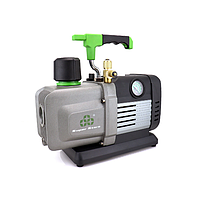
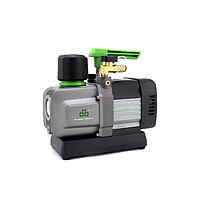
Vacuum pump
Reliable vacuum generation is a basic requirement in many laboratory workflows, from filtration and solvent handling to drying, degassing, and sample preparation. Choosing the right vacuum pump affects not only vacuum level, but also process stability, maintenance workload, noise, and long-term operating cost.
In practice, laboratories and technical users often compare pumps by flow rate first, then discover that application fit matters just as much. A compact pump for routine bench work, a rotary oil-sealed unit for deeper vacuum, or an aspirator-style solution for simple wet processes can serve very different needs even within the same lab environment.
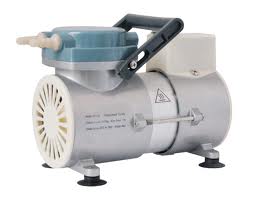
Where vacuum pumps are used in the laboratory
Vacuum is commonly used to speed up filtration, assist evaporation, remove trapped gases, and support controlled drying. In research and quality-control settings, a suitable pump helps shorten process time while keeping conditions repeatable from batch to batch.
Different tasks require different vacuum characteristics. For example, light-duty filtration may prioritize low noise and compact size, while vacuum drying or connection to a chamber may require deeper ultimate pressure and more stable continuous operation. This is why category-level comparison is important before selecting a specific model.
Main pump types available in this category
This category includes several practical approaches to vacuum generation. Oil-sealed rotary pumps are suited to applications that need relatively deep vacuum, while compact laboratory pumps are often chosen for routine bench processes where convenience and footprint are important.
For example, the JEIOtech W2V series such as W2V10, W2V-20, W2V-40, and W2V-60 represents rotary vacuum pump options with higher pumping capacity and low ultimate pressure for more demanding work. By contrast, LabTech models such as VP18 PLUS, VP20 PLUS, VP30, and VP50 PLUS are easier to position in general laboratory setups where moderate flow, manageable noise, and simple operation are valued.
There are also specialized solutions such as the JEIOTECH VE-11 Aspirator Pump, which is designed around a water-tank aspirator concept for certain laboratory procedures. In automation or pneumatic handling contexts, users may also look at compact vacuum generation solutions from Festo when the application is tied to machine integration rather than classic wet-lab use.
How to choose the right vacuum level and flow rate
Two of the first parameters to review are pumping speed and the target vacuum level. Pumping speed influences how quickly a system can be evacuated, while ultimate pressure indicates how deep the vacuum can go once the system is closed and stabilized.
If your process involves small-volume filtration or general sample handling, a lower-capacity bench pump may be enough. Models like the LabTech VP18 PLUS or VP20 PLUS can be relevant when the process benefits from compact equipment and controlled manual operation. For larger chambers, faster evacuation, or deeper vacuum requirements, a rotary solution such as the JEIOtech W2V-40 or W2V-60 may be more appropriate.
In real selection work, engineers also consider tubing length, vessel volume, leakage, vapor load, and operating cycle. A pump that looks sufficient on paper may underperform if the process includes frequent venting, solvent vapors, or long evacuation times.
Oil-sealed rotary pumps and accessory considerations
Oil-sealed pumps remain a common choice when users need stronger vacuum performance in laboratory and technical applications. Their strengths typically include better ultimate pressure and stable use in demanding setups, but they also require attention to oil condition, exhaust management, and periodic maintenance.
That is where accessories become important. The JEIOTECH WOF-150 Oil Mist Trap is an example of a support component used with certain oil ring vacuum pumps to help retain vacuum oil and reduce oil escape during operation. For laboratories concerned with cleaner exhaust and tidier operation around the equipment, this type of accessory can be a practical part of the overall system rather than an afterthought.
If you are comparing brands for deeper-vacuum applications, it can also be useful to review broader manufacturer portfolios such as JEIOtech and KNF, especially when maintenance philosophy and application type are part of the decision.
Factors that affect day-to-day operation
Beyond specifications, daily usability often determines whether a pump fits the lab well. Users should consider noise level, electrical compatibility, physical dimensions, and how easily the pump can be moved, cleaned, or connected to existing glassware and manifolds.
For bench-top environments, a smaller and quieter pump may improve working comfort, especially when the unit runs close to operators for long periods. In shared labs, this can be just as important as nominal performance. For more intensive processes, a larger pump may be justified if it reduces cycle time and supports more stable operation.
It is also worth checking how the pump will interact with adjacent lab equipment. Vacuum processes are often part of a wider workflow that may include sample preparation, heating, or mixing, so selection should reflect the full process chain rather than the pump alone. Related lab tools can be explored in categories such as laboratory blenders when building a broader preparation setup.
Typical maintenance points and common issues
Vacuum pumps tend to lose performance gradually rather than fail all at once. Common warning signs include slower evacuation, unusual vibration, increased operating temperature, and noticeable changes in sound. Early attention usually helps prevent larger downtime and protects connected equipment.
For oil-sealed pumps, routine checks often include oil condition, filter cleanliness, fittings, and seal integrity. For compact laboratory pumps, users commonly monitor tubing connections, diaphragm or internal wear over time, and whether the pump is being exposed to vapors outside its intended operating range. Matching the pump type to the process is one of the simplest ways to reduce maintenance problems.
When solvent or moisture carryover is possible, good system layout matters as much as the pump itself. Traps, proper tubing selection, and correct placement can all improve service life and process consistency.
Representative products in this category
Several models in this category illustrate the range of use cases. The JEIOtech W2V10, W2V-20, W2V-40, and W2V-60 serve users looking for rotary vacuum performance across different capacity levels. The LabTech VP18 PLUS, VP20 PLUS, VP30, and VP50 PLUS address compact laboratory applications with varying pumping speeds and vacuum levels.
For simpler aspirator-based operation, the JEIOTECH VE-11 provides another route for laboratory vacuum tasks. Meanwhile, Festo VN-series vacuum pumps may be relevant where vacuum generation is part of an integrated technical or automation-oriented setup rather than a conventional bench laboratory arrangement.
This mix makes the category useful for both routine laboratory work and more specialized technical applications. The right choice depends on how deep the vacuum must be, how quickly the process must run, and how much maintenance the user is prepared to manage.
Choosing with application in mind
A good selection process starts with the actual task: filtration, drying, degassing, chamber evacuation, or integration into equipment. From there, it becomes easier to decide whether the priority is compact form, cleaner operation, deeper vacuum, or higher throughput.
Within this category, users can compare compact LabTech units for general lab work, JEIOtech rotary pumps for more demanding vacuum requirements, and supporting components such as the WOF-150 oil mist trap where oil-sealed systems are involved. Reviewing the application first usually leads to a better decision than selecting on flow rate alone.
For laboratories and technical buyers, the most suitable vacuum pump is the one that matches process conditions consistently, is practical to maintain, and fits the broader equipment setup without unnecessary complexity.
Get exclusive volume discounts, bulk pricing updates, and new product alerts delivered directly to your inbox.
By subscribing, you agree to our Terms of Service and Privacy Policy.
Direct access to our certified experts