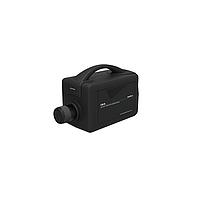
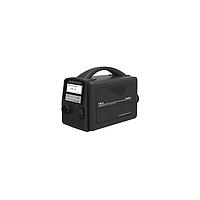
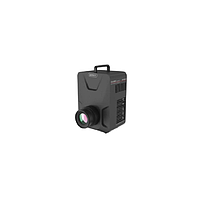
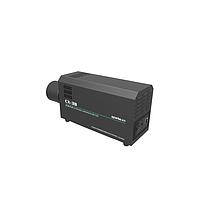
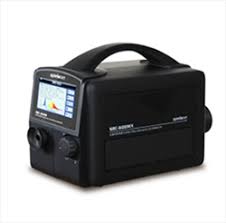
Luminance Meter
When you need to evaluate how bright a surface appears to the human eye, a standard illuminance reading is often not enough. In display testing, lighting development, reflective material inspection, and visual environment assessment, the key value is luminance—the light emitted or reflected from a surface in a given direction. That is where a Luminance Meter becomes essential.
This category brings together instruments designed for accurate luminance measurement across low-light and high-brightness applications. Whether the task involves checking display panels, diffusing surfaces, illuminated components, or controlled lab setups, selecting the right meter depends on measurement range, accuracy class, contact or non-contact method, and how the device fits into your test workflow.
Where luminance meters are used
Luminance measurement is relevant wherever the visual brightness of a surface matters more than ambient light level alone. Typical use cases include display and monitor inspection, evaluation of illuminated signs or indicators, testing of diffusing materials, and verification of light distribution in optical or lighting assemblies.
In production and quality control, these instruments help standardize visual performance and support repeatable acceptance criteria. In laboratories and R&D environments, they are also used alongside related optical tools such as light meter solutions when both illuminance and luminance need to be compared within the same project.
How a luminance meter differs from a light meter
A common source of confusion is the difference between luminance and illuminance. Illuminance describes how much light falls onto a surface, usually expressed in lux, while luminance describes how bright that surface appears from a viewing direction, commonly expressed in cd/m². For many optical and visual assessments, that distinction is critical.
If your application focuses on emitted or reflected brightness from a target surface, a luminance meter is usually the more relevant instrument. Some systems can also extend into illuminance measurement through attachments or kit-based configurations, which can be useful for users who need broader optical testing coverage without moving to a completely different platform.
Typical instrument formats in this category
This category includes both dedicated luminance instruments and flexible measurement kits. Dedicated luminance meters are typically selected when the primary requirement is direct brightness evaluation of a known target, especially in controlled inspection processes. They are often preferred for repeatable bench testing, display checks, and standardized measurement routines.
Kit-based systems provide more flexibility for users who may need to work across luminance and illuminance tasks. For example, the Gossen Metrawatt MAVOMONITOR - KIT is aimed at luminance measurement, while the MAVOLUX 5032 series can support illuminance measurement and, with an optional luminance attachment, broader optical evaluation. This can be practical in labs where one measurement platform is used for multiple test scenarios.
Representative products and manufacturers
Among the featured brands, Gossen Metrawatt is represented by models such as the MAVOMONITOR - KIT and the MAVOLUX 5032 B / 5032 C kits. These instruments are suitable for users who value defined measurement classes, data handling capability, and integration into structured test procedures. The MAVOLUX kits also illustrate how some systems can bridge illuminance and luminance tasks depending on the selected accessories.
Kyoritsu Electric offers luminance-focused models such as the BM-2000 and BM-4000SE. These products are relevant for measuring standard diffusing surfaces and can fit applications ranging from laboratory evaluation to practical inspection work. Across both manufacturers, the available range covers very low luminance levels as well as higher-brightness targets, giving users options for different optical environments.
What to consider when choosing a luminance meter
The first selection factor is usually the measurement range. Low-level luminance measurement is important in dark-scene evaluation, low-brightness displays, and sensitive optical testing, while higher ranges are needed for bright panels, illuminated surfaces, or stronger reflective targets. Choosing too narrow a range can limit usability, while an overly broad range may add cost or complexity that is not necessary for the application.
Accuracy and measurement class also matter, especially when results are used for quality records, comparative testing, or compliance-oriented workflows. Some users will also need data output, onboard memory, or USB/RS232 connectivity for reporting and traceability. If your process involves visual performance beyond brightness alone, related categories such as color sensors may also be relevant in the wider inspection setup.
Contact measurement, target type, and workflow fit
Not every luminance task is the same, so the target surface should guide the instrument choice. Contact-style measurement can be useful for controlled and repeatable readings on specific surfaces, while other setups may require measurement on standard diffusing targets or evaluation under defined viewing conditions. The shape, size, and consistency of the test surface can directly affect how practical a given meter will be in daily use.
Workflow considerations are equally important. Portable battery-powered instruments may be preferred for field checks or flexible inspection points, while bench-oriented devices with external interfaces are often better suited to laboratories, incoming inspection stations, or production lines. In broader optical testing environments, users may also combine luminance instruments with equipment such as camera testers when image-based evaluation and brightness verification are both required.
Why this category matters in optical and lighting testing
Brightness perception is a core part of product quality in many industries, from electronics and display manufacturing to lighting development and materials testing. A suitable luminance meter helps teams move from subjective visual checks to measurable, repeatable data. That improves consistency between operators, supports clearer pass/fail criteria, and makes it easier to compare results over time.
For buyers, engineers, and technicians, this category is most useful when approached as part of a broader measurement strategy. The right choice depends less on brand name alone and more on the expected luminance level, target surface, required accuracy, and how the instrument will be used in real testing conditions.
Choosing the right solution for your application
If your work involves evaluating how bright a surface actually appears, this category provides practical options for both dedicated luminance measurement and more flexible light measurement kits. Models from Gossen Metrawatt and Kyoritsu Electric show the range of approaches available, from portable instruments to more structured measurement systems.
Reviewing the target surface, measurement range, interface needs, and test environment will help narrow down the most suitable device. With the right luminance meter, optical testing becomes more consistent, easier to document, and better aligned with real-world performance requirements.
Get exclusive volume discounts, bulk pricing updates, and new product alerts delivered directly to your inbox.
By subscribing, you agree to our Terms of Service and Privacy Policy.
Direct access to our certified experts