Bore Gage
Accurate internal diameter inspection becomes critical when checking cylinders, bushings, bearing seats, precision bores, and other machined holes where a standard caliper may not provide enough repeatability. In these situations, a bore gage helps technicians compare, verify, and control internal dimensions with better sensitivity, especially for deeper or tighter features.
This category brings together bore gages used in mechanical measurement workflows for workshop inspection, maintenance, machining, and quality control. Whether you need to evaluate small holes, general-purpose bores, or larger internal diameters, the selection here supports practical measurement tasks across different size ranges and reading resolutions.
Where bore gages are used in real measurement work
Bore gages are commonly chosen when operators need to inspect the inside diameter of a hole with more confidence than basic handheld tools can offer. They are especially useful for checking round bores in machined parts, engine components, sleeves, and cylindrical cavities where alignment, contact stability, and small deviations matter.
In many workshops, a bore gage is not used alone but as part of a broader measurement process. A master setting standard or a reference dimension is often used before measurement, while supporting tools such as dial indicators and micrometers help complete comparison and verification tasks in the same inspection chain.
How a bore gage helps measure internal diameter
The basic function of a bore gage is to transfer variation inside a hole into a readable indicator movement. During use, the measuring head contacts the internal surface, and the operator gently rocks the tool to locate the minimum reading point, which corresponds to the true diameter condition at that section.
This method is well suited to detecting deviation from nominal size, and it is also helpful for identifying taper or out-of-round conditions when measurements are taken at different depths or orientations. That makes bore gages valuable not only for final inspection but also for process checks during machining and rework.
Common types found in this category
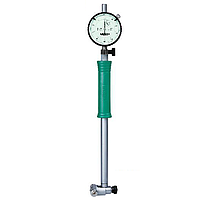
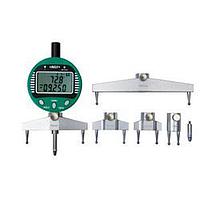
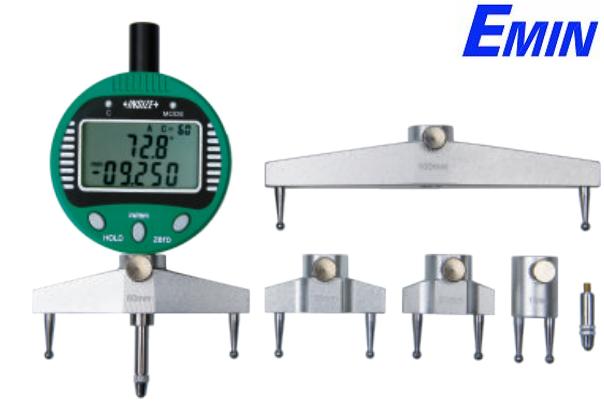
The range includes conventional dial-style bore gages, digitronic versions, and compact tools intended for smaller holes. Different designs suit different measurement tasks, so selection often depends on bore diameter, required resolution, measuring depth, and how the reading will be used in the inspection process.
For example, the MOORE & WRIGHT range includes models such as MW316-02 for 10-18 mm, MW316-03 for 18-35 mm, MW316-04 for 35-50 mm, and MW316-05 for 50-160 mm, giving users options across several common internal diameter ranges. For digital-style reading, the MW316-12D Digitronic Bore Gauge covers 35-160 mm with finer reading capability, which may be useful where higher reading sensitivity is preferred.
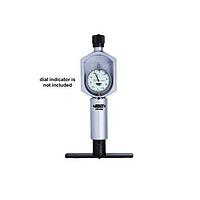
For smaller internal features, compact models such as TECLOCK CN-18 for 10-18.5 mm and TECLOCK MT-series micro-hole tools provide practical solutions where access and hole size are more limited. These small-hole instruments are relevant when standard bore gage heads are physically too large for the application.
Examples of representative products
A useful example in the mid-small range is the TECLOCK CD-35 Bore Gauge (18-35mm). Based on the available product data, it offers a narrow effective measuring range, 100 mm probe depth, and low total range error, making it suitable for internal diameter checks where stable contact and controlled deviation reading are important.
For users handling a wider bore range, the MOORE & WRIGHT MW316 series provides set-based options that cover from 10 mm up to 160 mm depending on the model. This is practical for maintenance departments or inspection teams that need coverage across multiple part sizes rather than a single dedicated range.
Where setup accuracy matters, the MOORE & WRIGHT MW720-01 Dial Bore Gauge Setting Master is also relevant. A setting master supports consistent zero setting before inspection, helping improve repeatability when the bore gage is used across batches or by multiple operators.
How to choose the right bore gage
The first point is the measurement range. A bore gage should match the actual bore size as closely as possible, because oversized range selection can make setup and contact feel less practical, while an undersized model simply will not fit the application. If your inspection work includes several bore sizes, a set version may be more efficient than multiple individual tools.
The next consideration is reading resolution and accuracy. For general workshop checks, one level of resolution may be sufficient, while tighter tolerance applications often require finer indication. It is also important to consider probe depth, especially when measuring deeper bores where a simple caliper would be difficult to position reliably.
Finally, think about the full measurement workflow. Some users need a straightforward comparative check on the shop floor, while others need a more controlled setup with a master and additional reference tools. In that case, pairing the bore gage with suitable setting equipment and external reference instruments will usually improve the consistency of results.
Brands commonly associated with this category
This category is closely connected with established measuring tool manufacturers such as Mahr, MITUTOYO, MOORE & WRIGHT, and TECLOCK. Each brand is widely recognized in industrial measurement, and users often choose based on preferred format, available size range, familiar handling, or compatibility with existing inspection routines.
Within the products highlighted here, MOORE & WRIGHT and TECLOCK are especially visible. MOORE & WRIGHT contributes several multi-range bore gauge sets and a setting master, while TECLOCK adds compact bore gages and micro-hole models that are useful for smaller internal diameters. This gives buyers a practical mix of general-purpose and small-bore measurement options.
Good practice for repeatable internal measurement
To get reliable readings, the bore gage should be set correctly before use and introduced into the bore without side loading. The operator then rocks the instrument slightly through the centerline to find the reversal point or lowest reading, depending on the measurement method being used. Repeating the check at multiple depths can reveal changes in bore condition along the length of the feature.
Environmental and handling factors also matter. Clean contact points, a stable reference for zero setting, and careful use of the measuring head all contribute to better repeatability. For applications where form error is also important, a bore gage can be part of a larger inspection approach that may later involve more advanced equipment such as a roundness measuring machine.
Finding a suitable solution for your inspection task
Choosing a bore gage is less about picking a generic tool and more about matching the instrument to the actual bore size, access condition, and tolerance requirement. Small holes, medium internal diameters, and wider-range workshop inspection all call for different measuring head designs and setup methods.
From compact TECLOCK small-hole models to MOORE & WRIGHT bore gauge sets and setting masters, this category supports a range of internal measurement needs. If you are comparing options, focus on range coverage, reading method, and setup requirements so the selected instrument fits both the part and the way your team performs inspection.
Get exclusive volume discounts, bulk pricing updates, and new product alerts delivered directly to your inbox.
By subscribing, you agree to our Terms of Service and Privacy Policy.
Direct access to our certified experts